


Key cautions
- Wash before cutting and reject decay.
- Pantry advice is for whole uncooked roots.
What’s inside
Boniato is a starchy carbohydrate food. A historic UF leaflet reports a half-cup nutrient estimate without adequately specifying the cooked form; it is not used here for nutrient badges. Orange sweet-potato vitamin-A figures are not relabelled as boniato measurements.
Uses in brief

- Boiled or mashed provisions
- Vegetable sancocho
- Savory stuffing
History, folklore and reported uses
History, folklore and traditional uses
Sweet potato is a tropical American crop. Kew describes an origin in Central America or northwestern South America; that species history does not identify the origin of every modern boniato cultivar.
Boniato has a specific Caribbean–South Florida connection: UF’s archived crop account links its commercial expansion in Dade County to Cuban demand. The current horticultural guide describes several commercial varieties, so the market name should not be treated as one uniform clone.
A closer look at its history
A Caribbean food identity within sweet potato
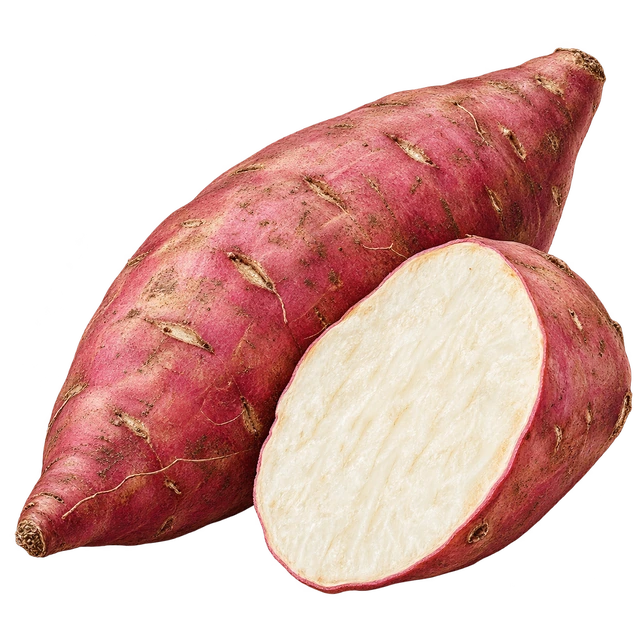
Boniato is Ipomoea batatas, not a botanical cross between potato and sweet potato. Its pale flesh, drier texture and less-sweet flavor distinguish it from familiar orange-fleshed types. UF/IFAS identifies it especially with Cuban cuisine, a useful reminder that one species can support quite different regional food expectations.
Local varieties preserve seasonal choices
South Florida production uses named varieties such as Picadia for fall–winter and Campeon for summer–fall. This is a living cultivation tradition shaped by season and market, rather than a single timeless “tropical sweet potato.” The tender roots bruise easily and do not share the long storage expectations of every other root crop.
Additional history reviewed 2026-10-10
Traditional, historical and reported uses
- Boiled or mashed provisions
Food or household practiceWhy this label?
The claim records a named culinary use of the stated plant part and preparation. Regional and modern-recipe boundaries are retained; no clinical efficacy is asserted.
UF/IFAS records boniato served boiled, mashed or baked. Its comparatively dry texture lends itself to a savory starchy accompaniment.
- Vegetable sancocho
Food or household practiceWhy this label?
The claim records a named culinary use of the stated plant part and preparation. Regional and modern-recipe boundaries are retained; no clinical efficacy is asserted.
The UF food leaflet includes boniato in a Caribbean/South American-style sancocho with other ground provisions and calabaza. This documents one recipe, not a universal ingredient list.
- Savory stuffing
Food or household practiceWhy this label?
The claim records a named culinary use of the stated plant part and preparation. Regional and modern-recipe boundaries are retained; no clinical efficacy is asserted.
The extension leaflet uses cooked mashed boniato with onion, celery and breadcrumbs as stuffing or a side dish.
- Baked puddings and casseroles
Food or household practiceWhy this label?
The claim records a named culinary use of the stated plant part and preparation. Regional and modern-recipe boundaries are retained; no clinical efficacy is asserted.
The leaflet also records boniato pudding and a fruit-and-nut casserole. These are sweetened prepared dishes, whose composition differs from plain cooked root.
4 distinct food uses are featured. Regional accounts describe culinary practice, not clinical treatment; no biblical identification is asserted.
Historical-use additions reviewed 2026-10-09
Story sources
- UF/IFAS Gardening Solutions: Boniato, tropical sweet-potato cultivars
- UF/IFAS: South Florida Tropicals: Boniato, FCS8517 (original extension leaflet, reviewed 2013; preserved copy)
- Kew Plants of the World Online: Ipomoea batatas, origin and botanical distinctions
- UF/IFAS: Archived EDIS publications, Boniato overview and Cuban–South Florida context
- FDA: Selecting and Serving Produce Safely
Growing notes
White-fleshed culinary Ipomoea batatas types; not Dioscorea yams or ornamental vines.
- Season and habit
- A spreading warm-season vine. Plant after the last frost where winters freeze; South Florida can support year-round planting. Picadia and Campeon have different local seasonal uses. [1] [2]
- Site, spacing and water
- Choose sun and well-drained loam or sandy soil. Set clean slips roughly 12 inches apart, rows 3–4 feet apart. Keep evenly moist during establishment. [1] [2]
- Harvest and handling
- Allow approximately 120–180 days, depending on variety and conditions. Lift gently: roots bruise easily. Store above refrigerator temperatures in a cool, dry place. [1]
- Pollination and crop health
- The crop is a storage root, so seed set is unnecessary. Start disease-free slips; rotate sites and monitor for sweet-potato weevil and nematodes rather than carrying old infested vines forward. [2]
Growing sources and regional guidance
Growing notes reviewed 2026-10-10
Identity & detailed reference
Identity
Boniato is a pale-fleshed culinary group within sweet potato, Ipomoea batatas, rather than a separate species or a potato hybrid. “Bonito” was interpreted as boniato in this Caribbean-food request.
Ingredient details, preparation and research
Also known as: Tropical sweet potato; Cuban sweet potato; Batata (regional sweet-potato name); Camote (regional sweet-potato name); Bonito (search spelling; this entry covers boniato sweet potato, not fish)
Source plant or material
Ipomoea batatas (L.) Lam., pale-fleshed tropical cultivars
Plant family / material: Convolvulaceae
Forms and route
Cooked storage roots, usually with white or cream flesh; boiled or mashed sides, stews and baked dishes. Commercial flour and orange-fleshed sweet potatoes have different composition records.
Absorption and preparation
No boniato-specific absorption advantage was established. Cultivar, cooking and recipe matter; ordinary sweet-potato studies do not identify every pale-fleshed Caribbean market type.
Practical preparation
Scrub the root under running water. Cook by a boniato recipe until the center is tender; peeled pieces brown quickly and can be held briefly in clean cold water during preparation. Refrigerate finished dishes promptly.
Food notes
Use the stated edible part and preparation; whole foods, isolated starches and extracts are different materials.
Combination context
No special medicinal pairing or nutrient-absorption combination is established for this named food.
Combination notes
Boniato can be part of a provisions plate or mixed stew. Sweeteners, coconut, dairy, breadcrumbs and frying oil belong to the particular recipe, not the plain root’s nutrient profile.
Traditional and reported uses
- Boiled or mashed provisions
- Vegetable sancocho
- Savory stuffing
- Baked puddings and casseroles
Contraindications and cautions
- Choose firm, sound food roots. Wash before cutting; discard rotten material and refrigerate cut produce or prepared dishes appropriately.
- Whole uncooked boniato is cold-sensitive. Store it in a ventilated, cool pantry; this storage advice does not apply to cooked leftovers.
- Pale flesh and a less-sweet taste do not establish a low-carbohydrate food or a diabetes treatment. Match the portion and recipe to any individualized eating plan.
Similar items and how they compare
- Sweet potato, general card 163
Both are Ipomoea batatas.
This card focuses on pale-fleshed boniato types. The existing general card is retained; an orange-fleshed serving profile is not a boniato-specific measurement.
- True yam
Both are starchy tropical provisions.
Yams belong to Dioscorea, a different plant family. Common culinary roles do not make them the same crop.
- Ordinary potato
Both may be baked or mashed.
Solanum tuberosum is a different species. Comparisons of boniato’s flavor to potato do not mean it is a cross between the two.
A sweet-potato group, not a botanical hybrid
UF identifies boniato as Ipomoea batatas, with creamy flesh and commonly pink to burgundy skin. Kew places sweet potato in the morning-glory family and distinguishes both potatoes and yams.
Color is not a complete nutrient profile
The leaflet’s old half-cup estimate is insufficiently preparation-specific for a new quantitative nutrition panel. This review therefore keeps a food description without assigning high-vitamin or low-glycemic claims.
Related, but separately useful
Keep boniato linked to general sweet potato rather than overwriting the established card. The narrower card adds cultivar-form identity and regional dishes.
Evidence limits
No single authenticated boniato cultivar, modern standardized serving analysis or clinical treatment effect is asserted. “Bonito” is a request-context spelling, not a plant synonym.
Entry sources
- UF/IFAS Gardening Solutions: Boniato, tropical sweet-potato cultivars
- UF/IFAS: South Florida Tropicals: Boniato, FCS8517 (original extension leaflet, reviewed 2013; preserved copy)
- Kew Plants of the World Online: Ipomoea batatas, origin and botanical distinctions
- UF/IFAS: Archived EDIS publications, Boniato overview and Cuban–South Florida context
- FDA: Selecting and Serving Produce Safely
Reference entry 259 · Recorded content review: 2026-10-09 · Review scope and dates