


Key cautions
- Do not use with bile-duct obstruction, cholangitis, liver disease, gallstones or other biliary disorders without the required medical assessment.
- EMA’s leaf-medicine framework is adult-only; pregnancy and breastfeeding use is not recommended in its monograph.
- Persistent, worsening or severe abdominal symptoms need medical evaluation rather than repeated herbal treatment.
What’s inside
Boldine and other alkaloids, alongside volatile constituents; essential-oil components can differ markedly from aqueous leaf preparations.
Uses in brief

- Traditional digestive-herbal use
History, folklore and reported uses
History, folklore and traditional uses
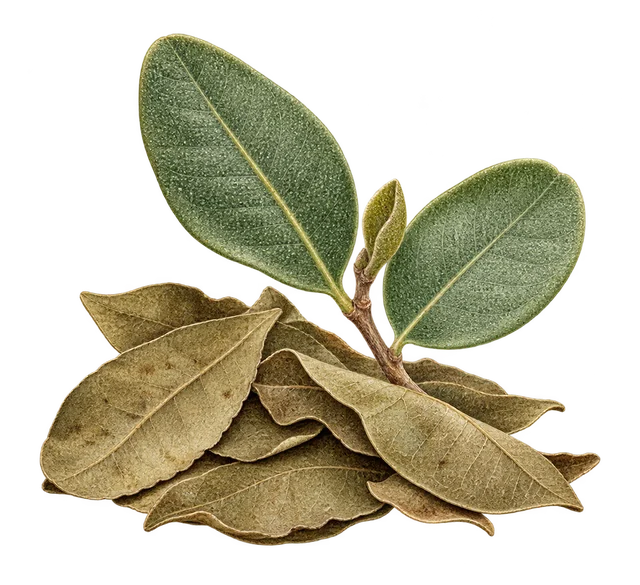
Peumus boldus is a Chilean native tree included in Chilean traditional-herbal documentation. The name’s regional significance does not make other species sold as boldo equivalent.
Traditional, historical and reported uses
- Traditional digestive-herbal use
Traditional accountWhy this label?
Source documents this specific material, culinary use or attributed practice; no clinical efficacy is inferred.
EMA recognizes specified leaf preparations for indigestion and mild gut spasms on a traditional-use basis. This is not evidence that any boldo product treats liver disease or gallstones.
1 bounded uses; regional records do not establish treatment effects.
Historical-use additions reviewed 2026-10-09
Regional reading paths
These sourced notes describe cultivation, trade, food traditions or material history. A regional connection does not claim exclusive origin.
South America
native; Chile
Documented traditional herbal preparation; medical-safety review required.
Identity & detailed reference
Identity
Peumus boldus; leaves of Peumus boldus, the Chilean boldo tree; not unrelated Brazilian plants also called boldo.
Ingredient details, preparation and research
Also known as: Peumus boldus
Source plant or material
Peumus boldus
Plant family / material: Monimiaceae
Forms and route
Identified dried leaf and regulated oral leaf preparations; essential oil and arbitrary alcohol extracts are outside this card.
Vitamins and minerals
Boldo leaf medicines are not nutrient foods, and no vitamin or mineral serving is assigned. Antioxidant assays do not convert them into dietary supplements with proven benefit.
Absorption and preparation
Preparation determines chemical exposure. The presence of boldine in a leaf does not establish its absorbed dose or clinical effect in a homemade drink.
Practical preparation
For medicinal use, consult a pharmacist and follow an appropriately authorized product’s instructions. Do not distill the oil, improvise an extract or create a prolonged self-treatment course.
Traditional and reported uses
- Traditional digestive-herbal use
Contraindications and cautions
- Do not use with bile-duct obstruction, cholangitis, liver disease, gallstones or other biliary disorders without the required medical assessment.
- EMA’s leaf-medicine framework is adult-only; pregnancy and breastfeeding use is not recommended in its monograph.
- Persistent, worsening or severe abdominal symptoms need medical evaluation rather than repeated herbal treatment.
Clinical evidence remains limited
The EMA assessment distinguishes longstanding use and laboratory observations from sufficient clinical-trial evidence. Chile’s health-ministry recognition documents local herbal practice, not universal safety for every person or extract.
Evidence limits
This is an identity and safety-oriented traditional-herbal reference. It does not prescribe a dose, endorse essential-oil ingestion or support liver cleansing claims.
Entry sources
Reference entry 430 · Recorded content review: 2026-10-09 · Review scope and dates