


Key cautions
- If normally mild squash tastes unexpectedly bitter, spit it out, stop eating and discard the squash or affected dish. Cucurbitacins can cause poisoning; cooking does not make bitter squash safe.
- Use known edible cultivars. Do not eat decorative gourds or unidentified volunteer plants, and do not taste an unknown plant to identify it. Appearance alone cannot establish edibility.
- Wash the outside before cutting, including winter squash whose rind will be removed. Refrigerate cut squash and prepared dishes promptly; discard rotten produce.
What’s inside
Water, carbohydrate, fiber and potassium, with variable vitamins and carotenoids. Orange-fleshed winter types can supply beta-carotene, a provitamin A carotenoid; this is not uniform across all squash.
Uses in brief

- Tender summer squash in salads and cooked dishes
- Grated squash in baking
- Cooked winter-squash flesh
- Winter-squash pie filling
- Edible squash blossoms
- Three Sisters food heritage
History, folklore and reported uses
History, folklore and traditional uses
The Three Sisters are rooted in Indigenous American agriculture. USDA’s account recognizes both practical cultivation and living cultural meanings, with specific Haudenosaunee and Seneca examples; it should not be reduced to one generic story for all Indigenous peoples.
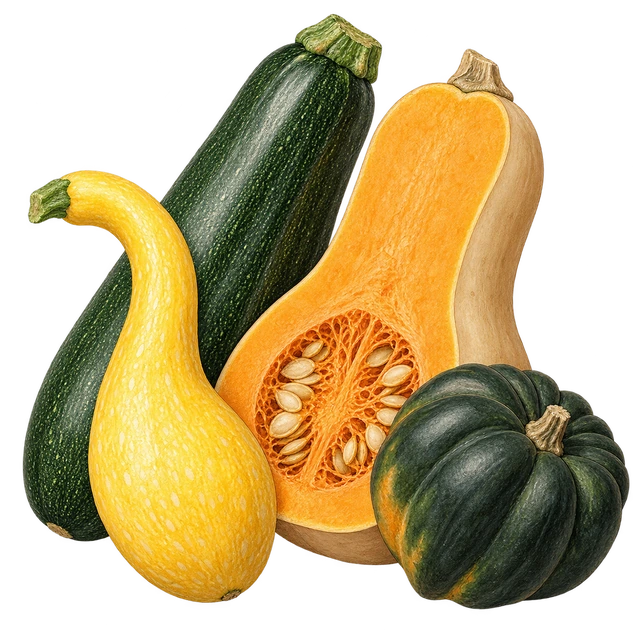
In the kitchen, summer squash is usually harvested immature and eaten with tender skin. Winter squash matures a harder rind and can keep longer. These overlapping food categories cut across species: zucchini and acorn are both Cucurbita pepo, while butternut is C. moschata and kabocha or Hubbard are C. maxima.
Traditional, historical and reported uses
- Tender summer squash in salads and cooked dishes
Food or household practiceWhy this label?
Describes ordinary preparation or culinary use; no clinical efficacy claim is made.
Young zucchini, yellow summer squash and pattypan can be eaten raw or cooked. Slices and pieces suit sautéing, steaming, grilling and vegetable medleys; tender skins and immature seeds are normally part of the food.
- Grated squash in baking
Food or household practiceWhy this label?
Describes ordinary preparation or culinary use; no clinical efficacy claim is made.
Grated zucchini is used in breads and other baked foods. Its use as an ingredient does not give a sweetened loaf the same composition as plain squash.
- Cooked winter-squash flesh
Food or household practiceWhy this label?
Describes ordinary preparation or culinary use; no clinical efficacy claim is made.
Mature edible winter-squash flesh is roasted or baked, then served as pieces or mashed. Different varieties offer different textures; spaghetti squash separates into strands after cooking.
- Winter-squash pie filling
Food or household practiceWhy this label?
Describes ordinary preparation or culinary use; no clinical efficacy claim is made.
Cooked, smooth winter-squash flesh can be used in pies. Illinois Extension notes that culinary use of the names pumpkin and squash overlaps; a pie is a prepared food with its own added ingredients.
- Edible squash blossoms
Food or household practiceWhy this label?
Describes ordinary preparation or culinary use; no clinical efficacy claim is made.
Blossoms of known edible squash plants have culinary uses alongside the fruit. University extension guidance describes using them in salads or squash dishes. Do not apply that guidance to unidentified flowers or ornamental gourds.
- Three Sisters food heritage
Traditional accountWhy this label?
Documents a named community’s food tradition, without a medical efficacy claim.
Squash is one of the Three Sisters with maize and beans. Smithsonian’s Haudenosaunee guide records these crops in the food tradition, including a stew combining them; traditions and recipes vary among communities.
Uses are culinary or specifically identified cultural practices. The number follows the evidence, not a fixed quota; no disease-treatment use is established.
Historical-use additions reviewed 2026-10-09
Story sources
- USDA National Agricultural Library: The Three Sisters of Indigenous American Agriculture
- Smithsonian National Museum of the American Indian: Haudenosaunee Guide for Educators
- University of Illinois Extension: Winter Squash
- University of Minnesota Extension: Harvesting and storing melons, squash and pumpkins
Regional reading paths
These sourced notes describe cultivation, trade, food traditions or material history. A regional connection does not claim exclusive origin.
North America
Domesticated/cultivated: Mexico and United States; Mandan, Hidatsa and Arikara gardens documented.
Young and mature fruits used in cooked foods.
Identity & detailed reference
Identity
Common cultivated edible summer and winter squashes. This card covers fruit flesh, tender edible skin and culinary blossoms from known food cultivars; it is not an identification guide for gourds or a blanket description of every Cucurbita species.
Ingredient details, preparation and research
Also known as: Summer squash; Winter squash; Zucchini; Courgette; Pattypan squash; Butternut squash; Acorn squash; Kabocha squash; Hubbard squash; Spaghetti squash
Source plant or material
Cucurbita pepo L.; Cucurbita maxima Duchesne; Cucurbita moschata Duchesne
Plant family / material: Cucurbitaceae
Forms and route
Fresh summer squash eaten raw or cooked; cooked winter-squash flesh, cubes or purée; blossoms prepared as food. Frozen or canned products should be matched to their particular squash and recipe.
Vitamins and minerals
Summer and winter squash cannot share one reliable nutrient value. Summer squash contributes fiber and potassium; winter-squash varieties supply differing amounts of carbohydrate, fiber, vitamin C and carotenoids. Orange-fleshed types may contribute provitamin A. Values for pumpkin seeds or seed oil do not describe the fruit flesh; no pooled copper serving is assigned.
Absorption and preparation
Beta-carotene can be converted to vitamin A, but absorption and conversion vary. Flesh color is not a measured absorbed dose. Whole squash and a concentrated carotenoid supplement are not nutritionally equivalent.
Practical preparation
Wash before cutting. Summer squash can keep its tender skin; remove tough winter rind and the mature seed cavity as appropriate. Cook winter flesh until tender. Refrigerate cut portions and cooked dishes promptly. Use tested preservation instructions rather than improvising sealed-jar purées.
Combination context
No special herbal pairing is required.
Combination notes
Use as an ordinary food in varied meals. Food combinations here are culinary, not therapeutic prescriptions.
Traditional and reported uses
- Tender summer squash in salads and cooked dishes
- Grated squash in baking
- Cooked winter-squash flesh
- Winter-squash pie filling
- Edible squash blossoms
- Three Sisters food heritage
Contraindications and cautions
- If normally mild squash tastes unexpectedly bitter, spit it out, stop eating and discard the squash or affected dish. Cucurbitacins can cause poisoning; cooking does not make bitter squash safe.
- Use known edible cultivars. Do not eat decorative gourds or unidentified volunteer plants, and do not taste an unknown plant to identify it. Appearance alone cannot establish edibility.
- Wash the outside before cutting, including winter squash whose rind will be removed. Refrigerate cut squash and prepared dishes promptly; discard rotten produce.
- Home preservation needs tested instructions. USDA/NCHFP guidance is for pressure-canned winter-squash cubes, not home-canned mash or purée.
- If illness follows suspect squash, contact a poison service or healthcare professional promptly, especially for significant vomiting, diarrhea or dehydration.
Similar items and how they compare
- Zucchini blossoms
Zucchini is one of the summer squashes covered here.
Card 182 focuses on the flower as a distinct culinary ingredient; fruit-flesh nutrient values do not describe blossoms.
- Pumpkin seeds (whole and pepitas)
Seeds and flesh may come from related cultivated Cucurbita crops.
Mature seeds are a separate, fat- and protein-containing food; seed nutrient values and seed-specific traditions do not describe squash flesh.
- Pumpkin seed oil
The oil is extracted from seeds of selected pumpkin/squash cultivars.
Oil is an extracted fat, not the whole fruit or whole seed, and does not inherit the flesh’s fiber or all of its nutrient claims.
- Sweet potato
Orange-fleshed winter squash and orange sweet potato have some similar kitchen uses.
Sweet potato is an Ipomoea storage root, not a Cucurbita fruit. Their nutrient servings are not interchangeable.
- Bitter melon
Another cultivated member of Cucurbitaceae.
Bitter melon is Momordica charantia, a distinct, naturally bitter food crop. Its name and normal bitterness do not make unexpectedly bitter Cucurbita squash safe.
Which squash does this card include?
Examples are zucchini, crookneck and pattypan as summer C. pepo; acorn, delicata and spaghetti as winter C. pepo; kabocha and Hubbard as C. maxima; and butternut as C. moschata. This is a practical selection of common food types, not an exhaustive list of cultivated squash species or all plants called gourds.
Unexpected bitterness is a food-safety warning
Excess cucurbitacins in normally mild squash can cause gastrointestinal poisoning. Heating does not reliably destroy these toxins. Do not disguise bitterness with seasoning or use suspect fruit as a purgative or antiparasitic remedy. Bitter melon is a different genus with its own food tradition; it is outside this card’s scope.
Seed saving and identification
Some crosses involving edible and ornamental squashes can produce bitter descendants if their seeds are saved and planted. Cross-pollination does not change the flesh of the fruit already growing that season. Keep ornamental gourds out of the food supply and use reliably identified food plants.
Nutrients depend on type and preparation
Winter-squash flesh can supply fiber, potassium and carotenoids; the proportions differ among varieties. Beta-carotene is a precursor rather than preformed vitamin A. This card does not assign one vitamin A, copper or calorie figure to zucchini, butternut and every other squash.
Preservation is preparation-specific
A cooked purée suitable for a meal is not automatically safe to seal in jars. Follow the complete USDA/NCHFP pressure-canning directions for winter-squash cubes; those directions explicitly exclude mashed or puréed squash.
Storage and clean preparation
Keep intact winter squash in suitable cool, dry storage; refrigerate cut pieces. Summer squash is a perishable fresh vegetable. Rinse produce under running water before cutting, use clean tools and remove hard rind as appropriate to the variety.
Evidence limits
Coverage is limited to common edible cultivars of C. pepo, C. maxima and C. moschata. Nutrients differ by variety, maturity, edible portion and recipe. No medical benefit or equivalence with seed preparations, bitter melon or unidentified gourds is established.
Entry sources
- University of Minnesota Extension: Harvesting and storing melons, squash and pumpkins
- University of Minnesota Extension: Growing summer squash and zucchini in home gardens
- University of Illinois Extension: Winter Squash
- University of Illinois Extension: Preparing Winter Squash
- University of Illinois Extension: Preparing Summer Squash and Zucchini
- University of Illinois Extension: Eat.Move.Save., Winter Squash
- NIH Office of Dietary Supplements: Vitamin A and Carotenoids, health-professional fact sheet
- USDA National Agricultural Library: The Three Sisters of Indigenous American Agriculture
- Smithsonian National Museum of the American Indian: Haudenosaunee Guide for Educators
- German Federal Centre for Nutrition: Do not eat bitter pumpkins and zucchini (German)
- New Zealand Ministry for Primary Industries: Natural toxins in vegetables and beans
- National Center for Home Food Preservation: Pumpkins and Winter Squash, Cubed
- University of Florida IFAS: Bitter Melon, an Asian Vegetable Expanding in Florida
- FDA: Selecting and Serving Produce Safely
- Kew Plants of the World Online: Ipomoea batatas
Reference entry 250 · Recorded content review: 2026-10-09 · Review scope and dates