


Key cautions
- Keep spinach refrigerated and follow ready-to-eat labels; otherwise rinse before preparing. Do not use recalled or spoiled leaves.
- If taking warfarin or another vitamin K antagonist, keep intake consistent and discuss major changes with the care team.
What’s inside
Folate, vitamin K, carotenoids, fibre and minerals, including iron and calcium; oxalate is also present. The contribution depends on food form and portion.
Uses in brief

- Salads and sandwiches
- Cooked vegetable ingredient
History, folklore and reported uses
History, folklore and traditional uses
DLR documented this crop in the controlled EDEN ISS greenhouse near Neumayer III during its Antarctic research programme. The greenhouse returned to Germany in 2023; this association is neither a native-range claim nor a record of an indigenous Antarctic food tradition.
Traditional, historical and reported uses
- Salads and sandwiches
Food or household practiceWhy this label?
The linked sources document this material-specific use; no treatment outcome or universal safety is inferred.
Utah State’s food guide records spinach as a salad or sandwich leaf. This applies to safely handled food-grade produce, not to every plant sold under the name spinach.
- Cooked vegetable ingredient
Food or household practiceWhy this label?
The linked sources document this material-specific use; no treatment outcome or universal safety is inferred.
The same guide describes spinach in soups, pasta and other dishes. Cooking reduces volume and changes the portion represented, while the full dish contributes additional ingredients.
2 supported material-specific uses; practices are not proof of treatment efficacy.
Historical-use additions reviewed 2026-10-09
Story sources
- DLR: The EDEN ISS greenhouse
- Utah State University Extension: Spinach in the garden
- Utah State University Extension: Spinach food guide
- FDA: Selecting and serving produce safely
- NIH ODS: Vitamin K health-professional fact sheet
- NIH ODS: Calcium, absorption and food sources
- DLR: EDEN ISS returned from Antarctica in 2023
- NIDDK: Kidney-stone diet depends on stone type
Regional reading paths
These sourced notes describe cultivation, trade, food traditions or material history. A regional connection does not claim exclusive origin.
Antarctica
Controlled Antarctic greenhouse research.
Cultivated food crop; not native Antarctic flora.
Identity & detailed reference
Identity
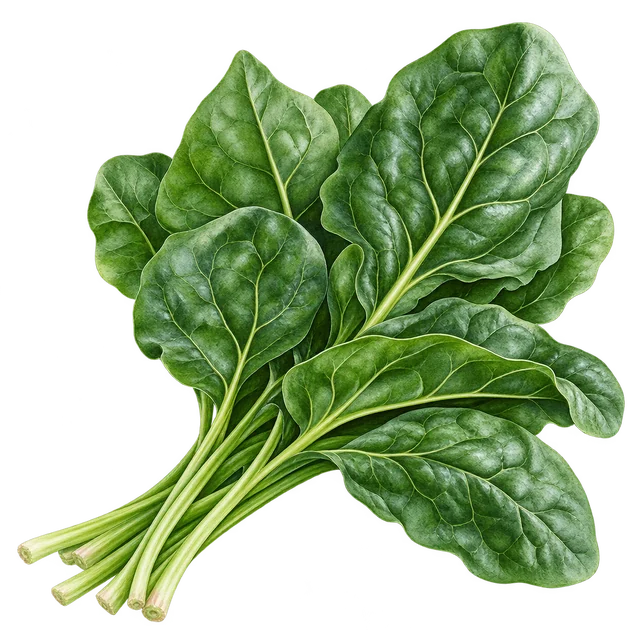
Spinach is the edible leaf crop Spinacia oleracea. New Zealand spinach, Malabar spinach and other plants sharing the common name are different species and need separate identities.
Ingredient details, preparation and research
Also known as: Spinacia oleracea; True spinach
Source plant or material
Spinacia oleracea
Plant family / material: Amaranthaceae
Forms and route
Fresh baby or mature leaves, frozen spinach and cooked or canned products. Powders, extracts and mixed dishes are not equivalent to a serving of whole leaves.
Vitamins and minerals
Raw leaves collapse substantially when cooked, so equal cup volumes are not equivalent portions. Fortified or mixed foods cannot be assigned plain-spinach composition unchanged.
Absorption and preparation
NIH notes that oxalate lowers absorption of spinach’s calcium. Therefore its measured calcium content should not be treated as equally available to calcium in every other food.
Practical preparation
Use sound food-grade leaves, clean utensils and label-specific washing directions. Add to salads when appropriate, or cook in a dish; refrigerate cooked leftovers promptly.
Combination notes
Use as part of an ordinary meal. No special combination eliminates its oxalate or permits abrupt changes in vitamin K intake during anticoagulant care.
Traditional and reported uses
- Salads and sandwiches
- Cooked vegetable ingredient
Contraindications and cautions
- Keep spinach refrigerated and follow ready-to-eat labels; otherwise rinse before preparing. Do not use recalled or spoiled leaves.
- If taking warfarin or another vitamin K antagonist, keep intake consistent and discuss major changes with the care team.
- Individual kidney-stone dietary advice may differ; a concentrated spinach regimen is not recommended by this food profile.
Similar items and how they compare
- Kale
Both are leafy vegetables.
Different botanical families and oxalate/calcium-availability profiles apply.
Bounded Antarctic research connection
DLR records spinach cultivation in EDEN ISS and the facility’s later return to Germany. The evidence establishes controlled experimental production, not Antarctic botanical origin or continuing operation of that installation.
Content and availability differ
The NIH calcium fact sheet explains why oxalate-rich spinach is not an interchangeable calcium source. Vitamin K also has a specific medication-related relevance that broad healthy-green slogans miss.
Evidence limits
No anaemia treatment, kidney-stone prevention or special greenhouse-grown nutrient claim is made. Extract studies and concentrated juice regimens are outside this ordinary-leaf food review.
Entry sources
- DLR: The EDEN ISS greenhouse
- Utah State University Extension: Spinach in the garden
- Utah State University Extension: Spinach food guide
- FDA: Selecting and serving produce safely
- NIH ODS: Vitamin K health-professional fact sheet
- NIH ODS: Calcium, absorption and food sources
- DLR: EDEN ISS returned from Antarctica in 2023
- NIDDK: Kidney-stone diet depends on stone type
Reference entry 518 · Recorded content review: 2026-10-09 · Review scope and dates