


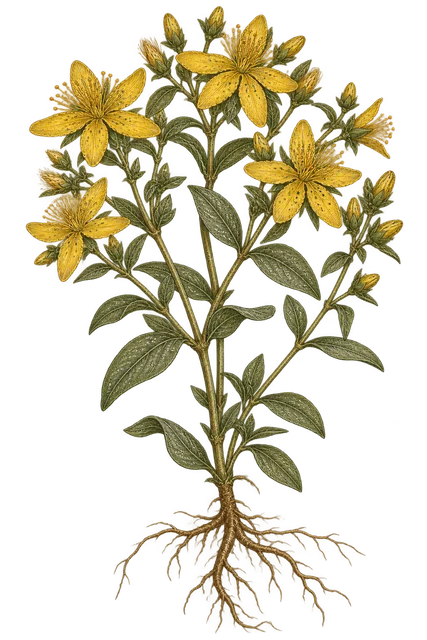
Key cautions
- Major interaction risk: can lower levels of essential medicines and hormonal contraceptives, including implants. Taking doses a few hours apart does not prevent these interactions.
- Combining St John’s wort with antidepressants or other medicines that increase serotonin can produce serious toxicity. Pregnancy and breastfeeding need avoidance/review; protect treated skin from strong UV exposure.
What’s inside
Hypericins such as hypericin/pseudohypericin, hyperforin and related phloroglucinols, flavonoids and procyanidins. The mixture depends on harvest, storage and extraction. Hyperforin-related enzyme/transporter induction is especially relevant to oral interactions.
EMA: Hypericum perforatum herb monograph, revision 1 (2023) · Moore et al. (2000): Hyperforin, pregnane X receptor and CYP3A4 in human hepatocytes · Dürr et al. (2000): Human St. John's wort induction of intestinal P-glycoprotein and CYP3A4
Uses in brief

- Human evidence: certain manufactured extracts for mild-to-moderate depressive episodes under appropriate care.
- Traditional: selected topical products for minor skin inflammation/wounds; some oral preparations for temporary mental exhaustion or mild digestive discomfort.
History, folklore and reported uses
Wounds and the red flower oil
Late-medieval herbals, including the Hortus Sanitatis, recommended St. John’s wort for bleeding and wounds. Steeping the blossoms in oil produced the characteristic red oil of European folk wound care. This infused flower oil is not the same material as flowering-herb tea or a standardized oral extract.
Low spirits and mental exhaustion
European herbal medicine used flowering-herb teas and extracts for low spirits and temporary mental exhaustion. EMA records the traditional exhaustion use separately from the modern, preparation-specific use of certain extracts for depressive episodes.
EMA: European Union herbal monograph on Hypericum perforatum, herba, revision 1 (2022)
Nervous restlessness and sleep
St. John’s wort herb tea also has a European traditional-use role for nervous restlessness with difficulty falling asleep.
EMA: European Union herbal monograph on Hypericum perforatum, herba, revision 1 (2022)
Digestive discomfort
European tradition includes St. John’s wort herbal tea for mild gastrointestinal discomfort. This internal digestive use is recorded by EMA alongside its better-known mood and external-skin uses.
EMA: European Union herbal monograph on Hypericum perforatum, herba, revision 1 (2022)
Midsummer protection
European flowering sprigs became midsummer amulets against witches and ill fortune. The Met connects the yellow summer flowers with the Christian feast of John the Baptist on June 24, and the reddish colour released by crushed buds with the saint’s blood. These seasonal links brought religious observance and household protection together; the symbolism is folklore, not a protective property established by the colour.
Identity & detailed reference
Identity
Hypericum perforatum L.; flowering aerial parts in Hypericaceae. Other ornamental Hypericum species are not substitutes.
Ingredient details, preparation and research
Source plant or material
Hypericum perforatum L.; flowering above-ground herb.
Plant family / material: Hypericaceae (St. John’s wort family).
Forms and route
Specified oral dry extracts, capsules/tablets, tea and tinctures; separately labeled infused oils, ointments or other topical preparations. An herb-infused carrier oil is not a distilled essential oil or an equivalent oral antidepressant extract.
Vitamins and minerals
The characteristic compounds are phytochemicals rather than vitamins. No dependable micronutrient serving was established for usual tea, tincture or extract use; a topical infused oil supplies no dietary nutrients.
Absorption and preparation
The important practical issue is altered handling of other medicines, not simply maximizing the herb’s absorption. Hyperforin content and route affect exposure, but unknown-strength tea or tincture cannot be assumed interaction-free. This increased enzyme and transporter activity can continue after the last dose; taking products a few hours apart does not prevent it.
Practical preparation
Oral use requires a review of medicines and the exact product; no generic dose or homemade mood-treatment recipe is provided. For skin use, choose a labeled topical preparation and follow its directions; do not ingest a product sold for skin or replace it with undiluted essential oil. Home-infused oil has no assured potency or microbial quality.
Combination notes
Avoid building a multi-herb mood/sleep blend around St. John’s wort without a pharmacist/prescriber review. Adding lemon balm or valerian does not remove its interaction risk. Calendula shares a traditional skin-care context, but combining oils has not been shown to improve efficacy and does not remove photosensitivity.
Traditional and reported uses
- Certain specified oral extracts have evidence for mild-to-moderate depression; effectiveness cannot be assumed for homemade tea, tincture or topical oil.
- EMA records traditional use of selected preparations for temporary mental exhaustion, mild gastrointestinal discomfort and nervous restlessness with difficulty falling asleep.
- Traditional topical use concerns minor skin inflammation and minor wounds. It does not establish treatment of deep wounds, infection, serious burns or depression through skin application.
Contraindications and cautions
- High-priority medicine review: oral preparations can increase the activity of drug-processing enzymes (CYP3A4, CYP2B6, CYP2C9 and CYP2C19) and the drug transporter P-glycoprotein, lowering the levels of many medicines in the body. Risks include transplant rejection, treatment failure and unintended pregnancy.
- Do not combine with antidepressants or other serotonin-raising medicines without prescriber direction. New agitation/confusion with fever, sweating, tremor or muscle rigidity needs urgent medical assessment.
- Hormonal pills and implants can fail. If already combined, contact a pharmacist/contraception service promptly; after potentially unprotected sex, seek same-day emergency-contraception advice and mention recent use even if stopped.
- Starting or stopping the herb can alter other medicine levels; obtain a plan and do not stop prescribed treatment yourself. Separating doses by a few hours is not adequate protection.
- Avoid medicinal use during pregnancy/breastfeeding without clinician direction. EMA does not recommend oral use under 18 or its traditional topical use under 12.
- Photosensitivity can occur with oral and topical products. Avoid intense UV exposure, stop for skin reactions, and seek clinical care for persistent depression or significant wounds.
Similar items and how they compare
- Lemon balm
Both occur in herbal traditions concerned with emotional wellbeing and are available in oral teas or extracts with variable composition.
St. John’s wort has major drug interactions; lemon balm mainly addresses mild stress/sleep traditions.
- Calendula
Both have traditional external use in skin and minor-wound care, including prepared ointments or oil-based herbal products.
Calendula uses flowers with triterpenes; St. John’s wort has distinct photosensitivity concerns.
Plant, parts and product identity
Hypericum perforatum L.; flowering aerial parts in Hypericaceae. Other ornamental Hypericum species are not substitutes. Flowering-herb extracts and herb-infused topical oils are different materials; the oil is neither the same as distilled essential oil nor evidence-backed oral depression treatment.
Traditional roles versus depression evidence
Historical use spans mood, digestive and skin complaints. EMA distinguishes defined oral extracts for depressive episodes from traditional-use preparations for temporary mental exhaustion, mild gastrointestinal symptoms, nervous restlessness and minor skin inflammation/wounds. A history of stomach-ulcer use is not a reason to self-treat ulcer symptoms.
What human depression trials show
A 375-person placebo-controlled study of WS 5570 reported benefit over six weeks in mild-to-moderate major depression. A separate 340-person US study of another extract did not show superiority to placebo on its primary outcomes; sertraline also failed the primary comparison. Alongside the broader evidence, this illustrates why product, patient group and trial design matter. Severe or persistent depression needs assessment; do not replace prescribed care with an unreviewed extract.
Constituents, laboratory and human interaction data
Hypericin-type pigments, hyperforin-type compounds and flavonoids form part of the mixture. In human hepatocytes, hyperforin activated the pregnane X receptor and increased CYP3A4 expression. A separate eight-volunteer study found intestinal transporter/enzyme induction and reduced digoxin exposure after repeated extract use. These are mechanistic and human interaction findings, not merely a theoretical warning.
Major medicines and stopping risk
Oral hyperforin-containing products can increase CYP3A4/2B6/2C9/2C19 and P-glycoprotein activity. Transplant medicines, anticoagulants, some HIV/cancer/epilepsy medicines and many others may be affected. Serotonin-related adverse effects are a separate interaction with serotonergic medicines. Arrange a pharmacist/prescriber plan before starting or stopping; the return of enzyme and transporter activity toward normal can also change medicine levels. Hours-apart dosing cannot reliably prevent this.
Contraceptive failure is time-sensitive
MHRA has reported unintended pregnancies with both pills and implants. Anyone already combining these with oral St. John’s wort needs prompt contraception advice. After potentially unprotected sex, seek same-day emergency-contraception advice and disclose current or recent use: enzyme inducers can also reduce oral emergency-contraceptive effectiveness, and guidance considers use in the preceding four weeks. Do not assume simply stopping the herb restores protection immediately.
When a reaction needs urgent care
Possible serotonin toxicity is more concerning than ordinary mild nausea: new agitation or confusion with fever, marked sweating, tremor, rigidity or rapid heartbeat after combining serotonergic products requires urgent medical assessment. Severe symptoms require emergency care. Keep product labels available for the treating clinician.
Topical oil, preparation and combinations
Oral use requires a review of medicines and the exact product; no generic dose or homemade mood-treatment recipe is provided. For skin use, choose a labeled topical preparation and follow its directions; do not ingest a product sold for skin or replace it with undiluted essential oil. Home-infused oil has no assured potency or microbial quality. Traditional minor-skin use does not establish sterile wound care. Protect treated areas from strong UV exposure. Combining with calendula or other infused oils has no established added benefit, while oral mood/sleep blends retain the herb’s interaction problem. The clinically demonstrated enzyme/transporter interactions concern oral exposure; limited topical use should not automatically be assigned the same systemic exposure, and topical safety still depends on the actual formulation and skin condition.
Pregnancy, children and realistic nutrition
Medicinal pregnancy and breastfeeding use is not recommended without clinical direction; potential fetal and infant adverse effects warrant caution. EMA distinguishes oral use, not recommended under 18, from traditional topical use, not recommended under 12. Characteristic plant compounds are not evidence of a useful vitamin/mineral serving; topical application provides no dietary serving.
Entry sources
- NCCIH: St. John's wort, usefulness and safety
- EMA: Hypericum perforatum herb monograph, revision 1 (2023)
- MHRA: St. John's wort and hormonal contraceptives, including implants
- MHRA: Emergency hormonal contraception and recent enzyme-inducer use
- Kew: Hypericum perforatum L., accepted name and Hypericaceae family
- Dürr et al. (2000): Human St. John's wort induction of intestinal P-glycoprotein and CYP3A4
- Moore et al. (2000): Hyperforin, pregnane X receptor and CYP3A4 in human hepatocytes
- Lecrubier et al. (2002): WS 5570 extract placebo-controlled depression trial
- Hypericum Depression Trial Study Group (2002): 340-person placebo/sertraline/extract depression trial
- MedlinePlus: Serotonin syndrome
- FDA: Microbiological safety and cosmetics
Reference entry 16 · Recorded content review: 2026-10-05 · Review scope and dates