


Key cautions
- Use blossoms from an identified edible zucchini crop, never unidentified ornamental gourds.
- Avoid pesticide-treated floral stock; refrigerate and use promptly. Clean flowers before filling or cooking.
What’s inside
Flower analyses report carotenoids and polyphenols, including rutin; amounts depend on cultivar and whether results use fresh or dry weight.
Uses in brief

- Prepared blossoms are a delicate vegetable ingredient.
History, folklore and reported uses
History, folklore and traditional uses
The University of Alaska Fairbanks’ Zucchini from A to Z makes room for the blossom before the familiar glut of fruit. Both flower sexes are food, but harvesting choices affect the later crop. This is a useful garden-to-kitchen story: a surplus male blossom may become an ingredient while enough pollen-bearing flowers remain for zucchini production.
Traditional, historical and reported uses
- Stuffed blossoms
Food or household practiceWhy this label?
The claim documents stuffed blossoms as a culinary, craft, gardening, or practical material use; it reports neither a treatment outcome nor measured nutrient content.
University of Minnesota Extension records squash flowers stuffed with cheese.
- Fried blossoms
Food or household practiceWhy this label?
The claim documents fried blossoms as a culinary, craft, gardening, or practical material use; it reports neither a treatment outcome nor measured nutrient content.
The same Extension guide records frying prepared squash blossoms.
Only specifically supported uses are included; historical or culinary use is not clinical proof.
Identity & detailed reference
Identity
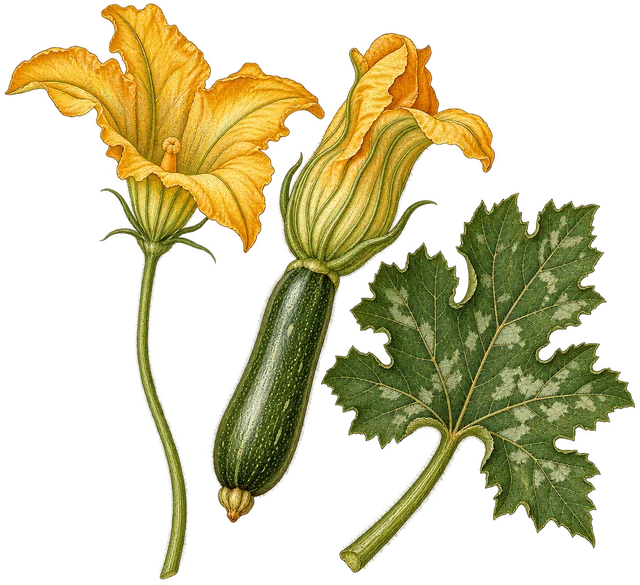
Zucchini blossoms are the flowers of food-grown Cucurbita pepo zucchini cultivars; male and female flowers are both used.
Ingredient details, preparation and research
Source plant or material
Cucurbita pepo L., zucchini cultivars; Zucchini blossoms are the flowers of food-grown Cucurbita pepo zucchini cultivars; male and female flowers are both used.
Plant family / material: Cucurbitaceae
Forms and route
Fresh blossoms for immediate food use; cooked, stuffed or fried flowers. These are not dried medicinal flowers.
Vitamins and minerals
A blossom is a small food portion. Laboratory dry-weight pigment measurements should not be presented as the nutrients delivered by a plate of stuffed flowers; filling and cooking oil also matter.
Absorption and preparation
No medicinal absorption regimen is justified. A study of a topical flower extract is not evidence that eating blossoms provides the same skin effects.
Practical preparation
Remove stamens or pistils and inspect for insects before use. If harvesting your own food crop, leave enough male flowers for pollination; picking female flowers sacrifices those developing fruits.
Traditional and reported uses
- Prepared blossoms are a delicate vegetable ingredient.
Contraindications and cautions
- Use blossoms from an identified edible zucchini crop, never unidentified ornamental gourds.
- Avoid pesticide-treated floral stock; refrigerate and use promptly. Clean flowers before filling or cooking.
Similar items and how they compare
- Zucchini fruit
Another food from the same crop.
The blossom has different texture, serving size and composition.
- Nasturtium flowers
Another food-grown flower.
Nasturtiums are peppery; squash flowers can carry a cooked filling.
Fresh handling and harvest
Alaska Extension describes blossoms as perishable food and distinguishes male from female flowers. This card is specifically for zucchini cultivars, rather than every cucurbit.
Constituent research has limits
The 2024 composition study analyzed C. pepo flowers and also investigated a topical extract. Neither dry-weight chemistry nor topical outcomes establish a clinical benefit from a meal.
Entry sources
- University of Alaska Fairbanks Extension: Zucchini from A to Z
- Chemical profile and promising applications of Cucurbita pepo L. flowers (2024)
- University of Minnesota Extension: Edible flowers
Reference entry 182 · Recorded content review: 2026-10-07 · Review scope and dates