


Key cautions
- Discard green, sprouting, shriveled, rotten, badly bruised or bitter tubers. Purple coloration is not a safety test; cooking cannot reliably make high-glycoalkaloid potatoes safe.
- Do not eat potato leaves, stems, sprouts, flowers or berries. Sweet-potato foliage belongs to a different plant and is not a guide to potato safety.
- Eat skins only on fresh, sound tubers. Remove eyes from otherwise sound potatoes; do not save suspect tubers for their pigments or nutrients.
What’s inside
Starch, fiber, potassium and vitamin C; purple anthocyanin pigments and other phenolics, including chlorogenic acids. Amounts vary with cultivar and preparation.
Uses in brief

- Cooked staple and colorful side dishes
- Cooked potato salads
History, folklore and reported uses
History, folklore and traditional uses
Cultivated potatoes have an Andean food history, with Indigenous cultivation preceding their spread around the world. Purple-fleshed potatoes belong within that diverse crop history rather than constituting a separate botanical species.
Modern breeding also contributes to that diversity. USDA’s account of Purple Pelisse/Purple Fiesta describes work by the Northwest potato-breeding partnership. A modern cultivar should not be presented as the unchanged potato of every Andean community.
Traditional, historical and reported uses
- Cooked staple and colorful side dishes
Food or household practiceWhy this label?
Describes ordinary preparation or culinary use; no clinical efficacy claim is made.
Sound purple-fleshed potatoes can be baked, roasted, steamed or mashed. USDA describes Purple Pelisse/Purple Fiesta as suitable for these preparations; this is a culinary use, not a therapeutic dose.
- Cooked potato salads
Food or household practiceWhy this label?
Describes ordinary preparation or culinary use; no clinical efficacy claim is made.
Cooked and cooled purple potatoes provide color and texture in salads. A Washington State University Extension recipe combines them with tomato, cucumber and a vinaigrette; the recipe illustrates a food use rather than a special medicinal combination.
Uses are culinary or specifically identified cultural practices. The number follows the evidence, not a fixed quota; no disease-treatment use is established.
Historical-use additions reviewed 2026-10-09
Identity & detailed reference
Identity
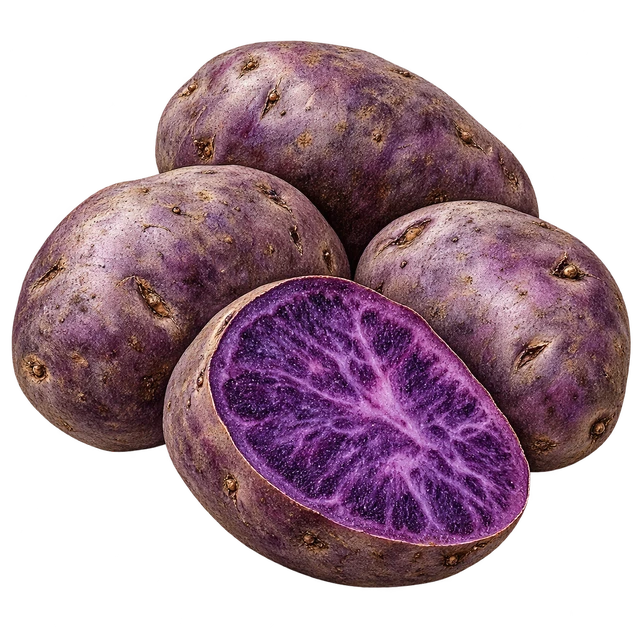
Purple-fleshed cultivars of the cultivated potato, whose edible part is a stem tuber. This card does not mean purple sweet potato or ube; purple skin alone does not establish purple flesh.
Ingredient details, preparation and research
Also known as: Purple-fleshed potato; Blue-fleshed potato; Purple Pelisse potato; Purple Fiesta potato
Source plant or material
Solanum tuberosum L. (purple-fleshed cultivars)
Plant family / material: Solanaceae
Forms and route
Whole cooked tubers, wedges, mash and cooked potato salads. Examples include Purple Pelisse, also marketed as Purple Fiesta; cultivar and recipe affect texture and color.
Vitamins and minerals
Purple potatoes are starchy foods that also contribute fiber, potassium and vitamin C. The actual amounts depend on the cultivar, serving and cooking method. No purple-cultivar copper value has been verified for this card; the ordinary Potato card’s unspecified-cultivar figure is not copied here. Purple color does not establish a higher copper content.
Absorption and preparation
Cooking changes extractable phenolics and may cause pigment loss into water. Laboratory antioxidant activity is not a measure of how much a person absorbs or proof that eating purple potatoes prevents disease.
Practical preparation
Store cool, dark and dry. Inspect and scrub before cooking; remove eyes from otherwise sound tubers. Cook until tender and discard the cooking water. Do not eat a dish that tastes bitter or causes burning; refrigerate leftovers promptly.
Combination context
No special herbal pairing is required.
Combination notes
Use as an ordinary food in varied meals. Food combinations here are culinary, not therapeutic prescriptions.
Traditional and reported uses
- Cooked staple and colorful side dishes
- Cooked potato salads
Contraindications and cautions
- Discard green, sprouting, shriveled, rotten, badly bruised or bitter tubers. Purple coloration is not a safety test; cooking cannot reliably make high-glycoalkaloid potatoes safe.
- Do not eat potato leaves, stems, sprouts, flowers or berries. Sweet-potato foliage belongs to a different plant and is not a guide to potato safety.
- Eat skins only on fresh, sound tubers. Remove eyes from otherwise sound potatoes; do not save suspect tubers for their pigments or nutrients.
- Refrigerate cooked potatoes and potato salads promptly; wash produce and use clean utensils.
Similar items and how they compare
- Potato
The same cultivated species supplies both foods.
This card focuses on purple-fleshed cultivars; card 244 covers potato generally. Its reference nutrient serving does not define every purple cultivar.
- Sweet potato
Both can have purple-fleshed edible underground organs.
Sweet potato is Ipomoea batatas in Convolvulaceae, a storage root; this card concerns Solanum stem tubers.
- Ube (purple yam)
A purple food commonly confused with purple potatoes.
Ube is Dioscorea alata in Dioscoreaceae. A color resemblance does not make it a potato or give it the same composition.
Identity: flesh color and three different crops
Purple potato here means purple-fleshed Solanum tuberosum. Purple sweet potato is Ipomoea batatas; ube is Dioscorea alata. Their nutrient figures and preparation advice are not interchangeable.
What cooking research actually shows
Sun and colleagues studied Purple Pelisse using chemical tests and extracts applied to Caco-2 cells. Cooking methods affected extractable polyphenols and laboratory activity. This does not establish disease prevention, a treatment, or a human dose; results from one cultivar need not describe all purple potatoes.
Pigmentation does not remove glycoalkaloid risk
Colored skins can make greening harder to judge; CFIA explicitly warns of camouflage in red-skinned and russet potatoes. For purple potatoes, the practical precaution is likewise not to rely on color alone. Sprouting, damage, deterioration or bitterness are reasons to reject suspect food. Cooking is not a reliable detoxification step.
Nutrition stays tied to the actual food
Anthocyanin profiles vary by cultivar, and preparation changes the food. A purple tuber’s appearance does not measure copper, vitamin C, absorbed antioxidants or overall diet quality. Whole potatoes, chips and isolated pigment extracts are different products.
Handling sound tubers
Store potatoes cool, dark and dry. Scrub before preparation, remove eyes from sound potatoes and cook until tender. Discard potato cooking water; keep fresh-produce hygiene separate from the question of natural toxins.
Evidence limits
This is a food overview of purple-fleshed cultivated potatoes, not all foods marketed as purple potatoes. Composition varies by cultivar, growing conditions, peeling and cooking. No cultivar-specific copper number or medical effect is assigned.
Entry sources
- Kew Plants of the World Online: Solanum tuberosum
- Kew: Taking root, potato season at Kew’s Kitchen Garden
- USDA ARS: Delicious, Nutritious, and a Colorful Dish for the Holidays
- USDA Agricultural Research, November–December 2014: Colored-flesh potatoes, pages 14–15
- Sun et al. (2021): Effect of Cooking Methods on Bioactivity of Polyphenols in Purple Potatoes
- German Federal Institute for Risk Assessment: Green and strongly germinating potatoes
- Canadian Food Inspection Agency: Natural toxins in fresh fruit and vegetables
- Health Canada: Glycoalkaloids in Foods
- Washington State University Extension: Farm to Heart Recipe Book, Colorful Potato Salad, page 44
- Kew Plants of the World Online: Ipomoea batatas
- University of Florida IFAS: Dioscorea alata, ube or purple yam
- FDA: Selecting and Serving Produce Safely
Reference entry 249 · Recorded content review: 2026-10-09 · Review scope and dates