


Key cautions
- Avocado allergy can occur; people with latex allergy have a higher risk of reacting to avocado. Seek individualized allergy advice if you have reacted.
- Wash the whole fruit before cutting so surface contamination is not carried into the flesh.
- Remove the pit and peel; this card does not establish the safety of homemade seed powders or leaf preparations.
What’s inside
Mostly unsaturated fat, fiber, folate, potassium and other nutrients, including copper. Whole flesh contains a food matrix absent from extracted oil.
Uses in brief

- Culinary flesh: savory and sweet foods
- Historical fertility-food association
Copper food reference
Copper in this food
Approximate reference values for the exact form and portion shown. The label Daily Value (DV) is 0.9 mg for adults and children age 4+, not an individual intake prescription. Portions differ, so this is not a per-gram ranking.
Avocado
Raw flesh · ½ cup
0.219 mg copper · 24% DV
Avocado fruit flesh; avocado oil is a different edible form with different composition.
Compare copper food sources and read the mineral cautions
Food composition does not establish a deficiency or predict a treatment effect. Oils and extracts do not inherit these food values.
History, folklore and reported uses
History, folklore and traditional uses
Avocado belongs to the laurel family and comes from Mexico and Central America. Its long food history predates its modern popularity as a toast topping.
The useful kitchen distinction is the edible flesh: it can stay in slices or become a smooth mash. Pressing it into oil produces a different food and removes the basis for copying whole-fruit nutrient claims.
Traditional, historical and reported uses
- Culinary flesh: savory and sweet foods
Food or household practiceWhy this label?
The claim documents culinary flesh: savory and sweet foods as a culinary, craft, gardening, or practical material use; it reports neither a treatment outcome nor measured nutrient content.
Mashed avocado flesh is the base of guacamole; seasonings and additions vary. Avocado flesh is used on toast and in salsas, or added to soups and other savory dishes. Blended flesh can lend creaminess to desserts; Illinois Extension demonstrates an avocado-cocoa mousse.
- Historical fertility-food association
Traditional accountWhy this label?
The claim is an attributed cultural fertility belief linked to shape and naming, without evidence of a reproductive effect.
Kew records a fertility-food association linked to the fruit’s shape and its Nahuatl name. This is a documented cultural belief, not evidence that avocado improves fertility.
Culinary, material and historical uses are distinguished from medical claims. The number of uses reflects the reviewed evidence, not a fixed quota.
Historical-use additions reviewed 2026-10-08
Story sources
- Kew POWO: Persea americana
- University of Illinois Extension: Hidden Inside, An Avocado
- University of Illinois Extension: Basic Guacamole
- NIH ODS: Copper, health-professional fact sheet, food table
- AAAAI: Latex Allergy, including avocado cross-reactivity
- FDA: Selecting and Serving Produce Safely
- FDA: Safe Food Handling
Regional reading paths
These sourced notes describe cultivation, trade, food traditions or material history. A regional connection does not claim exclusive origin.
North America
Domesticated/cultivated: Mexico and Central America.
Ripe edible pulp used fresh in foods.
Identity & detailed reference
Identity
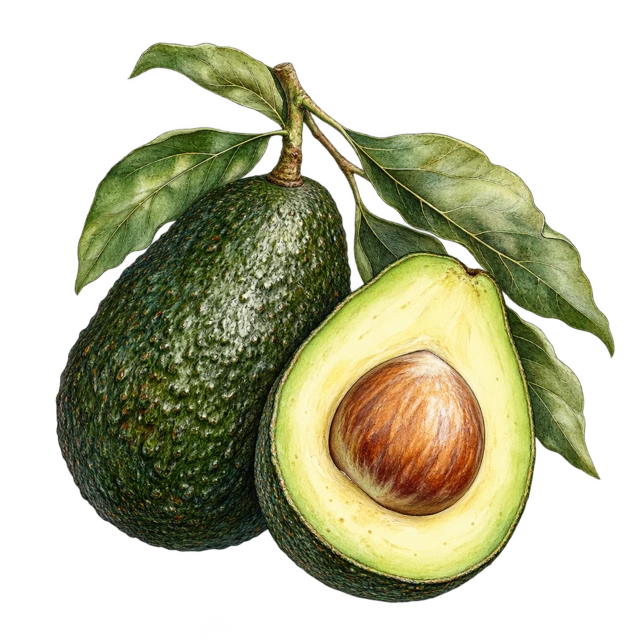
The edible fruit flesh of avocado, excluding peel and pit. Extracted avocado oil is a separate material with its own existing card.
Ingredient details, preparation and research
Also known as: Avocado; Aguacate; Palta; Alligator pear
Source plant or material
Persea americana Mill.
Plant family / material: Lauraceae
Forms and route
Fresh flesh, slices or mash; guacamole and other mixed foods. Avocado oil and seed powders are not equivalent forms of the flesh.
Vitamins and minerals
The copper comparison uses raw fruit flesh, not avocado oil. Whole flesh also supplies fiber, mostly unsaturated fat, folate and potassium; the size of a whole or half fruit varies.
Absorption and preparation
This card describes whole-flesh nutrition. A benefit studied with one portion or preparation cannot automatically be assigned to isolated avocado oil.
Practical preparation
Allow firm fruit to ripen; wash under running water before cutting, use clean utensils and remove the pit safely. Refrigerate cut flesh within two hours, or one hour when the temperature exceeds 90°F (32°C).
Combination context
No special herbal pairing is required.
Combination notes
Use in an ordinary mixed diet; the food’s mineral content does not establish a medicinal combination or treatment.
Traditional and reported uses
- Culinary flesh: savory and sweet foods
- Historical fertility-food association
Contraindications and cautions
- Avocado allergy can occur; people with latex allergy have a higher risk of reacting to avocado. Seek individualized allergy advice if you have reacted.
- Wash the whole fruit before cutting so surface contamination is not carried into the flesh.
- Remove the pit and peel; this card does not establish the safety of homemade seed powders or leaf preparations.
- Refrigerate cut fruit and guacamole promptly. Lime juice can slow browning but does not make a dish shelf-stable.
Similar items and how they compare
- Avocado oil
Oil and flesh come from Persea americana fruit.
Oil is extracted fat; the flesh’s copper, fiber and serving values do not describe the oil.
Browning and preservation
Lemon or lime can reduce oxidation-related browning. That quality effect is not permission to leave cut fruit unrefrigerated.
Allergy is individual
Latex and avocado can share cross-reactive proteins. Latex allergy raises risk, but does not establish that every latex-allergic person must avoid a tolerated fruit.
Fresh-produce handling
Wash before cutting even when the peel will be discarded. Keep cut fruit cold; washing lowers contamination but does not sterilize food.
Evidence limits
Food composition varies by variety, preparation and product. A reference serving is a comparison, not a therapeutic dose.
Entry sources
- Kew POWO: Persea americana
- University of Illinois Extension: Hidden Inside, An Avocado
- University of Illinois Extension: Basic Guacamole
- NIH ODS: Copper, health-professional fact sheet, food table
- AAAAI: Latex Allergy, including avocado cross-reactivity
- FDA: Selecting and Serving Produce Safely
- FDA: Safe Food Handling
Reference entry 245 · Recorded content review: 2026-10-08 · Review scope and dates