


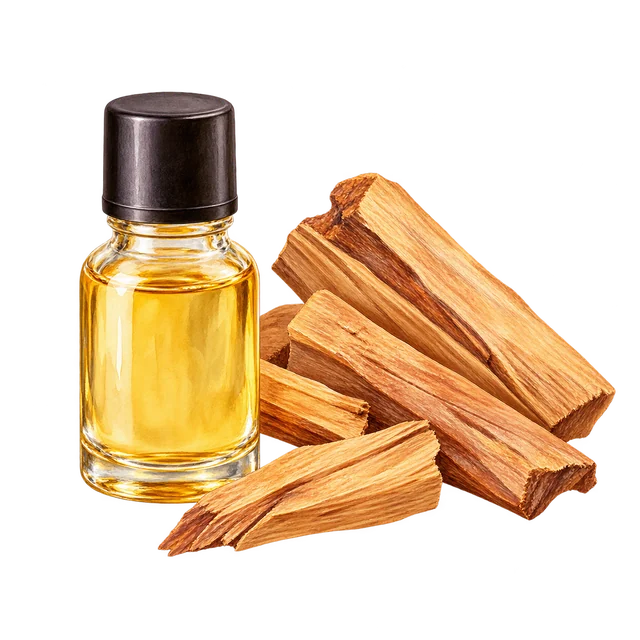
Key cautions
- Do not ingest or improvise medical treatment with this concentrated fragrance.
- Avoid eye and mucosal contact; stop a formulated product if irritation occurs.
What’s inside
Sandalwood oil contains volatile sesquiterpene constituents, including santalols. Species, feedstock and processing affect the profile; no generic purity or percentage is assigned.
Uses in brief

- Perfumery
- Soaps and cosmetics
History, folklore and reported uses
History, folklore and traditional uses
Western Australian sandalwood has a long export history. DBCA describes pressures on wild populations and the importance of partnering with Traditional Owners in management; legal supply and ecological provenance are part of product quality.
Traditional, historical and reported uses
- Perfumery
Food or household practiceWhy this label?
Sources document this named food or material use; no therapeutic outcome is claimed.
The Forest Products Commission records heartwood oils in perfumes. This is a fragrance-manufacturing use, not an indication to apply raw distillate to skin.
- Soaps and cosmetics
Food or household practiceWhy this label?
Sources document this named food or material use; no therapeutic outcome is claimed.
The same source records formulated soaps and cosmetic products. The finished product must be assessed on its own ingredients and intended use.
2 narrowly supported uses; no clinical efficacy or universal preparation is inferred.
Historical-use additions reviewed 2026-10-09
Regional reading paths
These sourced notes describe cultivation, trade, food traditions or material history. A regional connection does not claim exclusive origin.
Australia & Oceania
native and cultivated; Western Australia
Perfumery and cosmetic fragrance.
Identity & detailed reference
Identity
Santalum spicatum heartwood essential oil; Australian sandalwood, distinct from Indian sandalwood wood, seed oil and synthetic sandalwood fragrances.
Ingredient details, preparation and research
Source plant or material
Santalum spicatum heartwood essential oil; Australian sandalwood, distinct from Indian sandalwood wood, seed oil and synthetic sandalwood fragrances.
Plant family / material: Santalaceae
Forms and route
Commercially distilled aromatic oil and finished fragrance/cosmetic formulations.
Vitamins and minerals
This fragrance material is not a dietary source of vitamins or minerals. Its plant origin does not make it a culinary oil.
Absorption and preparation
Skin exposure depends on the finished formulation. A pleasant scent or chemical constituent does not establish useful systemic absorption or a medical benefit.
Practical preparation
Use only finished products intended for their labeled route. This card does not provide a dilution, ingestion, inhalation-treatment or home-distillation recipe. Check identity and sourcing documentation.
Traditional and reported uses
- The Forest Products Commission records heartwood oils in perfumes. This is a fragrance-manufacturing use, not an indication to apply raw distillate to skin.
- The same source records formulated soaps and cosmetic products. The finished product must be assessed on its own ingredients and intended use.
Contraindications and cautions
- Do not ingest or improvise medical treatment with this concentrated fragrance.
- Avoid eye and mucosal contact; stop a formulated product if irritation occurs.
Wood is not oil
Government reporting treats distilled oil separately from traded wood and incense material. Existing source-wood content cannot automatically supply directions or safety claims for the concentrated oil.
Responsible source selection
DBCA documents habitat change and other pressures on wild sandalwood. Prefer traceable legal material, and do not assume a botanical ingredient is sustainable merely because it is natural.
Evidence limits
This is a food/material reference, not evidence of disease treatment. Geographic and customary-use records do not establish a medicinal dose. Nutrient quantities are omitted unless a matching food form and serving have been verified.
Entry sources
- Western Australia Forest Products Commission: Sandalwood establishment guide
- Western Australia DBCA: Sandalwood management
- DAFF: Non-wood forest products, essential oils
Reference entry 491 · Recorded content review: 2026-10-09 · Review scope and dates