


Key cautions
- Postpartum haemorrhage needs urgent clinical care. Do not use leaves to prevent or treat it in place of care.
- Pregnancy and breastfeeding safety of this medicinal leaf preparation is unestablished.
What’s inside
A reliable composition profile for the exact preparation was not established in this review; chemistry from another plant part is not transferred.
Uses in brief

- Postpartum-bleeding history (traditional account).
History, folklore and reported uses
History, folklore and traditional uses
The Najjembe study preserves local accounts of maternal care. It is important to retain the named plant part rather than attach the story to a familiar avocado fruit card.
Traditional, historical and reported uses
- Postpartum-bleeding history
Traditional accountWhy this label?
The source is retained with its design and preparation limits; reported use is not upgraded to clinical effectiveness.
Interviewees reported avocado leaves for postpartum bleeding. Reporting a use does not show that it stops bleeding or prevents complications.
Includes only uses and context documented for this material. Historical reporting is not proof of benefit; no use-count quota is applied.
Story sources
Women’s Health: traditions, evidence and cautions
Historical use does not establish benefit or safety. Pregnancy, breastfeeding and fertility care require particular caution: food, tea, essential oil and concentrated extract are not interchangeable. These records are not treatment, dosing or pregnancy-management instructions. Discuss supplements with a qualified clinician or pharmacist; do not delay evaluation of persistent symptoms.
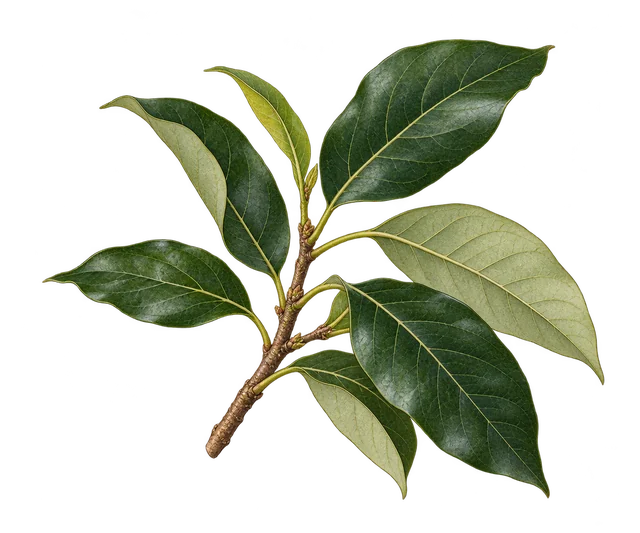
Avocado leaf
Persea americana Mill.
- Plant part / material
- Leaves
- Preparation studied or reported
- Historical medicinal leaf decoction in the Ugandan survey. This is not a culinary seasoning specification, avocado flesh or avocado fruit oil.
This card covers Persea americana leaves recorded in Najjembe, Uganda, with voucher AN107. The study does not identify a culinary cultivar or establish equivalence to any leaf food sold elsewhere.
Postpartum-bleeding history
Traditional account
Reported or traditional useInterviewees reported avocado leaves for postpartum bleeding. Reporting a use does not show that it stops bleeding or prevents complications.
What the evidence supportsThe source is retained with its design and preparation limits; reported use is not upgraded to clinical effectiveness.
Postpartum haemorrhage needs urgent clinical care. Do not use leaves to prevent or treat it in place of care. Pregnancy and breastfeeding safety of this medicinal leaf preparation is unestablished. Do not assume edible avocado flesh or oil makes its leaves safe to ingest medicinally.
Only the exact part and formulation described here; related existing cards do not inherit these claims.
- Postpartum haemorrhage needs urgent clinical care. Do not use leaves to prevent or treat it in place of care.
- Pregnancy and breastfeeding safety of this medicinal leaf preparation is unestablished.
- Do not assume edible avocado flesh or oil makes its leaves safe to ingest medicinally.
- 2024 Najjembe maternal ethnomedicine survey
- WHO 2025: Consolidated guidelines for postpartum haemorrhage
- Kew Plants of the World Online: Persea americana
Read the complete historical reference and its material distinctions
Identity & detailed reference
Identity
This card covers Persea americana leaves recorded in Najjembe, Uganda, with voucher AN107. The study does not identify a culinary cultivar or establish equivalence to any leaf food sold elsewhere.
Ingredient details, preparation and research
Also known as: ovakedo leaf
Source plant or material
Persea americana Mill.; Leaves
Plant family / material: Lauraceae
Forms and route
Historical medicinal leaf decoction in the Ugandan survey. This is not a culinary seasoning specification, avocado flesh or avocado fruit oil.
Absorption and preparation
No absorption-enhancement directions are established for this material. An extract, food, infusion and isolated chemical can deliver different substances; study results do not establish a home preparation.
Traditional and reported uses
- Postpartum-bleeding history: Interviewees reported avocado leaves for postpartum bleeding. Reporting a use does not show that it stops bleeding or prevents complications.
Contraindications and cautions
- Postpartum haemorrhage needs urgent clinical care. Do not use leaves to prevent or treat it in place of care.
- Pregnancy and breastfeeding safety of this medicinal leaf preparation is unestablished.
- Do not assume edible avocado flesh or oil makes its leaves safe to ingest medicinally.
Similar items and how they compare
- Avocado flesh and fruit oil
The edible materials come from the same tree.
They are different plant parts and must not inherit this historical obstetric claim.
Identity and exact material
This card covers Persea americana leaves recorded in Najjembe, Uganda, with voucher AN107. The study does not identify a culinary cultivar or establish equivalence to any leaf food sold elsewhere. Historical medicinal leaf decoction in the Ugandan survey. This is not a culinary seasoning specification, avocado flesh or avocado fruit oil.
Evidence and preparation boundaries
An interview study can establish what respondents said they used. It cannot determine clinical effectiveness, a safe preparation, contamination levels, infant exposure through milk or medicine interactions. Clinical postpartum-bleeding care should not be replaced by a leaf remedy. The exact cultivar and chemical profile were not established, so evidence from a food avocado cannot fill these gaps.
Safety and uncertainty
Postpartum haemorrhage needs urgent clinical care. Do not use leaves to prevent or treat it in place of care. Pregnancy and breastfeeding safety of this medicinal leaf preparation is unestablished. Do not assume edible avocado flesh or oil makes its leaves safe to ingest medicinally.
Evidence limits
- This is a focused source review, not a systematic clinical review. A traditional indication or laboratory result does not establish an effective or safe treatment.
- A lack of reported adverse effects is not proof of safety. No therapeutic dose or preparation is recommended.
Entry sources
- 2024 Najjembe maternal ethnomedicine survey
- WHO 2025: Consolidated guidelines for postpartum haemorrhage
- Kew Plants of the World Online: Persea americana
Reference entry 550 · Recorded content review: 2026-10-11 · Review scope and dates