


Key cautions
- Cook dried chickpeas before eating; canned chickpeas are already cooked. This food card is not a raw-sprout recommendation.
- Chickpea allergy is possible; hummus may also contain sesame and other allergens.
- Refrigerate cooked or opened canned leftovers promptly. Check sodium on canned and prepared products.
What’s inside
Starch, plant protein, fiber, folate and minerals. Cooked chickpeas contain copper and iron; canned sodium depends on the product.
Uses in brief

- Whole and split chickpeas in food
- Chickpea flour foods
Copper food reference
Copper in this food
Approximate reference values for the exact form and portion shown. The label Daily Value (DV) is 0.9 mg for adults and children age 4+, not an individual intake prescription. Portions differ, so this is not a per-gram ranking.
Chickpeas
Boiled, no added salt · ½ cup (82 g)
0.289 mg copper · 32% DV
Compare copper food sources and read the mineral cautions
Food composition does not establish a deficiency or predict a treatment effect. Oils and extracts do not inherit these food values.
History, folklore and reported uses
History, folklore and traditional uses
Kew describes archaeological chickpea remains from Syria and Türkiye dating to about 7000 BCE. The crop later spread widely, developing different culinary roles rather than one universal preparation.
Large, pale kabuli chickpeas often remain whole, while smaller desi types also become split pulses or flour. The shared species does not make the cooked seed, flour and a mixed dip nutritionally identical.
Traditional, historical and reported uses
- Whole and split chickpeas in food
Food or household practiceWhy this label?
The claim documents whole and split chickpeas in food as a culinary, craft, gardening, or practical material use; it reports neither a treatment outcome nor measured nutrient content.
Cooked chickpeas are mashed into hummus. Traditional tahini-containing versions also contain sesame; other versions differ. Cooked chickpeas hold their shape in soups and composed salads. Cooked chickpeas can become a roasted snack or crunchy topping. Split, dehulled chickpeas are used in dhal preparations.
- Chickpea flour foods
Food or household practiceWhy this label?
The claim documents chickpea flour foods as a culinary, craft, gardening, or practical material use; it reports neither a treatment outcome nor measured nutrient content.
Besan is used in cooked breads, batters and snacks, including pakoras and bhajis.
Culinary, material and historical uses are distinguished from medical claims. The number of uses reflects the reviewed evidence, not a fixed quota.
Historical-use additions reviewed 2026-10-08
Story sources
Regional reading paths
These sourced notes describe cultivation, trade, food traditions or material history. A regional connection does not claim exclusive origin.
Asia
Cultivated/traditional processing: India and West Asia.
Cooked pulses and flour in savoury foods and breads.
Identity & detailed reference
Identity
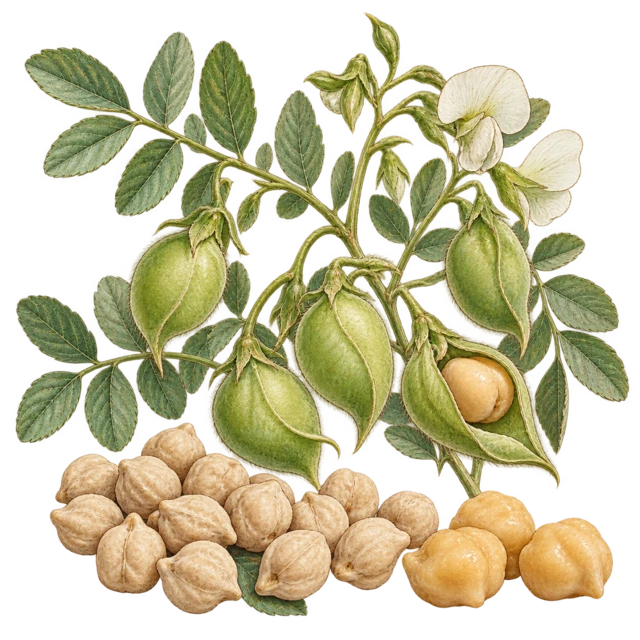
The edible seeds of chickpea, also called garbanzo bean. Kabuli and desi are cultivar groups of the same crop, not common kidney beans.
Ingredient details, preparation and research
Also known as: Garbanzo bean; Bengal gram; Chana; Chickpeas; Garbanzo beans; Garbanzos; Chick peas
Source plant or material
Cicer arietinum L.
Plant family / material: Fabaceae
Forms and route
Dried seeds cooked before eating; cooked canned chickpeas; split chickpeas and chickpea flour used in cooked foods.
Vitamins and minerals
Boiled without salt, ½ cup (82 g) provides about 7.3 g protein and 6.2 g fiber, alongside copper. Dry flour, hummus and canned products have different serving profiles.
Absorption and preparation
The copper comparison is total content in cooked seeds. No special herb or supplement is necessary to make chickpeas a useful food.
Practical preparation
Use cooked seeds for the stated nutrition comparison. Follow a reliable food-preparation method for dried seeds and cook chickpea-flour dishes.
Combination context
No special herbal pairing is required.
Combination notes
Use in an ordinary mixed diet; the food’s mineral content does not establish a medicinal combination or treatment.
Traditional and reported uses
- Whole and split chickpeas in food
- Chickpea flour foods
Contraindications and cautions
- Cook dried chickpeas before eating; canned chickpeas are already cooked. This food card is not a raw-sprout recommendation.
- Chickpea allergy is possible; hummus may also contain sesame and other allergens.
- Refrigerate cooked or opened canned leftovers promptly. Check sodium on canned and prepared products.
Similar items and how they compare
- Kidney bean
Both are culinary pulses.
Kidney beans are Phaseolus vulgaris; their identity and specific preparation cautions must not be copied indiscriminately to chickpeas.
Reference serving calculation
USDA gives 0.352 mg copper per 100 g cooked chickpeas and 164 g per cup. Half a cup is 82 g; the rounded copper figure is 0.289 mg.
Food composition reference
Chickpeas (garbanzo beans, bengal gram), mature seeds, cooked, boiled, without salt · ½ cup, cooked, boiled without salt (82 g). Approximate values, rounded to about three significant digits.
| Nutrient | Per 100 g | Per stated serving |
|---|---|---|
| Energy | 164 kcal | 134 kcal |
| Protein | 8.86 g | 7.26 g |
| Total fat | 2.59 g | 2.12 g |
| Carbohydrate | 27.4 g | 22.5 g |
| Fiber | 7.6 g | 6.23 g |
| Calcium | 49 mg | 40.2 mg |
| Iron | 2.89 mg | 2.37 mg |
| Magnesium | 48 mg | 39.4 mg |
| Potassium | 291 mg | 239 mg |
| Copper | 0.352 mg | 0.289 mg |
USDA FoodData Central SR Legacy reference data; not newly collected 2026 measurements
per-100-g value × edible serving grams / 100; prose rounded
Evidence limits
Food composition varies by variety, preparation and product. A reference serving is a comparison, not a therapeutic dose.
Entry sources
- Kew POWO: Cicer arietinum, species profile and food history
- University of Illinois Extension: Chickpeas, Hummus and Beyond
- USDA FoodData Central: Cooked, boiled chickpeas without salt, FDC 173757
- NIH ODS: Copper, health-professional fact sheet, food table
- FDA: Food Allergies, What You Need to Know
Reference entry 243 · Recorded content review: 2026-10-08 · Review scope and dates