


Key cautions
- If you have been advised to restrict oxalate for kidney stones, ask how beet portions fit your plan; beet is listed among high-oxalate vegetables.
- Wash produce and prevent contact with raw-meat juices. Canning and pickling require tested directions.
What’s inside
Carbohydrate, fiber and natural sugars; red and yellow betalain pigments vary with cultivar.
Uses in brief

- Raw salad
- Roasted vegetable
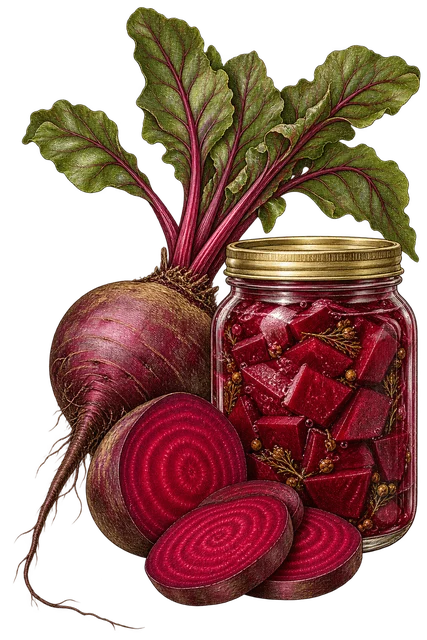
- Pickled roots
History, folklore and reported uses
History, folklore and traditional uses
Illinois Extension places garden beet beside Swiss chard, sugar beet and fodder beet, illustrating how selection emphasizes different parts of the same crop family. Its food account includes pickled roots, fresh greens and borscht.
The root’s strong color has a separate food-processing role. University of Illinois research describes red beets as an established source of betalain food pigments; that coloring use does not demonstrate a therapeutic effect.
Traditional, historical and reported uses
- Raw salad
Food or household practiceWhy this label?
The claim documents raw salad as a culinary, craft, gardening, or practical material use; it reports neither a treatment outcome nor measured nutrient content.
Purdue describes grated or thin-sliced raw beet in salads and slaws.
- Roasted vegetable
Food or household practiceWhy this label?
The claim documents roasted vegetable as a culinary, craft, gardening, or practical material use; it reports neither a treatment outcome nor measured nutrient content.
Cubed roots can be roasted as a side dish.
- Pickled roots
Food or household practiceWhy this label?
The claim documents pickled roots as a culinary, craft, gardening, or practical material use; it reports neither a treatment outcome nor measured nutrient content.
Illinois Extension records pickled beet roots for salads.
- Borscht
Food or household practiceWhy this label?
The claim documents borscht as a culinary, craft, gardening, or practical material use; it reports neither a treatment outcome nor measured nutrient content.
Illinois Extension identifies beet juice as a basic ingredient in borscht.
- Leafy greens
Food or household practiceWhy this label?
The claim documents leafy greens as a culinary, craft, gardening, or practical material use; it reports neither a treatment outcome nor measured nutrient content.
Beet tops are eaten fresh or cooked, separately from the root.
Five distinct culinary applications are documented; these are food practices, not five medicinal indications.
Regional reading paths
These sourced notes describe cultivation, trade, food traditions or material history. A regional connection does not claim exclusive origin.
Europe
Cultivated and traditional processing: Poland, where beetroot also supplies distinct fermented foods.
Root used cooked or in food preparations; fresh root is distinct from fermented beet products.
Identity & detailed reference
Identity
The edible swollen root of garden beet; leafy beet greens are also food but have a different nutrient profile.
Ingredient details, preparation and research
Also known as: beetroot; beets
Source plant or material
Beta vulgaris L., garden-beet cultivars; The edible swollen root of garden beet; leafy beet greens are also food but have a different nutrient profile.
Plant family / material: Amaranthaceae
Forms and route
Fresh red, golden, white or striped roots; raw grated, roasted or cooked beet; separately prepared greens. Juice, powder and concentrated nitrate products are different forms.
Vitamins and minerals
Whole beet roots contribute carbohydrate and fiber. Beet greens and concentrated juice cannot be assigned the same composition as a serving of roots.
Absorption and preparation
No special combination is needed for ordinary food use. Clinical claims made for standardized beet-juice products cannot be transferred to an unspecified portion of fresh root.
Practical preparation
Scrub before cutting. Refrigerate roots and greens separately; cook or grate roots as desired. Follow a tested recipe for pickling or canning.
Combination context
Combine with other vegetables, grains or a dressing for flavor; acidic dressings are not proof of safe shelf-stable preservation.
Traditional and reported uses
- Purdue describes grated or thin-sliced raw beet in salads and slaws.
- Cubed roots can be roasted as a side dish.
- Illinois Extension records pickled beet roots for salads.
- Illinois Extension identifies beet juice as a basic ingredient in borscht.
- Beet tops are eaten fresh or cooked, separately from the root.
Contraindications and cautions
- If you have been advised to restrict oxalate for kidney stones, ask how beet portions fit your plan; beet is listed among high-oxalate vegetables.
- Wash produce and prevent contact with raw-meat juices. Canning and pickling require tested directions.
Similar items and how they compare
- Swiss chard
Related leafy crop of Beta vulgaris.
Chard is selected for edible leaves and stalks rather than a swollen beetroot.
- Sugar beet
Same broader species and a swollen root.
Sugar-beet cultivars are selected for sugar processing, not interchangeable table-beet recipes.
Food identity and preparation
Fresh red, golden, white or striped roots; raw grated, roasted or cooked beet; separately prepared greens. Juice, powder and concentrated nitrate products are different forms. Scrub before cutting. Refrigerate roots and greens separately; cook or grate roots as desired. Follow a tested recipe for pickling or canning.
Nutrition and evidence limits
Whole beet roots contribute carbohydrate and fiber. Beet greens and concentrated juice cannot be assigned the same composition as a serving of roots. No special combination is needed for ordinary food use. Clinical claims made for standardized beet-juice products cannot be transferred to an unspecified portion of fresh root.
Evidence limits
- Nutrient information is qualitative; no unverified USDA food code, portion or numerical analysis is supplied.
- Culinary history does not establish a treatment effect. No medicinal dose is proposed.
Entry sources
- Purdue Extension FoodLink: beet
- Illinois Extension: Beet
- Illinois Extension: Betalains and food color, 2023
- Endotext: Nephrolithiasis, food oxalate table
- FDA: Selecting and Serving Produce Safely
Reference entry 171 · Recorded content review: 2026-10-07 · Review scope and dates