


Key cautions
- Avoid with known Asteraceae hypersensitivity; topical products can sensitize skin. Keep away from eyes.
- Medicinal use is not recommended under 12 or in pregnancy/breastfeeding by EMA. Do not drink aromatherapy oil or improvise oil-drop dilutions.
What’s inside
Flower phenolics, bitter sesquiterpene lactones and aromatic volatile compounds belong to different chemical groups. A cup of flower tea and a bottle of distilled oil do not deliver the same mixture.
Egyptian Drug Authority (2022): Roman chamomile monograph, traditional external and internal uses · Sándor et al.: Roman chamomile chemistry and isolated smooth-muscle experiments (2018)
Flower tea, extract, essential oil and hydrosol
Flowers contain apigenin- and luteolin-related flavonoids and sesquiterpene lactones; the volatile oil is commonly rich in angelate esters. Infusion, alcohol extraction and distillation yield different mixtures. Hydrosol is the water fraction from distillation; it has neither the whole flower’s composition nor a standardized equivalence to essential oil. Check botanical name, preparation, strength, preservatives and intended route.
Egyptian Drug Authority (2022): Roman chamomile monograph, traditional external and internal uses · Sándor et al.: Roman chamomile chemistry and isolated smooth-muscle experiments (2018) · FDA: Microbiological safety and cosmetics
Named flower constituents
The Egyptian Drug Authority lists apigenin, luteolin and quercetin-related flavonoids, caffeic and ferulic acids, and the bitter lactones nobilin and related compounds. In the 2018 experimental paper, apigenin, luteolin, hispidulin and eupafolin were isolated as reference compounds and their identities checked by nuclear magnetic resonance. That analytical identification is different from predicting a human effect from a compound name.
Egyptian Drug Authority (2022): Roman chamomile monograph, traditional external and internal uses · Sándor et al.: Roman chamomile chemistry and isolated smooth-muscle experiments (2018)
Volatile oil and its composition
Angelic- and tiglic-acid esters are characteristic constituents of Roman-chamomile oil. An ester is a chemical family, not a nutrient claim. Distillation enriches volatile molecules, whereas water and alcohol extracts retain different proportions of other constituents. Oil composition varies between materials, so the chemistry of one research batch is not a specification for every commercial product.
Egyptian Drug Authority (2022): Roman chamomile monograph, traditional external and internal uses · Sándor et al.: Roman chamomile chemistry and isolated smooth-muscle experiments (2018)
Absorption and realistic nutrition
No human evidence establishes a beneficial fat or meal pairing for this tea or a useful scalp-absorption technique. A primary composition paper analyzed leafy flowering material and preparations, not a standardized retail flower cup; whole-herb nutrients cannot be assigned to the infusion. Its antioxidant and tumor-cell results were laboratory findings, not evidence of nutritional sufficiency or cancer treatment. Topical exposure is not dietary intake.
Guimarães et al.: Roman chamomile herb, infusion and decoction composition (2013) · Sándor et al.: Roman chamomile chemistry and isolated smooth-muscle experiments (2018)
Uses in brief

- Traditional: flower tea or specified extracts for mild digestive cramps, bloating and gas.
- Traditional cosmetic use: hair shine/blonde-hair appearance and soothing skin preparations; reliable scalp-treatment evidence is lacking.
History, folklore and reported uses
Plant, part and identity
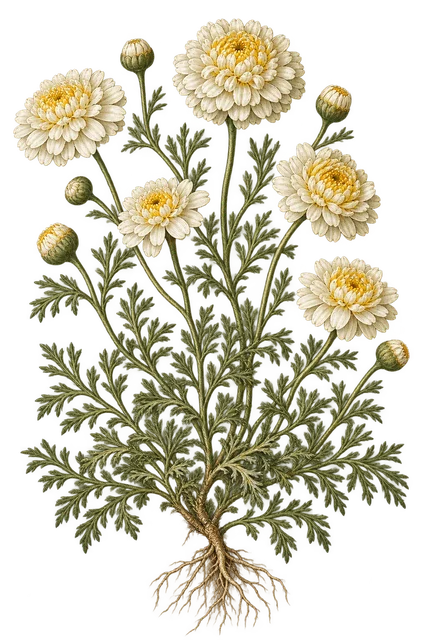
Chamaemelum nobile (L.) All., synonym Anthemis nobilis L., is Roman or English chamomile in Asteraceae. EMA’s medicinal material is dried flower heads, commonly the cultivated double-flowered form. Generic “chamomile” on a product is insufficient to identify the species; Matricaria chamomilla is German chamomile.
Kew: Chamaemelum nobile · EMA: Roman chamomile flower assessment report, including small topical study and safety limitations
Fragrant gardens and household preparations
Roman chamomile’s story begins close to the ground. The low, cushioning herb releases an apple-like scent when crushed, and Kew records its popularity in Elizabethan lawns and planted seats. A person could encounter the plant by walking or sitting on it, not only by drinking it. The same scent and familiarity helped carry it into household infusions, liqueurs and a long cosmetic tradition of adding shine and enhancing the appearance of blonde hair.
Royal Botanic Gardens, Kew: Roman chamomile, traditional hair care and cosmetic uses · EMA: Final Roman chamomile flower monograph · Egyptian Drug Authority (2022): Roman chamomile monograph, traditional external and internal uses · Royal Horticultural Society: Chamomile lawns and alternatives
A wider household herbal tradition
The flowers also had a place in remedies for stomach discomfort, headaches and restlessness. Kew preserves that wider household record, while EMA documents the more specific European tradition of flower preparations for mild digestive cramps, bloating and gas. These strands give Roman chamomile a fuller identity than simply “bedtime tea”: garden plant, beauty ingredient and digestive herb. Roman chamomile is Chamaemelum nobile, also called English chamomile, a familiar name for a low-growing fragrant plant. Its relative German chamomile has a separate botanical and medicinal history.
Royal Botanic Gardens, Kew: Roman chamomile, traditional hair care and cosmetic uses · EMA: Final Roman chamomile flower monograph · Egyptian Drug Authority (2022): Roman chamomile monograph, traditional external and internal uses · Royal Horticultural Society: Chamomile lawns and alternatives
Reading the recorded uses
The following are attributed traditions, not equivalent clinical indications. An infusion is a water-steeped preparation, a poultice is applied externally, and a mouthwash acts locally rather than being swallowed. Elizabethan lawns and seats refer to garden fashions in late-sixteenth-century England. EMA’s digestive indication is based on long-standing use; the clinical and laboratory findings are described separately below.
EMA: Final Roman chamomile flower monograph · Egyptian Drug Authority (2022): Roman chamomile monograph, traditional external and internal uses · Royal Botanic Gardens, Kew: Roman chamomile, traditional hair care and cosmetic uses
Digestive cramps and wind
European herbal medicine used Roman-chamomile flower tea and specified flower extracts for minor digestive cramps, bloating and gas. EMA identifies Chamaemelum nobile, keeping this tradition separate from German chamomile.
Restlessness and sleep
Kew records Roman-chamomile infusions as household relaxants and as drinks taken to ease stress and encourage sleep. The fragrant flower-tea tradition has continued into present-day use.
Royal Botanic Gardens, Kew: Roman chamomile, traditional hair care and cosmetic uses
Headache and fever remedies
Kew preserves Roman chamomile’s traditional use for headaches and fever within the household tea-and-infusion record. They sit alongside the flower’s calming and stomach-soothing uses.
Royal Botanic Gardens, Kew: Roman chamomile, traditional hair care and cosmetic uses
Skin and mouth applications
Egypt’s 2022 monograph records flowerhead infusions in poultices and mouthwashes, and topical flower preparations, for minor skin or oral inflammation, itching and abrasions. These external uses accompany the digestive tradition.
Egyptian Drug Authority (2022): Roman chamomile monograph, traditional external and internal uses
Hair rinses and shine
Kew records a long cosmetic tradition of Roman chamomile for hair shine and enhancing the appearance of blonde hair, continued in shampoos and rinses. The scented herb became familiar in the household beauty cupboard as well as the teapot.
Royal Botanic Gardens, Kew: Roman chamomile, traditional hair care and cosmetic uses
Fragrant chamomile lawns
The RHS documents Chamaemelum nobile as a low-growing alternative to grass where foot traffic is light. Its non-flowering cultivar Treneague is particularly suited to this living garden use, distinct from medicinal flower preparations.
Royal Horticultural Society: Chamomile lawns and alternatives
Identity & detailed reference
Identity
Chamaemelum nobile (syn. Anthemis nobilis); flower heads. Also called English chamomile. German chamomile is a different species, so check the botanical name.
Ingredient details, preparation and research
Source plant or material
Chamaemelum nobile (L.) All.; medicinal material is the dried flower head, commonly from the cultivated double-flowered form.
Plant family / material: Asteraceae (daisy family).
Forms and route
Dried flower tea and specified oral liquid extracts; separately, labeled topical extracts, shampoos, balms, distilled essential oil and hydrosol. EMA’s flower monograph covers oral digestive preparations; external traditions are recorded by other sources. A hydrosol is distillation water and is not equivalent to flower infusion or essential oil.
Food sources
Primarily consumed as an herbal flower infusion. Tea blends may instead contain German chamomile, so the common word “chamomile” does not identify the species.
Vitamins and minerals
A study of wild Roman chamomile analyzed dried leafy flowering material as well as its infusion and decoction. Tocopherols, carotenoids and fatty acids in that whole material cannot be treated as the contents of a usual 150–250 mL cup of flower tea. A dependable species-specific vitamin/mineral amount per cup was not established by the reviewed sources; topical use provides no dietary nutrient intake.
Absorption and preparation
Water extracts some flower phenolics, while alcohol extraction and distillation yield different mixtures. Human evidence does not establish an absorption-boosting meal or fat pairing for Roman chamomile tea. Prepare and use the intended oral product according to its label; greater concentration does not establish greater benefit.
Traditional and reported uses
- Traditional European use: symptomatic relief of mild digestive cramps, bloating and flatulence, recorded in the EMA monograph. This is a long-standing-use indication, not proof from strong clinical trials.
- Traditional external/cosmetic use: the Egyptian Drug Authority records minor skin or mouth inflammation and itch-related applications; Kew records hair rinsing for blonde-hair appearance and shine, and use in shampoos and balms. These are distinct from EMA’s oral digestive indication.
- Research context: a small human skin study reviewed by EMA suggested faster resolution of experimentally induced redness with a formulated extract but had important reporting limitations and no preventive UV effect. Isolated intestinal-tissue experiments support biological plausibility for digestive use; they are not trials of people drinking tea.
- Lactose-related symptoms: no established evidence shows that Roman chamomile supplies lactase, breaks down lactose or corrects lactose malabsorption. Any possible digestive comfort should not be confused with treating that cause.
Contraindications and cautions
- Avoid with known Roman chamomile allergy; EMA also contraindicates known Asteraceae-family hypersensitivity. Cross-reactivity can occur but is not inevitable. Stop for skin irritation or other reactions; breathing difficulty or sudden mouth/throat swelling needs emergency help.
- EMA does not recommend medicinal use in children under 12 or during pregnancy or breastfeeding because adequate safety data are lacking. Alcohol-containing extracts have additional label precautions.
- EMA reports no clinically relevant medicine interactions for its assessed flower preparations; other compendia recommend precaution with sedatives or anticoagulants on theoretical grounds. That is not proof of a clinical interaction. Check concentrated or regular medicinal oral use with a pharmacist rather than importing all German-chamomile warnings.
- Use products only by their labeled route. Do not swallow aromatherapy oil or add it to tea. Essential-oil misuse can cause poisoning; keep concentrated products away from children.
- Seek medical advice if digestive symptoms worsen or persist beyond two weeks rather than increasing the dose or concentration.
- Topical flower extracts, hydrosols and essential oils are different products. A rinse is not sterile or a sunscreen, and it is not established treatment for dandruff or hair loss. Do not use household preparations in eyes or on infected, broken or weeping skin; discard homemade wet mixtures after use.
Similar items and how they compare
- German chamomile
Both use daisy-family flower heads and have documented European traditional use for minor digestive discomfort.
German chamomile is Matricaria chamomilla/recutita and has a different volatile profile, including bisabolol-related compounds; Roman chamomile oil is typically ester-rich. Evidence and products are not interchangeable.
- Lemon balm (Melissa)
Both are aromatic tea herbs with traditional use for bloating and gas.
Lemon balm uses mint-family leaves with rosmarinic acid; Roman chamomile uses daisy-family flowers. Shared traditional uses do not prove equal efficacy.
Traditional uses, including hair and skin
EMA recognizes long-standing oral use for minor digestive cramps, bloating and gas. The Egyptian Drug Authority separately records external uses for minor skin/oral irritation and itch. Kew documents cosmetic use for hair shine and enhancing blonde-hair appearance. These accounts support inclusion as traditions without requiring clinical trials, but do not establish hair regrowth or dandruff treatment.
What human and laboratory evidence show
EMA reviewed a 20-volunteer study of 5% extract emulsions after experimental UV redness: there was a soothing signal, but group allocation, blinding and statistics were inadequately described, and no UV-preventive effect was found. Laboratory smooth-muscle research used isolated animal and human tissue; even human tissue in a dish is not a clinical efficacy trial. Neither supports substituting tea or oil for sunscreen or a scalp treatment.
Simple cosmetic use and mixtures
A labeled Roman-chamomile rinse or shampoo is a straightforward way to explore the documented hair-care tradition. For a home flower infusion, use a labeled flower product, strain, cool, use once and discard leftovers; no validated hair-growth strength or universal spoon measurement is established here. Keep it off eyes and damaged skin. Adding multiple ingredients is not required and introduces further tolerance or formulation questions.
Allergy and medicinal safety
Asteraceae cross-sensitization and Roman-chamomile contact reactions are documented; species and preparation still matter. EMA does not recommend medicinal use under 12 or in pregnancy/breastfeeding because safety is inadequate. Some compendia call it abortifacient, but EMA found no reliable human data establishing that effect. Avoid medicinal pregnancy use without turning an unproven mechanism into a fact. Interaction concerns in other compendia are precautionary; EMA reports none established.
Comparison and review status
German chamomile and calendula share some traditional skin applications but differ in chemistry and assessed preparations. The Roman-chamomile EMA page listed a new periodic-review call in 2026 while retaining its earlier adopted monograph and 2020 addendum. A consultation is not a newly adopted clinical indication.
Entry sources
- EMA: Final Roman chamomile flower monograph
- EMA: Roman chamomile assessment addendum (2020)
- National Capital Poison Center: Essential oils and misuse
- Kew: Chamaemelum nobile
- Sándor et al.: Roman chamomile chemistry and isolated smooth-muscle experiments (2018)
- Guimarães et al.: Roman chamomile herb, infusion and decoction composition (2013)
- EMA: German chamomile flower traditional uses and safety
- EMA: Melissa leaf traditional uses and safety
- EMA: Roman chamomile flower assessment report, including small topical study and safety limitations
- Egyptian Drug Authority (2022): Roman chamomile monograph, traditional external and internal uses
- FDA: Microbiological safety and cosmetics
- Royal Botanic Gardens, Kew: Roman chamomile, traditional hair care and cosmetic uses
- EMA: Roman chamomile flower page, including 2026 periodic-review call
- EMA: Matricaria recutita flower, adopted monograph (2015, published 2016)
- EMA: Calendula officinalis flower, adopted monograph revision 1 (2018)
- Royal Horticultural Society: Chamomile lawns and alternatives
Reference entry 107 · Recorded content review: 2026-10-05 · Review scope and dates