


Key cautions
- Avoid contact with eyes and damaged skin
- Do not use concentrated capsaicin extracts or homemade pepper applications as substitutes for the food.
What’s inside
Capsaicinoids and carotenoid pigments, with fruit sugars, water and organic acids.
Uses in brief

- Rocoto relleno
- Chopped pepper in regional salads
History, folklore and reported uses
History, folklore and traditional uses
Regional context: cultivated; Peru, especially Arequipa. These examples describe specific food or material traditions and production settings; they do not establish exclusive ownership, a single continent-wide recipe, or therapeutic effectiveness.
Traditional, historical and reported uses
- Rocoto relleno
Food or household practiceWhy this label?
Source documents this specific material, culinary use or attributed practice; no clinical efficacy is inferred.
PROMPERÚ records the Arequipa specialty as a pepper filled with a savory mixture and baked. The food’s identity depends on both the rocoto and its preparation.
- Chopped pepper in regional salads
Food or household practiceWhy this label?
Source documents this specific material, culinary use or attributed practice; no clinical efficacy is inferred.
The Arequipa food account includes rocoto in solterito, alongside vegetables and cheese. This is a second culinary role rather than a claim that the pepper provides a medical benefit.
2 bounded uses; regional records do not establish treatment effects.
Historical-use additions reviewed 2026-10-09
Regional reading paths
These sourced notes describe cultivation, trade, food traditions or material history. A regional connection does not claim exclusive origin.
South America
cultivated; Peru, especially Arequipa
Hot pepper used in stuffed rocoto.
Identity & detailed reference
Identity
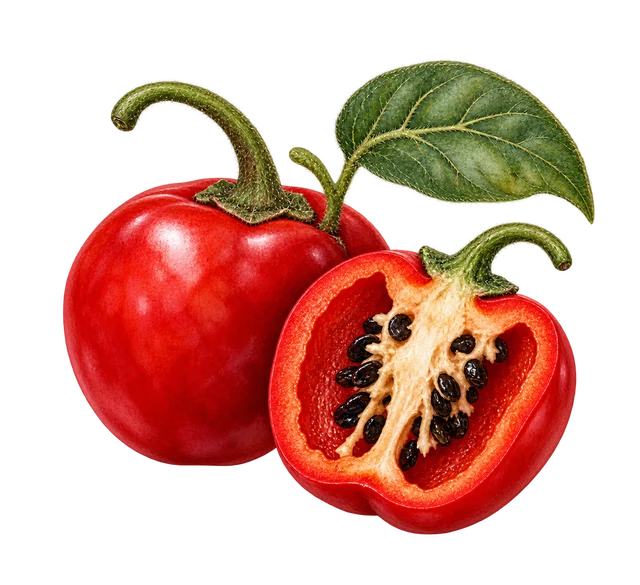
Capsicum pubescens; the fleshy hot fruit of rocoto, distinct from ají amarillo and ordinary sweet bell pepper.
Ingredient details, preparation and research
Also known as: Capsicum pubescens
Source plant or material
Capsicum pubescens
Plant family / material: Solanaceae
Forms and route
Fresh or frozen whole fruits, chopped culinary pepper and prepared sauces.
Vitamins and minerals
Preparation changes water content and the composition of the meal. A stuffed rocoto contains nutrients from its filling as well as its pepper shell.
Absorption and preparation
No special pairing or preparation is established to make rocoto a therapeutic source of carotenoids.
Practical preparation
Use food-grade fruit, protect eyes while cutting, and follow a trusted culinary recipe. Removing seeds and membranes can change pungency but does not make every pepper mild.
Traditional and reported uses
- Rocoto relleno
- Chopped pepper in regional salads
Contraindications and cautions
- Avoid contact with eyes and damaged skin. Strong peppers may aggravate individual gastrointestinal symptoms.
- Do not use concentrated capsaicin extracts or homemade pepper applications as substitutes for the food.
Color is not a nutrient measurement
A study of Bolivian ají and rocoto accessions identified differing carotenoid profiles in ripe fruits. Color and species name alone cannot establish the vitamin A contribution of a particular serving.
Evidence limits
This is a food-form review, not a treatment recommendation. Composition and laboratory findings apply to the material actually studied; no medicinal dose, universal nutrient ranking or preservation guarantee is inferred.
Entry sources
- PROMPERÚ: Ocho comidas típicas del Perú
- Carotenoid composition of Andean ají and rocoto peppers
- PROMPERÚ: Gastronomía de Arequipa
Reference entry 422 · Recorded content review: 2026-10-09 · Review scope and dates