


Key cautions
- Strain plant hairs thoroughly. Do not smoke it or use homemade drops for a painful or possibly perforated ear.
- Not recommended medicinally under 12 or in pregnancy/breastfeeding. Seek care for breathing difficulty, fever or persistent/worsening cough.
What’s inside
Mucilage polysaccharides, iridoids including aucubin/catalpol, flavonoids and phenylethanoid glycosides such as verbascoside. Saponins are documented in V. thapsus and V. phlomoides flowers; EMA notes they were not confirmed in V. densiflorum flowers. Species and part matter.
Uses in brief

- Traditional oral flower tea for sore throat associated with dry cough and a cold.
- Leaf and flower household uses are documented, but preparation-specific evidence is limited.
History, folklore and reported uses
Dry cough and a sore throat
European dried-mullein-flower infusions were used for an irritated throat with dry cough or a cold. Wider household respiratory remedies also used leaves, which are a different medicinal material.
EMA: Mullein flower · Turker and Camper: Biological activity of common mullein, a medicinal plant (2002), historical-use introduction
Earache flower oil
Western herbal literature records mullein flowers infused in oil as a local earache remedy. This was an infused flower oil, not a distilled essential oil.
Inflamed skin
Mullein-flower oil and other external preparations were used in Western herbal practice for eczema and inflamed skin. Brooklyn Botanic Garden also records skin remedies among the plant’s historical household roles.
Turker and Camper: Biological activity of common mullein, a medicinal plant (2002), historical-use introduction · Brooklyn Botanic Garden: Weed of the Month—Mullein
Diarrhoea and bowel complaints
Turker and Camper’s historical introduction records mullein used as an astringent, a remedy intended to tighten or dry tissues, for diarrhoea and haemorrhoids. This digestive history extends beyond its better-known respiratory uses.
Turker and Camper: Biological activity of common mullein, a medicinal plant (2002), historical-use introduction · Brooklyn Botanic Garden: Weed of the Month—Mullein
Protection from the evil eye
Brooklyn Botanic Garden records mullein used to ward off the evil eye, a belief that an envious or hostile gaze could bring harm. This protective custom accompanied the plant’s practical and medicinal roles.
Torches and lamp wicks
Common mullein, Verbascum thapsus, supplied torches, candles and lamp wicks. The University of Wisconsin–Milwaukee specifies dried leaf midribs, the central ribs of the leaves, as wicks and dried stalks as Roman torch material, explaining names such as candlewick and torchwort.
University of Wisconsin–Milwaukee Field Station: Mullein Watching · Brooklyn Botanic Garden: Weed of the Month—Mullein
Winter padding in footwear and clothing
The same university account records mullein’s thick leaves used as insulating padding in moccasins and leggings. This was a material use of the woolly foliage, separate from the plant’s medicinal preparations.
University of Wisconsin–Milwaukee Field Station: Mullein Watching
A conspicuous roadside plant
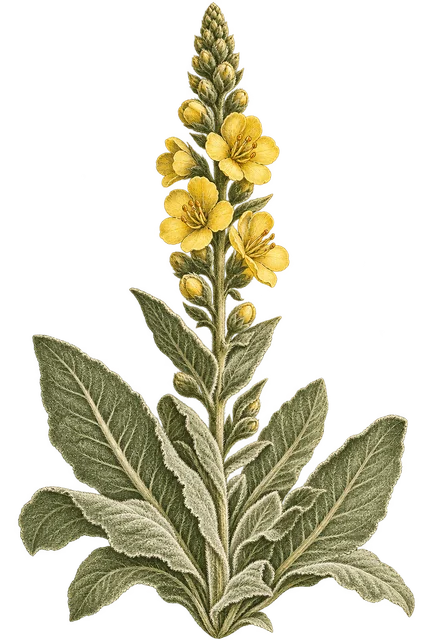
Mullein’s tall stalk, yellow flowers and soft, felted leaves made it recognizable on roadsides and disturbed ground. Alongside its uses for lighting and insulation, people watched its flowering for signs of coming weather.
Health topics: evidence and cautions
These notes describe a specific research context and preparation. A topic link is not a treatment recommendation.
Respiratory health · Traditional reports
Form and route: flower tea · oral
Mullein flowers have traditional use for sore throat linked to dry cough and colds.
Evidence: documented traditional use; clinical evidence insufficient
EMA recognizes longstanding symptom use; this is not proof of a disease cure.
Limits
This evidence does not transfer to mullein leaves or smoked herbs.
Cautions
- Do not smoke or vape mullein; no herb smoke is a lung treatment.
- EMA limits these flower medicines to adults and adolescents over 12; seek advice if symptoms worsen or persist over a week.
Identity & detailed reference
Identity
Verbascum thapsus L., V. densiflorum Bertol. or V. phlomoides L.; the EMA material is dried flowers, specifically corollas with stamens. Leaf products and other Verbascum species require separate identification.
Ingredient details, preparation and research
Source plant or material
Mullein flower (Verbasci flos) from the three EMA-listed Verbascum species; great-mullein leaf (V. thapsus) has a separate tradition.
Plant family / material: Scrophulariaceae (figwort family).
Forms and route
Oral flower infusion; separate leaf teas and tinctures in herbal practice. Flower-infused oils, topical mixtures and manufactured ear drops are different products and routes.
Vitamins and minerals
Mullein is not an established culinary vegetable. No dependable vitamin/mineral amount per ordinary cup of strained flower or leaf tea was verified. Whole-plant mineral measurements cannot be transferred to the liquid, and externally labeled oils are not dietary nutrient servings.
Absorption and preparation
The soothing rationale for mucilage is local contact with irritated surfaces, not maximizing blood concentrations. EMA found no human pharmacokinetic data for mullein flower. An oil infusion, water infusion and alcohol tincture extract different mixtures; no proven absorption-enhancing food or herb combination was established.
Practical preparation
Check both the species and whether the label says flower or leaf. Prepare a labeled oral tea with its specified water quantity and infusion time, then pass it through a fine filter that retains the hairs; let it cool. Do not swallow the unfiltered hairy material, extrapolate a flower-tea quantity to a tincture, or use an external oil orally.
Food notes
A strained infusion is the relevant household preparation; treating dried mullein as a vegetable powder or mineral supplement is unsupported. Do not include seeds or unidentified ornamental Verbascum in a tea.
Combination notes
Mullein and marshmallow share a demulcent tradition, but combining full separate product amounts has no established advantage. A product containing licorice acquires licorice’s distinct blood-pressure and electrolyte concerns. Evidence for a multicomponent ear product cannot identify which ingredient helped.
Traditional and reported uses
- EMA-recognized European traditional use: flower tea to soothe a sore throat with dry cough and a cold.
- Leaf and flower preparations also have recorded respiratory and external household traditions; the leaf is not the same monographed medicine.
- A trial of multicomponent ear drops included mullein, but cannot establish mullein alone as an ear-infection treatment.
Contraindications and cautions
- Avoid known allergy. Medicinal use under age 12 or during pregnancy/breastfeeding is not recommended by EMA because evidence is inadequate.
- Strain out plant hairs carefully; do not smoke mullein for lung health or regard it as a lung “detox.”
- Do not put homemade oils or alcohol tinctures in a painful or draining ear. Suspected perforation, ear tubes, hearing loss or infection require appropriate assessment.
- Breathlessness, fever, purulent or bloody sputum, worsening symptoms or cough/throat symptoms lasting beyond one week need assessment.
- Interaction and long-term safety data are sparse. “None reported” in a monograph does not prove absence of risk.
Similar items and how they compare
- Marshmallow root
Both have traditional water-preparation uses for irritated throat and dry cough, with mucilage supporting local contact.
Mullein uses flowers or separately identified leaf; marshmallow uses a chemically different root with specific medicine-timing precautions.
- Licorice root
Both occur in traditional throat and cough preparations.
Licorice has glycyrrhizin-related risks, including blood-pressure and electrolyte effects; this is not a shared safety profile.
Species, plant part and family
Great mullein is Verbascum thapsus in Scrophulariaceae. The official European flower material also allows V. densiflorum and V. phlomoides, using dried corollas and attached stamens. “Mullein leaf” and an unidentified garden Verbascum are not automatically equivalent to that flower preparation.
Traditional use without overclaiming
European flower-tea use for sore throat, dry cough and colds is recognized on the basis of longstanding use. EMA also documents British leaf preparations and older external flower/leaf practices. These histories can be retained without calling them clinically proven. Historic use for asthma or other serious chest illnesses does not establish modern treatment efficacy.
Chemistry varies by species
Mucilage, iridoids and phenylethanoid glycosides occur in the flower material. The proportions differ substantially between species. EMA reports saponins in V. thapsus and V. phlomoides, while none had been confirmed in V. densiflorum flowers. Therefore, the presence or amount of a constituent cannot be inferred from the common name alone.
Human evidence versus laboratory activity
EMA’s 2018 flower assessment found no clinical efficacy or pharmacokinetic studies; antimicrobial and other preclinical findings do not establish treatment of infection or improved lung function. The periodic review, published in March 2025, found no new relevant evidence requiring revision. The traditional-use classification therefore remains appropriate.
What the ear-drop study does and does not show
A 2003 randomized trial in 171 children studied a manufactured mixture containing mullein, garlic, calendula and additional ingredients in oil. Ear pain improved over three days in every group, and the authors attributed much of the change to time. This cannot isolate mullein’s contribution, prove eradication of infection or validate homemade ear oil. Suspected perforation or hearing loss needs assessment; use ear drops only when appropriate for the diagnosed condition.
Preparation, local contact and nutrition
Kew notes that hairs must be strained from preparations because they can irritate the throat and mucous membranes. Use an identified labeled oral tea, filter carefully and cool before drinking. Mucilage’s proposed soothing role depends on surface contact; there is no established need to boost systemic absorption. Neither the infusion nor an external oil has a verified dietary micronutrient serving in the sources reviewed.
Smoking and route safety
Smoking mullein is not a lung-treatment recommendation. Tobacco-free herbal smoke still contains tar, particles and carbon monoxide. Likewise, an alcohol tincture is not an ear drop, and homemade flower oil is not a sterile medicine. Sudden hearing loss or pain with drainage deserves prompt assessment rather than a home preparation.
Use limits and related herbs
EMA recommends medicinal flower use from age 12, with review if symptoms worsen or persist over a week; pregnancy/breastfeeding evidence is inadequate. Fever, breathlessness or purulent sputum require care sooner. Marshmallow has a similar soothing tradition, but no automatic synergy follows. If a blend contains licorice, its separate glycyrrhizin-related safety restrictions still apply.
Entry sources
- EMA: Mullein flower overview and current review documents
- EMA: Mullein flower traditional-use monograph (2018)
- Kew: Verbascum thapsus, accepted name and Scrophulariaceae family
- Kew Grow Wild: Great mullein, traditional uses and straining plant hairs
- EMA: Mullein flower assessment report (2018)
- EMA: Mullein periodic review addendum (2024; published March 2025)
- EMA: Earlier mullein assessment, traditional uses and mucilage action (superseded)
- Sarrell et al. (2003): Multicomponent herbal ear drops in 171 children
- NHS: Perforated eardrum, warning signs and avoiding unprescribed ear drops
- American Cancer Society: Tobacco-free herbal cigarettes still produce harmful smoke
- NCCIH: Licorice root, usefulness and safety
- EMA: Marshmallow root overview and current monograph status
- University of Wisconsin–Milwaukee Field Station: Mullein Watching
Reference entry 20 · Recorded content review: 2026-10-05 · Review scope and dates