


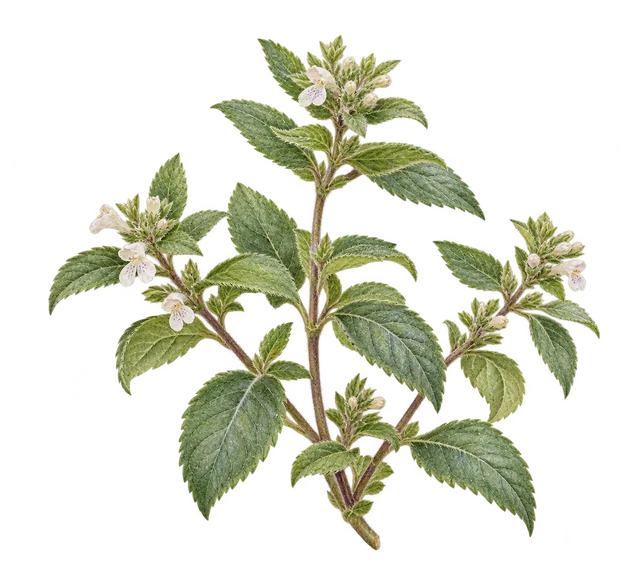
Key cautions
- Do not swallow muña essential oil or substitute it for leaf use
- Avoid medicinal self-use during pregnancy, breastfeeding, childhood or with liver disease; seek qualified advice rather than extrapolating from tradition.
What’s inside
Volatile monoterpenes can include pulegone and menthone; composition changes with plant material and conditions.
Uses in brief

- Culinary aromatic herb
- Traditional herbal record
History, folklore and reported uses
History, folklore and traditional uses
This selection centers on documented Peruvian Andean use and germplasm. Vernacular muña names can cover different local materials, so a botanical and route-specific boundary is essential.
Traditional, historical and reported uses
- Culinary aromatic herb
Food or household practiceWhy this label?
The cited material is a specified culinary ingredient or beverage, with its own preparation limits; no medical effect is inferred.
FAO identifies muña among Andean aromatic herbs, and INIA maintains identified germplasm. This supports a regional culinary context without prescribing an amount.
- Traditional herbal record
Traditional accountWhy this label?
Source documents this specific material, culinary use or attributed practice; no clinical efficacy is inferred.
A Peruvian oil-toxicity study describes its traditional medicinal context while investigating safety. The tradition is documented, but the experiment does not establish an effective or safe household remedy.
2 bounded uses; regional records do not establish treatment effects.
Historical-use additions reviewed 2026-10-09
Regional reading paths
These sourced notes describe cultivation, trade, food traditions or material history. A regional connection does not claim exclusive origin.
South America
native and cultivated; Peru
Aromatic Andean herb; no concentrated-oil ingestion advice.
Identity & detailed reference
Identity
Minthostachys mollis; the aromatic herb Minthostachys mollis, called muña; distilled oil and other plants with shared vernacular names are separate.
Ingredient details, preparation and research
Also known as: Minthostachys mollis
Source plant or material
Minthostachys mollis
Plant family / material: Lamiaceae
Forms and route
Food-grade culinary leaves and identified traditional leaf preparations; no essential-oil ingestion or concentrated extract is recommended.
Vitamins and minerals
Culinary herb quantities are not a standardized nutrient serving. No vitamin, mineral or therapeutic constituent dose is assigned.
Absorption and preparation
A leaf’s aroma does not measure how much of its oil is extracted into food or tea. Oil toxicology cannot set a safe home infusion strength.
Practical preparation
Use only a correctly identified culinary product for its labeled purpose. This card gives no medicinal tea regimen, distillation instructions or DIY concentration process.
Traditional and reported uses
- Culinary aromatic herb
- Traditional herbal record
Contraindications and cautions
- Do not swallow muña essential oil or substitute it for leaf use. Concentrated-oil toxicity has been investigated, including organ effects in experimental animals.
- Avoid medicinal self-use during pregnancy, breastfeeding, childhood or with liver disease; seek qualified advice rather than extrapolating from tradition.
Concentration changes risk
Primary research shows changes in pulegone and menthone following leaf damage, while toxicology tests the essential oil. A common name and mint-like scent do not establish equivalence to peppermint.
Evidence limits
No home dosing or clinical benefit is claimed. Essential-oil safety findings are not a validated quantitative risk assessment of every traditional leaf preparation.
Entry sources
- INIA: Banco de germoplasma de plantas medicinales
- FAO: Cultivos, hierbas aromáticas y alimentación andina
- Mechanical wounding and Minthostachys mollis volatile compounds
- Potential toxicity of Minthostachys mollis essential oil
Reference entry 429 · Recorded content review: 2026-10-09 · Review scope and dates