

Research draft · Editorial review pending. Sources are linked below; these reports have not been approved as treatment advice.
Herbal leaf infusion
Tulsi / holy basil leaf
Ocimum tenuiflorum
Read cautions first · Check the sources
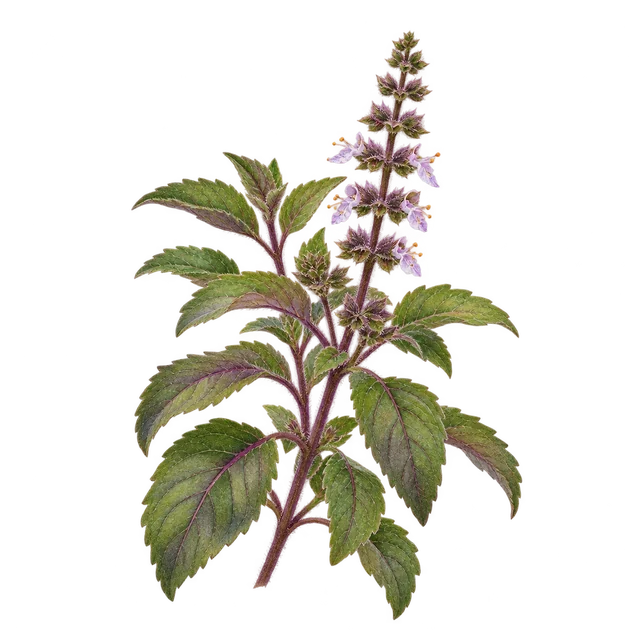
Tulsi is sacred in Hindu traditions and was historically grown in temple and household courtyards. The leaves also belong to South and Southeast Asian food and herbal traditions, including Thai cooking.
History, folklore, traditional and unusual uses
Only source-documented traditions are included; no unsourced legends have been added.
Asia
Documented regional plant-use tradition
Tulsi is sacred in Hindu traditions and was historically grown in temple and household courtyards. The leaves also belong to South and Southeast Asian food and herbal traditions, including Thai cooking.
- Leaf-containing teas and decoctions documented in Indian herbal practice; flowers may also be included.
- Leaves used as an aromatic ingredient in Thai cuisine.
- Leaf preparations traditionally used for stomach complaints in Thailand.
North America
Introduced tea-garden culture
Tulsi originates in India. Its inclusion in Minnesota tea-garden guidance documents an introduced North American garden association.
- Aromatic leaf tea
Sources for this account: 1
Sources
Research selection updated 2026-10-15. Historical and traditional reports do not establish clinical effectiveness.