


Key cautions
- Check the species when flavour or tradition matters; Thai basil is not botanically identical.
- Culinary history does not establish safety of concentrated supplements, particularly with medicines or during pregnancy; seek individual advice before medicinal use.
What’s inside
Aromatic volatiles and leaf polyphenols vary with plant type and growing conditions. Their presence does not establish a clinical effect from a culinary portion.
Uses in brief

- Thai holy-basil stir-fry
- Leaf infusion tradition
- Sacred household planting
History, folklore and reported uses
History, folklore and traditional uses
Kew and NParks document holy basil’s cultural importance and food uses. Thai cook Pailin Chongchitnant explains its role in pad kra pao and distinguishes it from the Thai basil often substituted overseas.
Traditional, historical and reported uses
- Thai holy-basil stir-fry
Food or household practiceWhy this label?
The cited source documents this material, preparation or cultural practice; it does not establish treatment efficacy.
Fresh holy-basil leaves supply the defining aroma of pad kra pao. The broader dish can contain animal ingredients; the herb itself is the plant-food selection.
- Leaf infusion tradition
Food or household practiceWhy this label?
The cited source documents this material, preparation or cultural practice; it does not establish treatment efficacy.
Dried or fresh leaves are used in tulsi-style infusions. This records a beverage practice, not a validated dose for stress, infection or blood-sugar treatment.
- Sacred household planting
Traditional accountWhy this label?
The cited source documents this material, preparation or cultural practice; it does not establish treatment efficacy.
Hindu traditions honour tulsi in household and temple settings. This cultural role is distinct from a clinical recommendation to ingest or apply any particular preparation.
3 supported featured food or cultural uses; no treatment claim.
Historical-use additions reviewed 2026-10-09
Regional reading paths
These sourced notes describe cultivation, trade, food traditions or material history. A regional connection does not claim exclusive origin.
Asia
Native/cultivated: tropical and subtropical Asia; sacred in Hindu traditions.
Aromatic culinary leaf and culturally important herb; no extract efficacy claim.
Identity & detailed reference
Identity
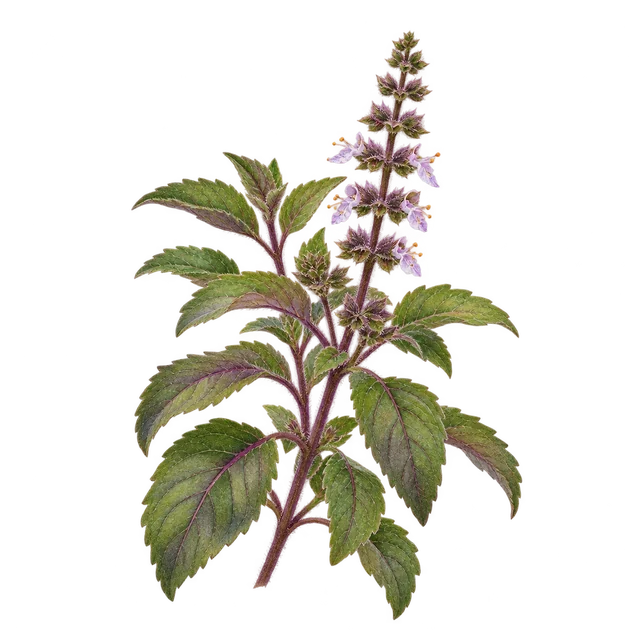
Ocimum tenuiflorum, synonym Ocimum sanctum; the aromatic leaf of holy basil or tulsi. It is distinct from sweet basil and Thai basil forms of Ocimum basilicum.
Ingredient details, preparation and research
Also known as: Tulsi; Tulasi; Holy basil; Ocimum sanctum; Krapao
Source plant or material
Ocimum tenuiflorum
Plant family / material: Lamiaceae
Forms and route
Fresh culinary leaves and dried leaves for infusions; powders, standardized supplements and distilled essential oil are different preparations.
Vitamins and minerals
Small herb or infusion quantities do not supply predictable micronutrient amounts. The strained drink differs from eating the whole leaf or taking powdered leaf capsules.
Absorption and preparation
No pairing or brewing method is established here to deliver a standardized absorbed medicinal dose.
Practical preparation
Wash food-grade leaves, discard damaged material and add as the dish directs. Prepare infusions with clean water and clean utensils; do not treat a brewed drink as shelf-stable medicine.
Combination notes
Use holy basil for its distinct aroma; changing to sweet or Thai basil changes the flavour profile.
Traditional and reported uses
- Thai holy-basil stir-fry
- Leaf infusion tradition
- Sacred household planting
Contraindications and cautions
- Check the species when flavour or tradition matters; Thai basil is not botanically identical.
- Culinary history does not establish safety of concentrated supplements, particularly with medicines or during pregnancy; seek individual advice before medicinal use.
Tradition and efficacy are different evidence
Botanical authorities describe both food and historical medicinal uses. These descriptions identify traditions; they do not by themselves verify treatment claims or make results from concentrated extracts applicable to food.
Evidence limits
A food-and-culture card, not a clinical supplement monograph.
Entry sources
- Singapore NParks: Ocimum tenuiflorum
- Pailin Chongchitnant: Holy basil stir-fry
- Kew POWO: Ocimum tenuiflorum
Reference entry 346 · Recorded content review: 2026-10-09 · Review scope and dates