


Key cautions
- Do not start without medical advice with kidney disease, high potassium, ACE inhibitors, ARBs or potassium-sparing diuretics.
What’s inside
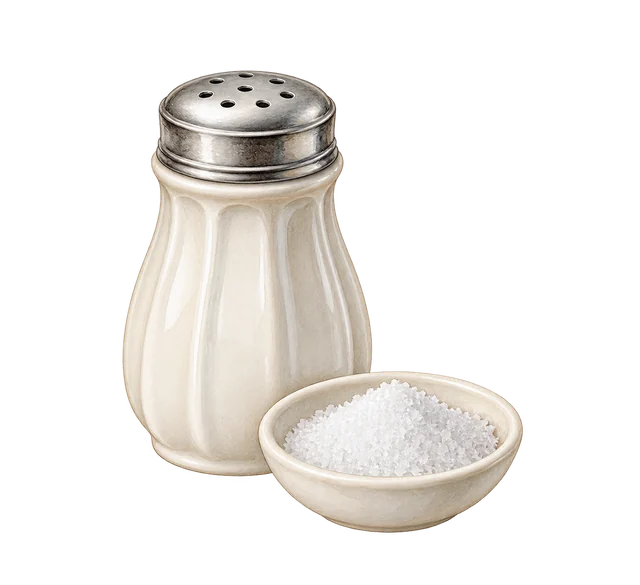
The key salts are potassium chloride and sodium chloride. Blend ratios and potassium content differ across products.
Uses in brief

- Risk reduction: Replacing some sodium with potassium salt can lower blood pressure.
History, folklore and reported uses
History, folklore and traditional uses
This is a modern food-reformulation and public-health research story. The 2021 Salt Substitute and Stroke Study tested a defined blend in rural Chinese communities.
Traditional, historical and reported uses
- Lower-sodium seasoning
Food or household practiceWhy this label?
Reported use or research history, with the form and evidentiary limits stated in the entry. This label is not a treatment endorsement.
Replacing part of ordinary table salt changes both sodium and potassium intake. Adding the substitute on top of usual salt would not reproduce a replacement trial.
- Stroke-outcome trial
Human researchWhy this label?
Reported use or research history, with the form and evidentiary limits stated in the entry. This label is not a treatment endorsement.
In 20,995 high-risk adults, a blend of 75% sodium chloride and 25% potassium chloride reduced stroke rates compared with regular salt. Results do not establish safety for every kidney condition.
Only documented uses and research history are included. Modern study products do not inherit ancient clinical evidence.
Health topics: evidence and cautions
These notes describe a specific research context and preparation. A topic link is not a treatment recommendation.
Cardiovascular health · Risk reduction
Form and route: Food salt substitute · oral
Replacing some sodium with potassium salt can lower blood pressure.
Evidence: agency_review_of_trials
ODS summarizes trials of potassium-containing salt substitutes.
Limits
Part of the effect may come from reducing sodium. Potassium citrate is a different preparation.
Cautions
- Do not start without medical advice with kidney disease, high potassium, ACE inhibitors, ARBs or potassium-sparing diuretics.
Identity & detailed reference
Identity
Food-grade potassium chloride replacing part of sodium chloride in a table-salt blend. This is not potassium citrate, a potassium tablet or an industrial salt.
Ingredient details, preparation and research
Source plant or material
Non-botanical food-grade mineral-salt blend.
Plant family / material: Not assigned: this record is defined by its chemical or product identity.
Forms and route
Food salt substitute. Oral route only unless a historical context is expressly separated.
Vitamins and minerals
No universal serving values apply to this formulation. A constituent being present does not establish nutritional adequacy or clinical benefit.
Absorption and preparation
Potassium is a readily available electrolyte. The main safety issue is whether the body can remove excess potassium, especially with kidney disease or interacting medicines.
Nutritional role and uses
- Replacing some sodium with potassium salt can lower blood pressure.
Contraindications and cautions
- Do not start without medical advice with kidney disease, high potassium, ACE inhibitors, ARBs or potassium-sparing diuretics.
Similar items and how they compare
- Potassium citrate (existing card 55)
Both supply potassium.
Different salt and intended use; a food salt blend is not a citrate medicine.
Identity and composition
Food-grade potassium chloride replacing part of sodium chloride in a table-salt blend. This is not potassium citrate, a potassium tablet or an industrial salt. The key salts are potassium chloride and sodium chloride. Blend ratios and potassium content differ across products.
What the human evidence can show
ODS summarizes trials of potassium-containing salt substitutes. Part of the effect may come from reducing sodium. Potassium citrate is a different preparation.
Safety and limits
Do not start without medical advice with kidney disease, high potassium, ACE inhibitors, ARBs or potassium-sparing diuretics.
Evidence limits
- Part of the effect may come from reducing sodium. Potassium citrate is a different preparation.
- A product-specific result cannot establish every commercial preparation.
Entry sources
Reference entry 588 · Recorded content review: 2026-10-11 · Review scope and dates