


Key cautions
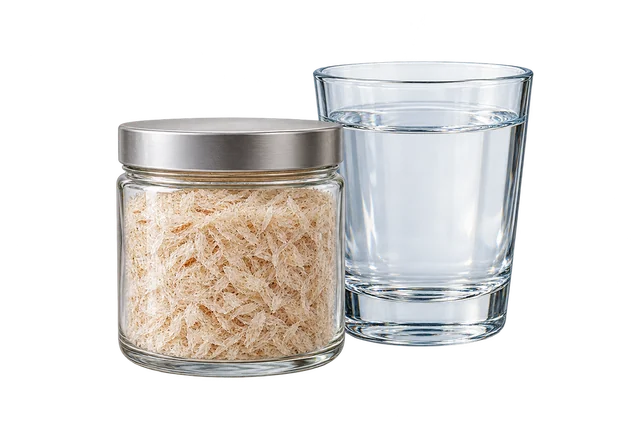
- Never swallow dry powder; choking is possible. Check swallowing problems and medicine timing with a pharmacist.
What’s inside
Husk is rich in gel-forming mucilage, including arabinoxylan polysaccharides. This fiber acts in the gut; it is not an isolated vitamin.
Uses in brief

- Risk reduction: Psyllium soluble fiber can support cholesterol lowering.
History, folklore and reported uses
History, folklore and traditional uses
EMA documents a long medicinal history for ispaghula husk, while warning that older publications sometimes use “psyllium” without identifying the exact preparation. Modern husk evidence should not be assigned to every plantain.
Traditional, historical and reported uses
- Constipation and stool softening
Mixed/contextual sourcesWhy this label?
Reported use or research history, with the form and evidentiary limits stated in the entry. This label is not a treatment endorsement.
MedlinePlus describes psyllium as a bulk-forming laxative. This established practical use is distinct from a diabetes-treatment claim.
- Cholesterol support
Mixed/contextual sourcesWhy this label?
Reported use or research history, with the form and evidentiary limits stated in the entry. This label is not a treatment endorsement.
FDA recognizes psyllium husk fiber in the coronary-risk evidence framework. It complements overall diet and usual care.
- Glucose research
Human researchWhy this label?
Reported use or research history, with the form and evidentiary limits stated in the entry. This label is not a treatment endorsement.
A small eight-week trial in men with type 2 diabetes found improved measured glucose responses. It did not establish replacement of diabetes medicine.
Only documented uses and research history are included. Modern study products do not inherit ancient clinical evidence.
Health topics: evidence and cautions
These notes describe a specific research context and preparation. A topic link is not a treatment recommendation.
Cardiovascular health · Risk reduction
Form and route: Husk fiber product mixed with adequate liquid · oral
Psyllium soluble fiber can support cholesterol lowering.
Evidence: established_risk_factor_evidence
FDA recognizes psyllium husk fiber for coronary-risk claims.
Limits
Husk differs from whole seed and other plantain species. Use alongside usual care.
Cautions
- Never swallow dry powder; choking is possible. Check swallowing problems and medicine timing with a pharmacist.
Diabetes and prediabetes · Support during care
Form and route: Husk fiber product mixed with adequate liquid · oral
Psyllium may reduce after-meal glucose as an add-on.
Evidence: small_randomized_trial
In 34 men with type 2 diabetes and raised cholesterol, eight weeks of psyllium improved measured after-meal glucose versus placebo.
Limits
Small, older, short trial; no evidence of insulin replacement or reversal of complications.
Cautions
- Use enough liquid, check swallowing safety and medicine spacing, and monitor glucose with your care team.
Colon and bowel health · Symptom support
Form and route: Plain bulk-forming fiber powder · oral
Psyllium can help adults pass stools more easily.
Evidence: Guideline; low-certainty evidence
The AGA–ACG guideline supports a trial of fiber; psyllium has the clearest evidence among evaluated fibers.
Limits
Constipation relief is not evidence of colon or rectal cancer prevention.
Cautions
- Take with the label-directed fluid. Ask first with swallowing trouble, bowel blockage or bleeding. Check medicine spacing with a pharmacist.
Identity & detailed reference
Identity
Separated outer seed covering of Plantago ovata, also called ispaghula husk. It differs from whole seed and broadleaf plantain leaf.
Ingredient details, preparation and research
Source plant or material
Plantago ovata
Plant family / material: Plantaginaceae (plantain family)
Forms and route
Husk fiber product mixed with adequate liquid. Oral route only unless a historical context is expressly separated.
Vitamins and minerals
No universal serving values apply to this formulation. A constituent being present does not establish nutritional adequacy or clinical benefit.
Absorption and preparation
The husk takes up water and forms a gel in the bowel. It can affect medicine absorption; ask a pharmacist about spacing rather than taking it with every medicine.
Traditional and reported uses
- Psyllium soluble fiber can support cholesterol lowering.
Contraindications and cautions
- Never swallow dry powder; choking is possible. Check swallowing problems and medicine timing with a pharmacist.
- Avoid inhaling husk dust; allergic reactions are possible. Seek advice with swallowing difficulty or suspected bowel obstruction.
Similar items and how they compare
- Broadleaf plantain leaf (existing card 100); whole psyllium seed
Related plant names can obscure species and part.
Plantago ovata seed husk is a distinct fiber material.
Identity and composition
Separated outer seed covering of Plantago ovata, also called ispaghula husk. It differs from whole seed and broadleaf plantain leaf. Husk is rich in gel-forming mucilage, including arabinoxylan polysaccharides. This fiber acts in the gut; it is not an isolated vitamin.
What the human evidence can show
FDA recognizes psyllium husk fiber for coronary-risk claims. Husk differs from whole seed and other plantain species. Use alongside usual care.
Safety and limits
Never swallow dry powder; choking is possible. Check swallowing problems and medicine timing with a pharmacist. Avoid inhaling husk dust; allergic reactions are possible. Seek advice with swallowing difficulty or suspected bowel obstruction.
Evidence limits
- Husk differs from whole seed and other plantain species. Use alongside usual care.
- A product-specific result cannot establish every commercial preparation.
Entry sources
- FDA: Scientific evidence on non-digestible carbohydrates
- MedlinePlus: Psyllium
- EMA: ispaghula husk assessment
- Anderson et al. 1999: psyllium in men with type 2 diabetes
Reference entry 587 · Recorded content review: 2026-10-11 · Review scope and dates