


Key cautions
- Do not combine with statins or use for self-managed statin intolerance. Review liver, kidney and muscle risks with a clinician.
What’s inside
Some products contain monacolin K, chemically the same as lovastatin. Amounts vary; contamination with the kidney toxin citrinin is another concern.
Uses in brief

- Safety reference: Red yeast rice can carry statin-like harms and uncertain strength.
History, folklore and reported uses
History, folklore and traditional uses
NCCIH distinguishes food, traditional Chinese medicine and supplement uses. A traditional food history cannot establish the strength or safety of a present-day capsule.
Traditional, historical and reported uses
- Traditional-product context
Historical recordWhy this label?
Reported use or research history, with the form and evidentiary limits stated in the entry. This label is not a treatment endorsement.
Fermented rice appears in food and Chinese-medicine contexts. This record covers oral supplements, whose monacolin content may differ greatly from those older materials.
- Modern cholesterol marketing
Mixed/contextual sourcesWhy this label?
Reported use or research history, with the form and evidentiary limits stated in the entry. This label is not a treatment endorsement.
Products with enough monacolin K can lower cholesterol, but also carry drug-like risks. Low-monacolin products cannot be assumed effective.
Only documented uses and research history are included. Modern study products do not inherit ancient clinical evidence.
Story sources
Health topics: evidence and cautions
These notes describe a specific research context and preparation. A topic link is not a treatment recommendation.
Cardiovascular health · Safety reference
Form and route: Oral supplement · oral
Red yeast rice can carry statin-like harms and uncertain strength.
Evidence: agency_safety_review
Monacolin K is lovastatin; some products also contain kidney-toxic citrinin.
Limits
Products differ greatly. A natural label does not make them safer than regulated medicine.
Cautions
- Do not combine with statins or use for self-managed statin intolerance. Review liver, kidney and muscle risks with a clinician.
Identity & detailed reference
Identity
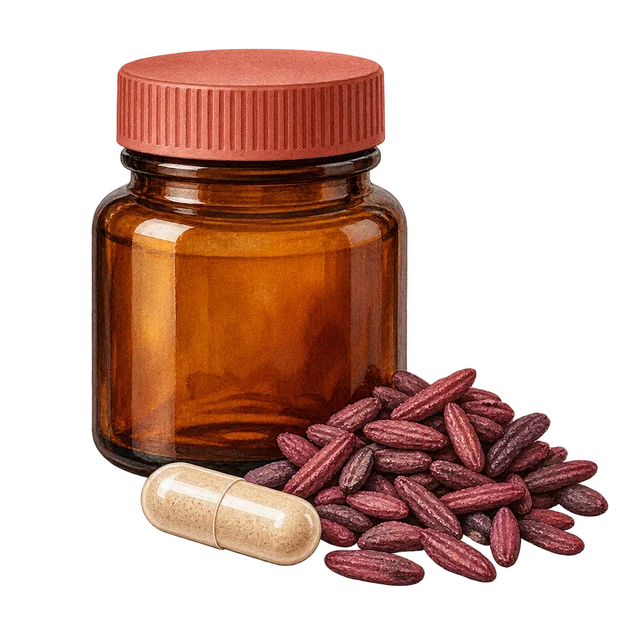
Rice fermented with Monascus fungi, commonly M. purpureus, supplied as an oral supplement. “Red yeast rice” is a market name; the fermenting organism is a mould.
Ingredient details, preparation and research
Source plant or material
Oryza sativa grain fermented with Monascus species; a fungal-fermentation product.
Plant family / material: Not assigned: this record is defined by its chemical or product identity.
Forms and route
Oral supplement. Oral route only unless a historical context is expressly separated.
Vitamins and minerals
No universal serving values apply to this formulation. A constituent being present does not establish nutritional adequacy or clinical benefit.
Traditional and reported uses
- Red yeast rice can carry statin-like harms and uncertain strength.
Contraindications and cautions
- Do not combine with statins or use for self-managed statin intolerance. Review liver, kidney and muscle risks with a clinician.
- Avoid during pregnancy or breastfeeding. Muscle, liver and kidney harms and drug interactions can occur.
Similar items and how they compare
- Plain Asian rice (existing card 352)
Rice provides the starting grain.
Monascus fermentation can add pharmacologically active compounds and contaminants.
Identity and composition
Rice fermented with Monascus fungi, commonly M. purpureus, supplied as an oral supplement. “Red yeast rice” is a market name; the fermenting organism is a mould. Some products contain monacolin K, chemically the same as lovastatin. Amounts vary; contamination with the kidney toxin citrinin is another concern.
What the human evidence can show
Monacolin K is lovastatin; some products also contain kidney-toxic citrinin. Products differ greatly. A natural label does not make them safer than regulated medicine.
Safety and limits
Do not combine with statins or use for self-managed statin intolerance. Review liver, kidney and muscle risks with a clinician. Avoid during pregnancy or breastfeeding. Muscle, liver and kidney harms and drug interactions can occur.
Evidence limits
- Products differ greatly. A natural label does not make them safer than regulated medicine.
- A product-specific result cannot establish every commercial preparation.
Entry sources
Reference entry 582 · Recorded content review: 2026-10-11 · Review scope and dates