


Key cautions
- Do not use this material to clean breast milk or treat an infant through maternal dosing.
- Avoid self-directed use in pregnancy or breastfeeding; the study raises poisoning concerns and does not establish safety.
What’s inside
A reliable composition profile for the exact preparation was not established in this review; chemistry from another plant part is not transferred.
Uses in brief

- Milk-cleaning tradition (traditional account).
- Milk-supply reports (traditional account).
History, folklore and reported uses
History, folklore and traditional uses
BaKongo participants in Uíge described milk-cleaning beliefs and milk-supply practices. The researchers explain that milk cleaning has no matching scientific diagnosis; normal variation in milk appearance does not prove contamination.
Traditional, historical and reported uses
- Milk-cleaning tradition
Traditional accountWhy this label?
The source is retained with its design and preparation limits; reported use is not upgraded to clinical effectiveness.
The survey records a culturally defined milk-cleaning practice. It does not demonstrate that breast milk needs cleansing or that maternal plant use treats infant illness.
- Milk-supply reports
Traditional accountWhy this label?
The source is retained with its design and preparation limits; reported use is not upgraded to clinical effectiveness.
Some reports concern increasing milk supply, but the table groups leaves and bark. A separate efficacy claim for either material cannot be inferred.
Includes only uses and context documented for this material. Historical reporting is not proof of benefit; no use-count quota is applied.
Women’s Health: traditions, evidence and cautions
Historical use does not establish benefit or safety. Pregnancy, breastfeeding and fertility care require particular caution: food, tea, essential oil and concentrated extract are not interchangeable. These records are not treatment, dosing or pregnancy-management instructions. Discuss supplements with a qualified clinician or pharmacist; do not delay evaluation of persistent symptoms.
Yellow mombin
Spondias mombin L.
- Plant part / material
- Leaves and bark, source-grouped overview
- Preparation studied or reported
- The Angola survey groups leaves and bark in one row. It does not establish one combined recipe or assign every reported indication to each part.
Yellow mombin is Spondias mombin. This qualified overview retains the source’s unresolved leaf/bark grouping; fruit and Spondias dulcis are excluded.
BaKongo participants in Uíge described milk-cleaning beliefs and milk-supply practices. The researchers explain that milk cleaning has no matching scientific diagnosis; normal variation in milk appearance does not prove contamination.
Milk-cleaning tradition
Traditional account
Reported or traditional useThe survey records a culturally defined milk-cleaning practice. It does not demonstrate that breast milk needs cleansing or that maternal plant use treats infant illness.
What the evidence supportsThis is an interview study, not a milk-volume or infant-outcome trial. The authors discuss poisoning reports, including children after leaf consumption; those observations raise concern but do not quantify a safe exposure or prove that bark has the same toxicity. The unresolved table cannot support an invented leaf-and-bark mixture or a part-specific clinical claim.
Do not use this material to clean breast milk or treat an infant through maternal dosing. Avoid self-directed use in pregnancy or breastfeeding; the study raises poisoning concerns and does not establish safety. Infant diarrhoea, poor feeding or concerns about milk supply need clinical and feeding assessment.
Milk-supply reports
Traditional account
Reported or traditional useSome reports concern increasing milk supply, but the table groups leaves and bark. A separate efficacy claim for either material cannot be inferred.
What the evidence supportsThis is an interview study, not a milk-volume or infant-outcome trial. The authors discuss poisoning reports, including children after leaf consumption; those observations raise concern but do not quantify a safe exposure or prove that bark has the same toxicity. The unresolved table cannot support an invented leaf-and-bark mixture or a part-specific clinical claim.
Do not use this material to clean breast milk or treat an infant through maternal dosing. Avoid self-directed use in pregnancy or breastfeeding; the study raises poisoning concerns and does not establish safety. Infant diarrhoea, poor feeding or concerns about milk supply need clinical and feeding assessment.
Keep unresolved source grouping explicit; no automatic inheritance of original composite uses.
- Do not use this material to clean breast milk or treat an infant through maternal dosing.
- Avoid self-directed use in pregnancy or breastfeeding; the study raises poisoning concerns and does not establish safety.
- Infant diarrhoea, poor feeding or concerns about milk supply need clinical and feeding assessment.
- Jendras et al. 2020: BaKongo plants, food and breastmilk traditions
- Kew Plants of the World Online: Spondias mombin
Read the complete historical reference and its material distinctions
Identity & detailed reference
Identity
Yellow mombin is Spondias mombin. This qualified overview retains the source’s unresolved leaf/bark grouping; fruit and Spondias dulcis are excluded.
Ingredient details, preparation and research
Source plant or material
Spondias mombin L.; Leaves and bark, source-grouped overview
Plant family / material: Anacardiaceae
Forms and route
The Angola survey groups leaves and bark in one row. It does not establish one combined recipe or assign every reported indication to each part.
Absorption and preparation
No absorption-enhancement directions are established for this material. An extract, food, infusion and isolated chemical can deliver different substances; study results do not establish a home preparation.
Traditional and reported uses
- Milk-cleaning tradition: The survey records a culturally defined milk-cleaning practice. It does not demonstrate that breast milk needs cleansing or that maternal plant use treats infant illness.
- Milk-supply reports: Some reports concern increasing milk supply, but the table groups leaves and bark. A separate efficacy claim for either material cannot be inferred.
Contraindications and cautions
- Do not use this material to clean breast milk or treat an infant through maternal dosing.
- Avoid self-directed use in pregnancy or breastfeeding; the study raises poisoning concerns and does not establish safety.
- Infant diarrhoea, poor feeding or concerns about milk supply need clinical and feeding assessment.
Identity and exact material
Yellow mombin is Spondias mombin. This qualified overview retains the source’s unresolved leaf/bark grouping; fruit and Spondias dulcis are excluded. The Angola survey groups leaves and bark in one row. It does not establish one combined recipe or assign every reported indication to each part.
Evidence and preparation boundaries
This is an interview study, not a milk-volume or infant-outcome trial. The authors discuss poisoning reports, including children after leaf consumption; those observations raise concern but do not quantify a safe exposure or prove that bark has the same toxicity. The unresolved table cannot support an invented leaf-and-bark mixture or a part-specific clinical claim.
Safety and uncertainty
Do not use this material to clean breast milk or treat an infant through maternal dosing. Avoid self-directed use in pregnancy or breastfeeding; the study raises poisoning concerns and does not establish safety. Infant diarrhoea, poor feeding or concerns about milk supply need clinical and feeding assessment.
Evidence limits
- The source groups leaves and bark without a fully resolved part-to-use assignment. This overview does not pretend they are one preparation.
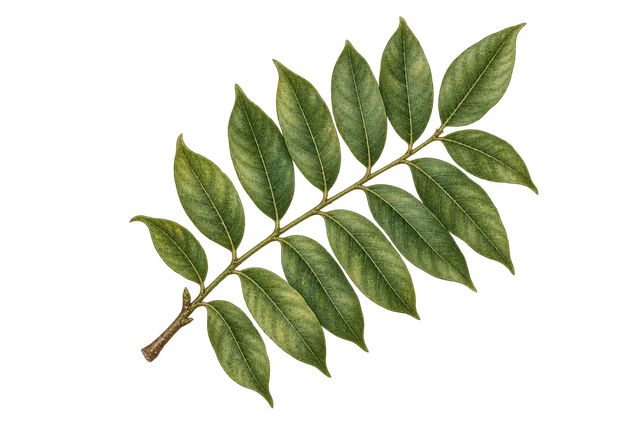
- Exact bark morphology was not established; contextual plant art must be labelled as such.
Entry sources
- Jendras et al. 2020: BaKongo plants, food and breastmilk traditions
- Kew Plants of the World Online: Spondias mombin
Reference entry 569 · Recorded content review: 2026-10-11 · Review scope and dates