


Key cautions
- Contains caffeine; consider total caffeine from all drinks and personal sensitivity.
- Use verified food-grade Ilex vomitoria leaves, never holly berries or unidentified ornamental foliage.
- People limiting caffeine, including during pregnancy, should follow their clinician’s guidance rather than assuming native tea is caffeine-free.
What’s inside
Caffeine and polyphenols are documented; concentrations vary by cultivar, plant and processing. A laboratory antioxidant measurement is not a disease-prevention effect.
Uses in brief

- Leaf infusion
- Roasted tea flavor
History, folklore and reported uses
History, folklore and traditional uses
UF/IFAS documents centuries of yaupon tea use and a modern Florida industry. Its scientific name reflects a historical association with purification practices, not a recommendation to induce vomiting or recreate ceremonies.
Traditional, historical and reported uses
- Leaf infusion
Food or household practiceWhy this label?
Label describes the stated practice or evidence, not an efficacy grade. Exact form and cautions remain attached.
Prepared leaves make a caffeinated drink. This everyday beverage use can be described without appropriating or reconstructing ceremonial practices.
- Roasted tea flavor
Food or household practiceWhy this label?
Label describes the stated practice or evidence, not an efficacy grade. Exact form and cautions remain attached.
UF/IFAS distinguishes the appearance and flavor of teas made from fresh versus roasted leaves. Roasting is a food-processing distinction, not evidence of a stronger health effect.
2 supported uses; records describe the named form and are not treatment recommendations.
Historical-use additions reviewed 2026-10-09
Regional reading paths
These sourced notes describe cultivation, trade, food traditions or material history. A regional connection does not claim exclusive origin.
North America
Native/cultivated: southeastern United States, including Florida.
Prepared leaves make a caffeinated tea; berries are not the tea ingredient.
Identity & detailed reference
Identity
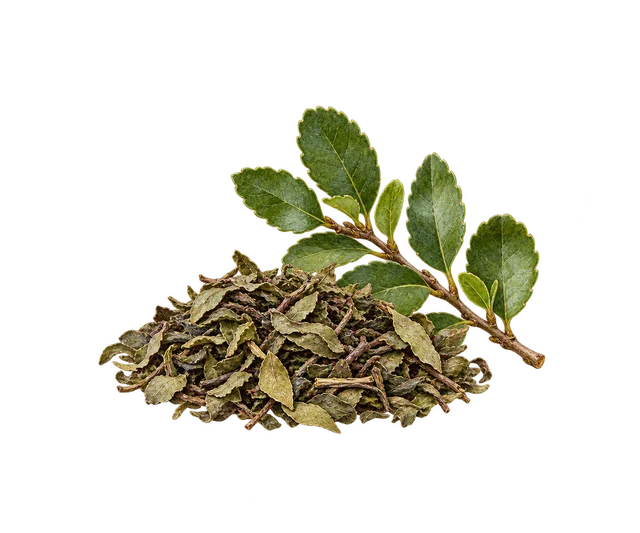
Ilex vomitoria leaves and suitable small twigs prepared as tea. The red berries and other holly species are excluded.
Ingredient details, preparation and research
Also known as: Yaupon tea
Source plant or material
Ilex vomitoria
Plant family / material: Aquifoliaceae
Forms and route
Commercial dried or roasted tea leaves and their water infusion. Whole leaves, brewed tea and concentrated extracts have different compositions.
Vitamins and minerals
Unsweetened infusion is primarily a beverage. Added sugar, milk or other ingredients determine additional nutrients and energy.
Absorption and preparation
Brewing extracts caffeine into water; the amount cannot be inferred reliably from leaf color. Re-steeping should not be assumed to make every product caffeine-free.
Practical preparation
Follow the packaged tea’s brewing directions with potable hot water. Buy material grown or gathered for food; ornamental shrubs may have unsuitable pesticide exposure.
Traditional and reported uses
- Leaf infusion
- Roasted tea flavor
Contraindications and cautions
- Contains caffeine; consider total caffeine from all drinks and personal sensitivity.
- Use verified food-grade Ilex vomitoria leaves, never holly berries or unidentified ornamental foliage.
- People limiting caffeine, including during pregnancy, should follow their clinician’s guidance rather than assuming native tea is caffeine-free.
Composition research, not a clinical trial
Palumbo and colleagues investigated caffeine and antioxidant chemistry in yaupon. Results depend on the tested plants and infusion; they do not prove superior health outcomes compared with coffee or Camellia tea.
Evidence limits
Regional history and food/material practice do not establish treatment efficacy. Composition depends on the named species, part and preparation; no medicinal dose or universal nutrient ranking is inferred.
Entry sources
- UF/IFAS Gardening Solutions: Yaupon Holly Tea
- UF/IFAS: Yaupon, Ilex vomitoria
- Palumbo, Talcott and Putz (2009): Ilex vomitoria, caffeinated tea
Reference entry 392 · Recorded content review: 2026-10-09 · Review scope and dates