


Key cautions
- Caffeine may worsen insomnia, anxiety or palpitations
- Avoid drinking it scalding hot
What’s inside
Caffeine, theobromine and phenolic compounds including caffeoylquinic acids; brewing and repeated pours change extraction.
Uses in brief

- Caffeinated leaf beverage
- Regional beverage craft
History, folklore and reported uses
History, folklore and traditional uses
Argentina’s account credits Guaraní use and later cultivation and trade. Argentina, Paraguay and Brazil provide regional connections, but a single national account should not stand in for every community’s preparation or meanings.
Traditional, historical and reported uses
- Caffeinated leaf beverage
Food or household practiceWhy this label?
The cited material is a specified culinary ingredient or beverage, with its own preparation limits; no medical effect is inferred.
Argentina’s official cultural account describes mate prepared from dried leaves and its widespread social role. The familiar drinking vessel also carries the name mate.
- Regional beverage craft
Traditional accountWhy this label?
Source documents this specific material, culinary use or attributed practice; no clinical efficacy is inferred.
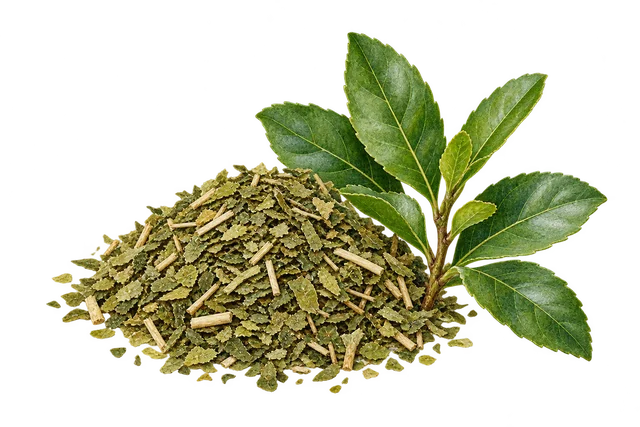
Official Argentine specifications distinguish dried, lightly toasted and fragmented yerba. Processing and the inclusion of stems can change the product, so labels matter when comparing blends.
2 bounded uses; regional records do not establish treatment effects.
Historical-use additions reviewed 2026-10-09
Regional reading paths
These sourced notes describe cultivation, trade, food traditions or material history. A regional connection does not claim exclusive origin.
South America
native and cultivated; Argentina, Paraguay, Brazil
Caffeinated leaf infusion with Guaraní historical roots.
Identity & detailed reference
Identity
Ilex paraguariensis; processed leaves and sometimes small stem fragments of Ilex paraguariensis; other hollies are not interchangeable.
Ingredient details, preparation and research
Also known as: Ilex paraguariensis
Source plant or material
Ilex paraguariensis
Plant family / material: Aquifoliaceae
Forms and route
Dried yerba for infusion, loose leaf and tea bags; extracts and energy drinks are separately formulated products.
Vitamins and minerals
A brewed cup is not nutritionally identical to dry leaves. No fixed caffeine or mineral amount is assigned to an unspecified preparation.
Absorption and preparation
Beverage extraction depends on leaf amount, temperature and contact time. Combining it with other stimulants increases total exposure rather than creating a demonstrated beneficial synergy.
Practical preparation
Use identified beverage-grade yerba and potable water. Follow product preparation guidance and let the drink cool to a comfortable temperature before sipping.
Traditional and reported uses
- Caffeinated leaf beverage
- Regional beverage craft
Contraindications and cautions
- Caffeine may worsen insomnia, anxiety or palpitations. Pregnancy, breastfeeding, childhood and relevant medications require individual caffeine guidance.
- Avoid drinking it scalding hot. IARC’s concern about very hot beverages is distinct from a claim that all cooled mate causes cancer.
Chemical and temperature boundaries
Leaf analysis identifies methylxanthines and phenolics; it does not establish weight-loss or cardiovascular treatment. IARC separately evaluates injury-related concern from consuming beverages very hot.
Evidence limits
This is a beverage review, not a stimulant prescription. Clinical claims for extracts or mixed energy products are not transferred to a traditional infusion.
Entry sources
- Argentina: El mate
- Primary analysis of constituents in Ilex paraguariensis leaves
- IARC: Questions and answers on maté and very hot beverages
- Argentina: Yerba mate quality protocol
Reference entry 426 · Recorded content review: 2026-10-09 · Review scope and dates