


Key cautions
- Papaya can cause allergy, including cross-reactions in some people allergic to latex or kiwi.
- Do not use a food tradition to replace assessment of low milk supply or poor infant growth.
What’s inside
A reliable composition profile for the exact preparation was not established in this review; chemistry from another plant part is not transferred.
Uses in brief

- Postpartum food tradition (food or household practice).
History, folklore and reported uses
History, folklore and traditional uses
The Vanuatu account places cooked papaya alongside other staple foods in postpartum meals. This is a food-history record, not a formula or a claim that a single ingredient explains milk production.
Traditional, historical and reported uses
- Postpartum food tradition
Food or household practiceWhy this label?
The source is retained with its design and preparation limits; reported use is not upgraded to clinical effectiveness.
Cooked papaya fruit was included in a Vanuatu diet intended to support lactation. A shared meal tradition does not establish an independent therapeutic effect.
Includes only uses and context documented for this material. Historical reporting is not proof of benefit; no use-count quota is applied.
Women’s Health: traditions, evidence and cautions
Historical use does not establish benefit or safety. Pregnancy, breastfeeding and fertility care require particular caution: food, tea, essential oil and concentrated extract are not interchangeable. These records are not treatment, dosing or pregnancy-management instructions. Discuss supplements with a qualified clinician or pharmacist; do not delay evaluation of persistent symptoms.
Cooked papaya fruit: postpartum food history
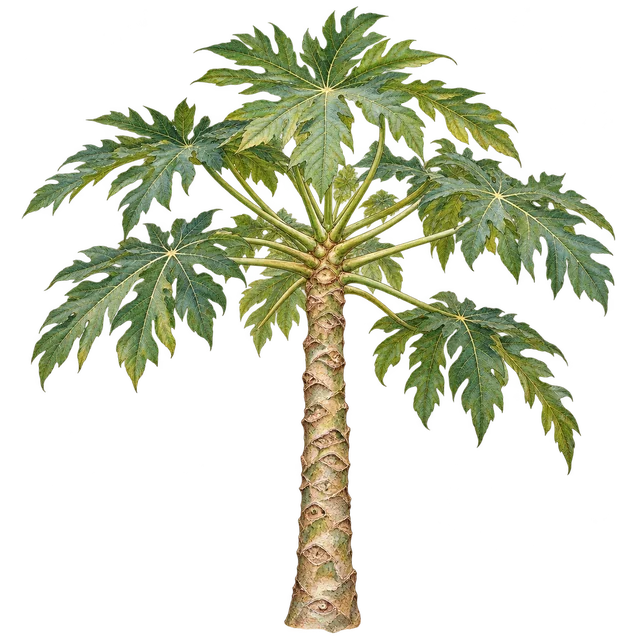
Carica papaya L.
- Plant part / material
- Cooked fruit; ripeness unspecified in the Vanuatu passage
- Preparation studied or reported
- Papaya fruit eaten as part of a cooked postpartum diet. Fruit ripeness, portion and recipe are not stated in the original Vanuatu passage; no medicinal extract is inferred.
This card concerns cooked Carica papaya fruit in the Vanuatu food record. It does not identify the meal as ripe or unripe, and it excludes leaf, root, seed, papain and crude latex.
The Vanuatu account places cooked papaya alongside other staple foods in postpartum meals. This is a food-history record, not a formula or a claim that a single ingredient explains milk production.
Postpartum food tradition
Food or household practice
Reported or traditional useCooked papaya fruit was included in a Vanuatu diet intended to support lactation. A shared meal tradition does not establish an independent therapeutic effect.
What the evidence supportsLactMed finds no scientifically valid trial establishing papaya fruit or leaves as milk-supply treatments. Its discussion of cooked unripe fruit in other traditions does not fill in the missing ripeness in this Vanuatu record. Fruit food history cannot establish root, leaf or latex safety. The card therefore preserves uncertainty instead of assigning another fruit card’s serving or nutrient values.
Papaya can cause allergy, including cross-reactions in some people allergic to latex or kiwi. Do not use a food tradition to replace assessment of low milk supply or poor infant growth. The evidence does not establish safety of a medicinal course or of other papaya parts during pregnancy or breastfeeding.
Composite source must not be copied wholesale. Use this record’s explicit material_profile only; other papaya parts and routes are excluded.
- Papaya can cause allergy, including cross-reactions in some people allergic to latex or kiwi.
- Do not use a food tradition to replace assessment of low milk supply or poor infant growth.
- The evidence does not establish safety of a medicinal course or of other papaya parts during pregnancy or breastfeeding.
- Bourdy and Walter 1992: Maternity and medicinal plants in Vanuatu
- LactMed: Papaya, January 2025
- Kew Plants of the World Online: Carica papaya
Read the complete historical reference and its material distinctions
Identity & detailed reference
Identity
This card concerns cooked Carica papaya fruit in the Vanuatu food record. It does not identify the meal as ripe or unripe, and it excludes leaf, root, seed, papain and crude latex.
Ingredient details, preparation and research
Source plant or material
Carica papaya L.; Cooked fruit; ripeness unspecified in the Vanuatu passage
Plant family / material: Caricaceae
Forms and route
Papaya fruit eaten as part of a cooked postpartum diet. Fruit ripeness, portion and recipe are not stated in the original Vanuatu passage; no medicinal extract is inferred.
Vitamins and minerals
No recipe-specific nutrient figures are assigned. Ripeness, cooking method and serving size are unspecified; ripe fresh-pulp figures would be a different food form.
Absorption and preparation
No absorption-enhancement directions are established for this material. An extract, food, infusion and isolated chemical can deliver different substances; study results do not establish a home preparation.
Traditional and reported uses
- Postpartum food tradition: Cooked papaya fruit was included in a Vanuatu diet intended to support lactation. A shared meal tradition does not establish an independent therapeutic effect.
Contraindications and cautions
- Papaya can cause allergy, including cross-reactions in some people allergic to latex or kiwi.
- Do not use a food tradition to replace assessment of low milk supply or poor infant growth.
- The evidence does not establish safety of a medicinal course or of other papaya parts during pregnancy or breastfeeding.
Identity and exact material
This card concerns cooked Carica papaya fruit in the Vanuatu food record. It does not identify the meal as ripe or unripe, and it excludes leaf, root, seed, papain and crude latex. Papaya fruit eaten as part of a cooked postpartum diet. Fruit ripeness, portion and recipe are not stated in the original Vanuatu passage; no medicinal extract is inferred.
Evidence and preparation boundaries
LactMed finds no scientifically valid trial establishing papaya fruit or leaves as milk-supply treatments. Its discussion of cooked unripe fruit in other traditions does not fill in the missing ripeness in this Vanuatu record. Fruit food history cannot establish root, leaf or latex safety. The card therefore preserves uncertainty instead of assigning another fruit card’s serving or nutrient values.
Safety and uncertainty
Papaya can cause allergy, including cross-reactions in some people allergic to latex or kiwi. Do not use a food tradition to replace assessment of low milk supply or poor infant growth. The evidence does not establish safety of a medicinal course or of other papaya parts during pregnancy or breastfeeding.
Evidence limits
- This is a focused source review, not a systematic clinical review. A traditional indication or laboratory result does not establish an effective or safe treatment.
- A lack of reported adverse effects is not proof of safety. No therapeutic dose or preparation is recommended.
Entry sources
- Bourdy and Walter 1992: Maternity and medicinal plants in Vanuatu
- LactMed: Papaya, January 2025
- Kew Plants of the World Online: Carica papaya
Reference entry 565 · Recorded content review: 2026-10-11 · Review scope and dates