


Key cautions
- The cited lactation evidence does not establish medicinal-use safety during pregnancy; postpartum traditions must not be extrapolated to pregnancy.
- Do not recommend fennel tea as a self-directed pregnancy or breastfeeding treatment; regulatory estragole concerns and uncertain infant safety warrant professional review.
- Avoid with relevant carrot/celery/Apiaceae allergy; photosensitivity and other allergic reactions are reported.
What’s inside
Fruit volatile components include anethole, fenchone and estragole. Anethole can enter breastmilk; food flavour does not establish safety of concentrated preparations.
Uses in brief

- Culinary dried-fruit spice.
- Lactation and digestive traditions; medicinal pregnancy/breastfeeding use is cautioned against.
History, folklore and reported uses
History, folklore and traditional uses
Dahanu Warli fieldwork records fennel fruits in nursing-mother foods and drinks; LactMed summarizes broader lactation traditions.
Traditional, historical and reported uses
- Lactation / milk-supply tradition
Human researchWhy this label?
A few small studies report selected milk or infant outcomes; evidence is insufficient for dependable efficacy, and mixed-tea findings are not fennel-only results.
Fennel fruit preparations are used as purported milk stimulants. A few small studies report selected milk or infant outcomes; evidence is insufficient for dependable efficacy, and mixed-tea findings are not fennel-only results.
- Culinary spice
Food or household practiceWhy this label?
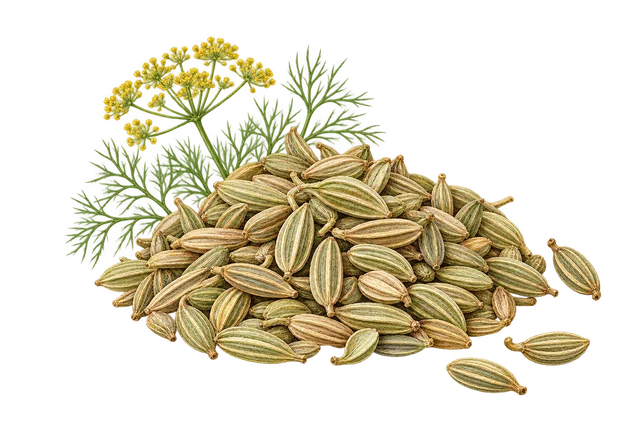
NC State records aromatic fennel fruits, conventionally called seeds, in cakes and breads. That culinary use is distinct from medicinal tea, isolated compounds and essential oil.
NC State records aromatic fennel fruits, conventionally called seeds, in cakes and breads. That culinary use is distinct from medicinal tea, isolated compounds and essential oil.
- Digestive tradition with regulatory caution
Traditional accountWhy this label?
Swissmedic describes the traditional anti-gas and cramp-relief reputation, while warning that tea exposure to estragole is variable. Its 2024 preliminary advice excludes pregnancy and breastfeeding use of fennel tea/medicinal preparations.
Swissmedic describes the traditional anti-gas and cramp-relief reputation, while warning that tea exposure to estragole is variable. Its 2024 preliminary advice excludes pregnancy and breastfeeding use of fennel tea/medicinal preparations.
Coverage reflects verified sources, without a minimum use quota.
Women’s Health: traditions, evidence and cautions
Historical use does not establish benefit or safety. Pregnancy, breastfeeding and fertility care require particular caution: food, tea, essential oil and concentrated extract are not interchangeable. These records are not treatment, dosing or pregnancy-management instructions. Discuss supplements with a qualified clinician or pharmacist; do not delay evaluation of persistent symptoms.
Fennel fruit
Foeniculum vulgare Mill.
- Plant part / material
- Dried fruit, conventionally called seed
- Preparation studied or reported
- Species-level Foeniculum vulgare fruit. Variety is not established; sweet-fennel equivalence is unconfirmed. Culinary fruit, medicinal infusion and concentrated essential oil have different exposures.
Species-level Foeniculum vulgare fruit. Variety is not established; sweet-fennel equivalence is unconfirmed. Culinary fruit, medicinal infusion and concentrated essential oil have different exposures.
Dahanu Warli fieldwork records fennel fruits in nursing-mother foods and drinks; LactMed summarizes broader lactation traditions.
Lactation / milk-supply tradition
Human research
Reported or traditional useFennel fruit preparations are used as purported milk stimulants. A few small studies report selected milk or infant outcomes; evidence is insufficient for dependable efficacy, and mixed-tea findings are not fennel-only results.
What the evidence supportsA few small studies report selected milk or infant outcomes; evidence is insufficient for dependable efficacy, and mixed-tea findings are not fennel-only results.
The cited lactation evidence does not establish medicinal-use safety during pregnancy; postpartum traditions must not be extrapolated to pregnancy. Do not recommend fennel tea as a self-directed pregnancy or breastfeeding treatment; regulatory estragole concerns and uncertain infant safety warrant professional review. Avoid with relevant carrot/celery/Apiaceae allergy; photosensitivity and other allergic reactions are reported. Do not use medicinal fennel tea as a self-directed milk-supply or pregnancy treatment.
Culinary spice
Food or household practice
Reported or traditional useNC State records aromatic fennel fruits, conventionally called seeds, in cakes and breads. That culinary use is distinct from medicinal tea, isolated compounds and essential oil.
What the evidence supportsNC State records aromatic fennel fruits, conventionally called seeds, in cakes and breads. That culinary use is distinct from medicinal tea, isolated compounds and essential oil.
The cited lactation evidence does not establish medicinal-use safety during pregnancy; postpartum traditions must not be extrapolated to pregnancy. Do not recommend fennel tea as a self-directed pregnancy or breastfeeding treatment; regulatory estragole concerns and uncertain infant safety warrant professional review. Avoid with relevant carrot/celery/Apiaceae allergy; photosensitivity and other allergic reactions are reported. Do not use medicinal fennel tea as a self-directed milk-supply or pregnancy treatment.
Digestive tradition with regulatory caution
Traditional account
Reported or traditional useSwissmedic describes the traditional anti-gas and cramp-relief reputation, while warning that tea exposure to estragole is variable. Its 2024 preliminary advice excludes pregnancy and breastfeeding use of fennel tea/medicinal preparations.
What the evidence supportsSwissmedic describes the traditional anti-gas and cramp-relief reputation, while warning that tea exposure to estragole is variable. Its 2024 preliminary advice excludes pregnancy and breastfeeding use of fennel tea/medicinal preparations.
The cited lactation evidence does not establish medicinal-use safety during pregnancy; postpartum traditions must not be extrapolated to pregnancy. Do not recommend fennel tea as a self-directed pregnancy or breastfeeding treatment; regulatory estragole concerns and uncertain infant safety warrant professional review. Avoid with relevant carrot/celery/Apiaceae allergy; photosensitivity and other allergic reactions are reported. Do not use medicinal fennel tea as a self-directed milk-supply or pregnancy treatment.
Species-level Foeniculum vulgare fruit. Variety is not established; sweet-fennel equivalence is unconfirmed. Culinary fruit, medicinal infusion and concentrated essential oil have different exposures.
- The cited lactation evidence does not establish medicinal-use safety during pregnancy; postpartum traditions must not be extrapolated to pregnancy.
- Do not recommend fennel tea as a self-directed pregnancy or breastfeeding treatment; regulatory estragole concerns and uncertain infant safety warrant professional review.
- Avoid with relevant carrot/celery/Apiaceae allergy; photosensitivity and other allergic reactions are reported.
- Do not use medicinal fennel tea as a self-directed milk-supply or pregnancy treatment.
- Sayed, Deo and Mukundan (2007): Herbal remedies used by Warlis of Dahanu to induce lactation in nursing mothers
- LactMed: Fennel
- Swissmedic: Fennel preliminary recommendation, 2024
- NC State Extension Plant Toolbox: foeniculum vulgare
Read the complete historical reference and its material distinctions
Identity & detailed reference
Identity
Foeniculum vulgare Mill.; Dried fruit, conventionally called seed. The reviewed reproductive literature identifies Foeniculum vulgare at species level and does not establish sweet fennel var. dulce for every reported use or study. Card 22 is a related comparison only; do not transfer these claims as sweet-fennel-specific evidence.
Ingredient details, preparation and research
Also known as: fennel seed; Foeniculum vulgare fruit
Source plant or material
Foeniculum vulgare Mill. — Dried fruit, conventionally called seed
Plant family / material: Apiaceae (carrot family)
Forms and route
Species-level Foeniculum vulgare fruit. Variety is not established; sweet-fennel equivalence is unconfirmed. Culinary fruit, medicinal infusion and concentrated essential oil have different exposures.
Vitamins and minerals
No nutrient quantities or daily-value claims are assigned to this medicinal material. Do not borrow the food nutrient profile of another plant part or use an extract as a dietary substitute.
Absorption and preparation
Preparation and route matter. A tea, whole powder, alcohol extract and isolated constituent can give different exposures. No food pairing or absorption-enhancement technique is established by the sources reviewed.
Traditional and reported uses
- Fennel fruit preparations are used as purported milk stimulants. A few small studies report selected milk or infant outcomes; evidence is insufficient for dependable efficacy, and mixed-tea findings are not fennel-only results.
- NC State records aromatic fennel fruits, conventionally called seeds, in cakes and breads. That culinary use is distinct from medicinal tea, isolated compounds and essential oil.
- Swissmedic describes the traditional anti-gas and cramp-relief reputation, while warning that tea exposure to estragole is variable. Its 2024 preliminary advice excludes pregnancy and breastfeeding use of fennel tea/medicinal preparations.
Contraindications and cautions
- The cited lactation evidence does not establish medicinal-use safety during pregnancy; postpartum traditions must not be extrapolated to pregnancy.
- Do not recommend fennel tea as a self-directed pregnancy or breastfeeding treatment; regulatory estragole concerns and uncertain infant safety warrant professional review.
- Avoid with relevant carrot/celery/Apiaceae allergy; photosensitivity and other allergic reactions are reported.
- Do not use medicinal fennel tea as a self-directed milk-supply or pregnancy treatment.
Similar items and how they compare
- Sweet fennel fruit
Existing card 22
That card specifies var. dulce; the Warli and LactMed sources identify Foeniculum vulgare only.
- Fennel bulb
Same plant complex
The swollen leaf-base vegetable is not the dried fruit.
- Fennel essential oil
Concentrated fruit constituent product
Not interchangeable with food seasoning or fruit tea.
Identity and composition
Foeniculum vulgare Mill.; Dried fruit, conventionally called seed. The reviewed reproductive literature identifies Foeniculum vulgare at species level and does not establish sweet fennel var. dulce for every reported use or study. Card 22 is a related comparison only; do not transfer these claims as sweet-fennel-specific evidence. Fruit volatile components include anethole, fenchone and estragole. Anethole can enter breastmilk; food flavour does not establish safety of concentrated preparations.
Lactation / milk-supply tradition: what evidence can say
A few small studies report selected milk or infant outcomes; evidence is insufficient for dependable efficacy, and mixed-tea findings are not fennel-only results. Anethole reaches milk. Excessive mixed herbal tea was associated with toxicity in two newborns; the particular ingredient was not proven. Allergy and photosensitivity are possible. Fennel contains estragole. Swissmedic’s 2024 preliminary recommendation advises against fennel tea and medicinal fennel use during pregnancy and breastfeeding. LactMed describes a more permissive assessment of usual maternal exposure but also reports limited evidence and toxicity after excessive mixed tea use; these assessments should not be presented as a consensus of safety.
Exact material and preparation boundaries
Species-level Foeniculum vulgare fruit. Variety is not established; sweet-fennel equivalence is unconfirmed. Culinary fruit, medicinal infusion and concentrated essential oil have different exposures.
Medicines, pregnancy and breastfeeding
LactMed and Swissmedic differ in how cautiously they assess usual maternal exposure; present both rather than claiming unanimous safety. Small and mixed-product studies do not settle infant safety or efficacy. No robust preparation-specific interaction map was established in this review; discuss medicinal products with a clinician.
Source-supported safety summary
The cited lactation evidence does not establish medicinal-use safety during pregnancy; postpartum traditions must not be extrapolated to pregnancy. Do not recommend fennel tea as a self-directed pregnancy or breastfeeding treatment; regulatory estragole concerns and uncertain infant safety warrant professional review. Avoid with relevant carrot/celery/Apiaceae allergy; photosensitivity and other allergic reactions are reported. Do not use medicinal fennel tea as a self-directed milk-supply or pregnancy treatment.
Evidence limits
- This is a focused educational source review, not a systematic review or a treatment plan.
- Traditional use documents a practice; it does not establish clinical benefit. Laboratory findings and multi-ingredient trials cannot establish a single ingredient’s effects.
- Warli original PDF was verified through indexed Table 1 after direct opening failed. The cited row establishes species and fruit use but not var. dulce.
Entry sources
- Sayed, Deo and Mukundan (2007): Herbal remedies used by Warlis of Dahanu to induce lactation in nursing mothers
- LactMed: Fennel
- Swissmedic: Fennel preliminary recommendation, 2024
- NC State Extension Plant Toolbox: foeniculum vulgare
Reference entry 563 · Recorded content review: 2026-10-11 · Review scope and dates