


Key cautions
- Discard seeds before blending.
- Avoid assuming leaf tea or extracts share ordinary food safety.
What’s inside
Fruit pulp contributes carbohydrate, fiber, vitamin C and potassium. The plant also contains acetogenins, including compounds investigated for neurotoxicity; a chemical’s presence does not establish a therapeutic benefit.
Uses in brief

- Ripe fruit pulp
- Seed-free drinks and frozen desserts
- Caribbean traditional-use history
History, folklore and reported uses
History, folklore and traditional uses
Kew places soursop’s native range from southern Mexico through parts of Central and South America to Venezuela and Peru. Long cultivation has carried it through the Caribbean and far beyond.
Caribbean names tell part of that food story: guanábana in Spanish-speaking communities, corossol or korosòl in French and Creole contexts, and soursop in English. A familiar name still needs a species and plant-part boundary.
A closer look at its history
An American fruit in a Singapore garden
NParks records tropical American origin and documents soursop in Singapore’s edible gardens, where its flesh enters drinks and desserts. Names such as guanabana and durian belanda sit beside one botanical identity, Annona muricata. These records demonstrate a crop living across regions, but do not establish a single route or date for every introduction.
Additional history reviewed 2026-10-12
Traditional, historical and reported uses
- Ripe pulp eaten fresh
Food or household practiceWhy this label?
This records an identified food preparation or material practice, without claiming a medical outcome.
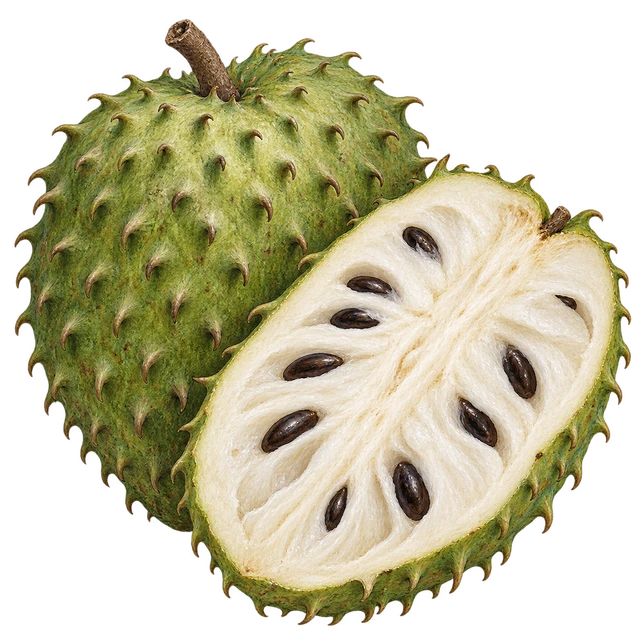
The soft white flesh is a sweet-tart fruit food. Separate it carefully from the dark seeds and skin; the seed-free pulp is the edible material described here.
- Fruit drinks and smoothies
Food or household practiceWhy this label?
This records an identified food preparation or material practice, without claiming a medical outcome.
The pulp is used in drinks, including blended fruit beverages. Remove seeds before processing; commercial nectar may contain added water and sugar.
- Ice cream and other chilled desserts
Food or household practiceWhy this label?
This records an identified food preparation or material practice, without claiming a medical outcome.
NParks records soursop in ice cream and desserts. Its aromatic pulp contributes the fruit flavor; a finished dessert also reflects its milk, sweeteners and other ingredients.
- Guadeloupean leaf-infusion tradition
Traditional accountWhy this label?
The source records a community’s intended traditional use; it does not establish clinical benefit or a safe home treatment.
A Grande-Terre ethnobotanical survey documented soursop leaves used in a bedtime infusion for stress and insomnia. This preserves an attributed Caribbean practice, not proof of effectiveness or a recommendation to make the tea.
Distinct documented practices are featured without filling a quota. Food, material use and traditional remedy accounts retain separate evidence labels; none is a cure claim.
Historical-use additions reviewed 2026-10-09
Story sources
- Kew POWO: Annona muricata L.
- TRAMIL: Annona muricata, Caribbean vernacular names
- Jamaica Forestry Department: Food and fruit tree inventory
- Singapore NParks: Annona muricata L.
- MD Anderson: Soursop, does this tropical fruit have health benefits?
- Memorial Sloan Kettering: Graviola
- Raclariu-Manolica et al. (2020): Risk assessment regarding the use of Annona muricata in food supplements
- Medicinal Plants and Plant-Based Remedies in Grande-Terre: An Ethnopharmacological Approach (2023)
- FDA: Selecting and Serving Produce Safely
- FDA: What You Need to Know About Juice Safety
Growing notes
Annona muricata fruit tree; not cherimoya, sugar apple, or a medicinal leaf or seed production recommendation.
- Climate and lifecycle
- A tropical perennial tree. The cited NParks advice is for Singapore, not a US winter-hardiness trial. In a frost-prone US location, confirm protected growing feasibility locally; do not infer outdoor survival from instructions for year-round tropical gardens. [1]
- Sun, soil and water
- Provide at least six hours of direct sun and substantial root space. NParks recommends ground planting or very deep containers, with loamy, well-drained soil. Water and mulch in dry periods, but avoid root-suffocating saturation. [2]
- Starting and pruning
- Seedlings, grafts and woody cuttings are possible starts. Prune for airflow and manageable picking height. Seedling fruit traits and timing vary. [2]
- Flowers and first crop
- Expect years rather than months: NParks reports around three years from seed, with its flora account allowing 3–5. Beetles pollinate in the native range; local pollinators differ. Poor fruit set may require knowledgeable hand-pollination rather than simply adding fertilizer. [2] [1]
Growing sources and regional guidance
Growing notes reviewed 2026-10-12
Regional reading paths
These sourced notes describe cultivation, trade, food traditions or material history. A regional connection does not claim exclusive origin.
North America
Cultivated/traditional food: Caribbean.
Ripe fruit pulp used in foods and drinks; seeds excluded.
Identity & detailed reference
Identity
The ripe white fruit pulp of Annona muricata, with peel, core and seeds removed. The names sour sop, guanábana and graviola refer here to this verified species; mountain soursop and other Annona fruits are different plants.
Ingredient details, preparation and research
Also known as: sour sop; Sour-sop; Guanábana; Guanabana; Graviola; Corossol; Korosòl; Guyabano
Source plant or material
Annona muricata L.
Plant family / material: Annonaceae
Forms and route
Fresh seed-free pulp, frozen food-grade pulp, fruit drinks and desserts. Leaf tea, seed powder and concentrated graviola extracts are separate preparations.
Vitamins and minerals
The edible pulp supplies fiber, carbohydrate, vitamin C and potassium. No serving-specific copper value or “high in” claim is assigned here. Strained drinks, sweetened nectars and ice cream do not have the same composition as plain pulp.
Absorption and preparation
No soursop-specific absorption advantage is established. Extract experiments cannot predict how nutrients from a fruit serving are absorbed.
Practical preparation
Wash, open and remove the peel, core and all seeds. Use only the ripe pulp for eating or blending, and refrigerate the prepared fruit. Follow storage directions for packaged frozen pulp.
Combination context
No medicinal combination or required nutrient-absorption pairing is established for this food.
Combination notes
Use seed-free pulp with ordinary drink or dessert ingredients to taste. Added sugar and dairy change the recipe; no medicinal pairing is implied.
Traditional and reported uses
- Ripe fruit pulp
- Seed-free drinks and frozen desserts
- Caribbean traditional-use history
Contraindications and cautions
- Remove and discard every seed before blending; do not eat or grind the seeds.
- Do not use soursop, leaf tea or graviola supplements to treat cancer or replace prescribed care. Discuss supplements with your cancer team.
- Long-term or heavy exposure and concentrated preparations raise neurological safety concerns. The available evidence does not establish a safe medicinal dose or daily supplement regimen.
- Check with a clinician before medicinal use, especially with blood-pressure or glucose-lowering medicines. Supplement safety cannot be inferred from eating fruit.
- Wash the fruit before opening and refrigerate cut pulp. For purchased drinks, use properly treated products and follow the label.
Similar items and how they compare
- Sugar apple / sweetsop
Another Annona fruit with white pulp.
Annona squamosa has a segmented, knobby exterior and is a different species.
- Graviola leaf tea or supplement
May be made from Annona muricata.
Plant part, concentration and exposure differ; the food card does not validate medicinal use.
Cancer claims exceed the human evidence
Cancer-cell and animal findings do not show that eating soursop or taking a leaf product treats cancer in people. MD Anderson advises against using it as cancer treatment.
Neurological questions remain unresolved
A 2020 EU-FORA project at BfR identified neurotoxic potential in some Annona muricata preparations and major uncertainties around long-term supplement use. It could not establish a safe supplement intake level. This does not define a toxic threshold for an occasional fruit serving.
Ordinary food and medicinal exposure differ
MSK distinguishes generally tolerated fruit food from stronger supplements. Medication interactions and preparation-specific safety must be reviewed separately; repeated medicinal tea use is not covered by a fruit’s culinary history.
Evidence limits
This overview cannot establish a safe long-term high intake, medicinal dose or supplement regimen. Botanical, ethnobotanical and laboratory evidence answer different questions. No cancer-treatment or prevention claim is made.
Entry sources
- Kew POWO: Annona muricata L.
- TRAMIL: Annona muricata, Caribbean vernacular names
- Jamaica Forestry Department: Food and fruit tree inventory
- Singapore NParks: Annona muricata L.
- MD Anderson: Soursop, does this tropical fruit have health benefits?
- Memorial Sloan Kettering: Graviola
- Raclariu-Manolica et al. (2020): Risk assessment regarding the use of Annona muricata in food supplements
- Medicinal Plants and Plant-Based Remedies in Grande-Terre: An Ethnopharmacological Approach (2023)
- FDA: Selecting and Serving Produce Safely
- FDA: What You Need to Know About Juice Safety
Reference entry 254 · Recorded content review: 2026-10-09 · Review scope and dates