


Key cautions
- Do not use inner bark to manage difficult labour; skilled obstetric assessment is needed.
- Avoid self-directed use in pregnancy or breastfeeding because safety is unestablished.
What’s inside
A reliable composition profile for the exact preparation was not established in this review; chemistry from another plant part is not transferred.
Uses in brief

- Childbirth and belief history (traditional account).
- Laxative history (traditional account).
History, folklore and reported uses
History, folklore and traditional uses
The manual places one childbirth practice within an aitu, or spirit-related, explanation. That belief deserves accurate attribution without presenting it as a biological cause.
Traditional, historical and reported uses
- Childbirth and belief history
Traditional accountWhy this label?
The source is retained with its design and preparation limits; reported use is not upgraded to clinical effectiveness.
Inner bark is recorded in an aitu-framed difficult-childbirth practice. This is a cultural account, not evidence that bark makes delivery safe.
- Laxative history
Traditional accountWhy this label?
The source is retained with its design and preparation limits; reported use is not upgraded to clinical effectiveness.
The manual also records an inner-bark laxative use. It provides no modern clinical or safety validation.
Includes only uses and context documented for this material. Historical reporting is not proof of benefit; no use-count quota is applied.
Women’s Health: traditions, evidence and cautions
Historical use does not establish benefit or safety. Pregnancy, breastfeeding and fertility care require particular caution: food, tea, essential oil and concentrated extract are not interchangeable. These records are not treatment, dosing or pregnancy-management instructions. Discuss supplements with a qualified clinician or pharmacist; do not delay evaluation of persistent symptoms.
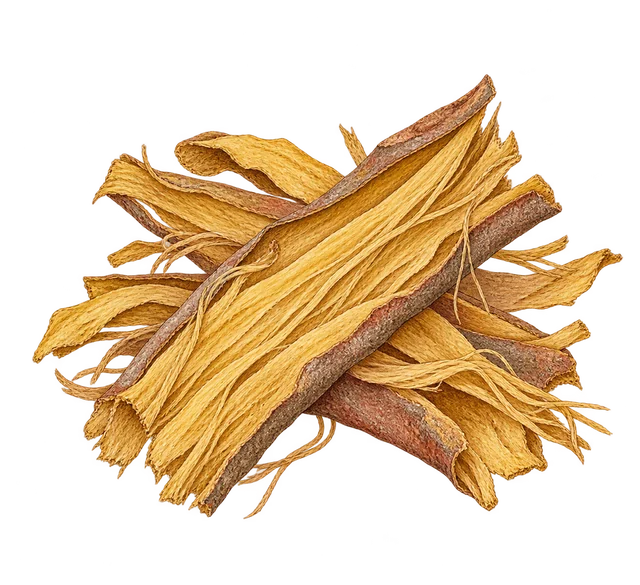
Moso‘oi / ylang-ylang inner bark
Cananga odorata (Lam.) Hook.f. & Thomson
- Plant part / material
- Inner bark
- Preparation studied or reported
- Historical expressed inner-bark liquid; no extraction, dose or childbirth instructions provided. Flower essential oil is a different material.
Moso-oi in this record means Cananga odorata inner bark. Ylang-ylang flower oil is not bark medicine and does not inherit this history.
Childbirth and belief history
Traditional account
Reported or traditional useInner bark is recorded in an aitu-framed difficult-childbirth practice. This is a cultural account, not evidence that bark makes delivery safe.
What the evidence supportsThe source is retained with its design and preparation limits; reported use is not upgraded to clinical effectiveness.
Do not use inner bark to manage difficult labour; skilled obstetric assessment is needed. Avoid self-directed use in pregnancy or breastfeeding because safety is unestablished. Do not transfer flower-oil instructions, food status or cosmetic safety to inner bark.
Laxative history
Traditional account
Reported or traditional useThe manual also records an inner-bark laxative use. It provides no modern clinical or safety validation.
What the evidence supportsThe source is retained with its design and preparation limits; reported use is not upgraded to clinical effectiveness.
Do not use inner bark to manage difficult labour; skilled obstetric assessment is needed. Avoid self-directed use in pregnancy or breastfeeding because safety is unestablished. Do not transfer flower-oil instructions, food status or cosmetic safety to inner bark.
Only the exact part and formulation described here; related existing cards do not inherit these claims.
- Do not use inner bark to manage difficult labour; skilled obstetric assessment is needed.
- Avoid self-directed use in pregnancy or breastfeeding because safety is unestablished.
- Do not transfer flower-oil instructions, food status or cosmetic safety to inner bark.
- Samoan Medicinal Plants and Their Usage, second edition 2001
- Conn and Damas: Guide to Trees of Papua New Guinea, Cananga odorata
Read the complete historical reference and its material distinctions
Identity & detailed reference
Identity
Moso-oi in this record means Cananga odorata inner bark. Ylang-ylang flower oil is not bark medicine and does not inherit this history.
Ingredient details, preparation and research
Also known as: moso-oi; ylang-ylang inner bark
Source plant or material
Cananga odorata (Lam.) Hook.f. & Thomson; Inner bark
Plant family / material: Annonaceae
Forms and route
Historical expressed inner-bark liquid; no extraction, dose or childbirth instructions provided. Flower essential oil is a different material.
Absorption and preparation
No absorption-enhancement directions are established for this material. An extract, food, infusion and isolated chemical can deliver different substances; study results do not establish a home preparation.
Traditional and reported uses
- Childbirth and belief history: Inner bark is recorded in an aitu-framed difficult-childbirth practice. This is a cultural account, not evidence that bark makes delivery safe.
- Laxative history: The manual also records an inner-bark laxative use. It provides no modern clinical or safety validation.
Contraindications and cautions
- Do not use inner bark to manage difficult labour; skilled obstetric assessment is needed.
- Avoid self-directed use in pregnancy or breastfeeding because safety is unestablished.
- Do not transfer flower-oil instructions, food status or cosmetic safety to inner bark.
Identity and exact material
Moso-oi in this record means Cananga odorata inner bark. Ylang-ylang flower oil is not bark medicine and does not inherit this history. Historical expressed inner-bark liquid; no extraction, dose or childbirth instructions provided. Flower essential oil is a different material.
Evidence and preparation boundaries
Neither the historical account nor a botanical description establishes an effective or safe obstetric medicine. The material is inner bark, not fragrant petals, distilled flower oil or isolated scent chemicals. No exact-bark pregnancy, lactation or interaction data sufficient for self-treatment were established.
Safety and uncertainty
Do not use inner bark to manage difficult labour; skilled obstetric assessment is needed. Avoid self-directed use in pregnancy or breastfeeding because safety is unestablished. Do not transfer flower-oil instructions, food status or cosmetic safety to inner bark.
Evidence limits
- This is a focused source review, not a systematic clinical review. A traditional indication or laboratory result does not establish an effective or safe treatment.
- A lack of reported adverse effects is not proof of safety. No therapeutic dose or preparation is recommended.
Entry sources
- Samoan Medicinal Plants and Their Usage, second edition 2001
- Conn and Damas: Guide to Trees of Papua New Guinea, Cananga odorata
Reference entry 560 · Recorded content review: 2026-10-11 · Review scope and dates