


Key cautions
- Use food fruit and distinguish it from other Syzygium species.
- Do not transfer experimental seed, leaf or bark extracts to fresh-fruit health claims.
What’s inside
Juicy fruit contains water and carbohydrate with variable pigments. No standardized medicinal-active composition is assigned.
Uses in brief

- Fresh fruit
- Cultivated fruit-tree production
History, folklore and reported uses
History, folklore and traditional uses
University of Hawaiʻi describes a South/Southeast Asian origin and long Pacific cultivation, including a Polynesian introduction to Hawaiʻi. Regional familiarity is therefore not the same as Hawaiian endemism.
Traditional, historical and reported uses
- Fresh fruit
Food or household practiceWhy this label?
Sources document this named food or material use; no therapeutic outcome is claimed.
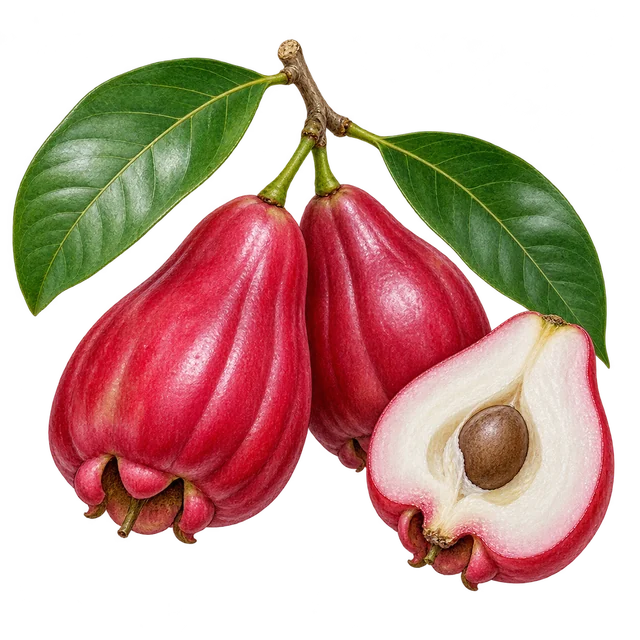
CTAHR and Hawaiʻi DLNR identify the fruit as edible, with a crisp, watery character. The food scope is the fruit flesh.
- Cultivated fruit-tree production
Food or household practiceWhy this label?
Sources document this named food or material use; no therapeutic outcome is claimed.
University agricultural material treats mountain apple as a tropical fruit crop. This supports garden and orchard food supply without adding unrelated bark-remedy claims.
2 narrowly supported uses; no clinical efficacy or universal preparation is inferred.
Historical-use additions reviewed 2026-10-09
Regional reading paths
These sourced notes describe cultivation, trade, food traditions or material history. A regional connection does not claim exclusive origin.
Australia & Oceania
introduced/traded and cultivated; Hawaiʻi and wider Pacific
Fresh fruit.
Identity & detailed reference
Identity
Syzygium malaccense; mountain/Malay apple or ʻōhiʻa ʻai, distinct from Malus apples, wax apple and rose apple.
Ingredient details, preparation and research
Source plant or material
Syzygium malaccense; mountain/Malay apple or ʻōhiʻa ʻai, distinct from Malus apples, wax apple and rose apple.
Plant family / material: Myrtaceae
Forms and route
Ripe food fruit, principally the edible flesh; not leaves, seed extracts or medicinal bark.
Vitamins and minerals
Do not borrow a temperate-apple or another Syzygium fruit’s nutrient values. Ripeness, cultivar and edible-portion definitions affect comparisons.
Absorption and preparation
Fresh flesh and strained or sweetened products contain different proportions of water and solids; no unique absorption benefit is established.
Practical preparation
Choose sound, ripe food fruit. Wash and handle with clean utensils; remove non-food seed/cores as appropriate and follow local produce-storage guidance. Discard damaged or spoiled fruit.
Traditional and reported uses
- CTAHR and Hawaiʻi DLNR identify the fruit as edible, with a crisp, watery character. The food scope is the fruit flesh.
- University agricultural material treats mountain apple as a tropical fruit crop. This supports garden and orchard food supply without adding unrelated bark-remedy claims.
Contraindications and cautions
- Use food fruit and distinguish it from other Syzygium species.
- Do not transfer experimental seed, leaf or bark extracts to fresh-fruit health claims.
Common names overlap
Mountain apple, water apple and rose apple are applied inconsistently in trade. Keep Syzygium malaccense on supplier and catalog records; a visually similar S. samarangense product should not silently share this card.
Introduction and cultural use
A crop can be introduced botanically and still have a deep regional food history. The Hawaiian account supports that distinction without rewriting its Asian origin or implying that every island uses the fruit identically.
Evidence limits
This is a food/material reference, not evidence of disease treatment. Geographic and customary-use records do not establish a medicinal dose. Nutrient quantities are omitted unless a matching food form and serving have been verified.
Entry sources
- University of Hawaiʻi CTAHR: Syzygium malaccense
- Hawaiʻi DLNR: ʻŌhiʻa ʻai
- University of Hawaiʻi CTAHR: Tropical fruit production, mountain apple
Reference entry 512 · Recorded content review: 2026-10-09 · Review scope and dates