


Key cautions
- Do not use kamunye to end a pregnancy, induce labour or control postpartum bleeding.
- Avoid self-directed medicinal use in pregnancy and breastfeeding because safety is not established.
What’s inside
A reliable composition profile for the exact preparation was not established in this review; chemistry from another plant part is not transferred.
Uses in brief

- Maternal-care history (traditional account).
History, folklore and reported uses
History, folklore and traditional uses
The Najjembe study records local maternal-care knowledge and identifies collected plants with voucher records. A botanical voucher supports identity, not efficacy.
Traditional, historical and reported uses
- Maternal-care history
Traditional accountWhy this label?
The source is retained with its design and preparation limits; reported use is not upgraded to clinical effectiveness.
The survey records leaf use for contractions and postpartum bleeding, as well as pregnancy-ending purposes. These are historical reports with serious safety implications.
Includes only uses and context documented for this material. Historical reporting is not proof of benefit; no use-count quota is applied.
Story sources
Women’s Health: traditions, evidence and cautions
Historical use does not establish benefit or safety. Pregnancy, breastfeeding and fertility care require particular caution: food, tea, essential oil and concentrated extract are not interchangeable. These records are not treatment, dosing or pregnancy-management instructions. Discuss supplements with a qualified clinician or pharmacist; do not delay evaluation of persistent symptoms.
Hoslundia / kamunye
Hoslundia opposita Vahl
- Plant part / material
- Leaves
- Preparation studied or reported
- Historical medicinal leaf decoction; no preparation, timing or dose directions provided.
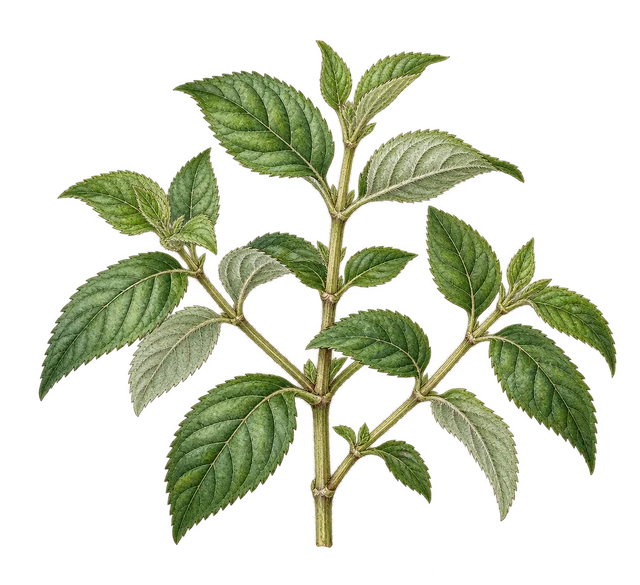
Kamunye in the Ugandan survey is Hoslundia opposita, an aromatic shrub in the mint family. Fruiting calyces are distinct from the medicinal leaves described here.
Maternal-care history
Traditional account
Reported or traditional useThe survey records leaf use for contractions and postpartum bleeding, as well as pregnancy-ending purposes. These are historical reports with serious safety implications.
What the evidence supportsThe source is retained with its design and preparation limits; reported use is not upgraded to clinical effectiveness.
Do not use kamunye to end a pregnancy, induce labour or control postpartum bleeding. Avoid self-directed medicinal use in pregnancy and breastfeeding because safety is not established. Heavy bleeding, severe pain, fainting or fever requires urgent medical assessment.
Only the exact part and formulation described here; related existing cards do not inherit these claims.
- Do not use kamunye to end a pregnancy, induce labour or control postpartum bleeding.
- Avoid self-directed medicinal use in pregnancy and breastfeeding because safety is not established.
- Heavy bleeding, severe pain, fainting or fever requires urgent medical assessment.
- 2024 Najjembe maternal ethnomedicine survey
- Kew Plants of the World Online: Hoslundia opposita
- WHO 2025: Consolidated guidelines for postpartum haemorrhage
Read the complete historical reference and its material distinctions
Identity & detailed reference
Identity
Kamunye in the Ugandan survey is Hoslundia opposita, an aromatic shrub in the mint family. Fruiting calyces are distinct from the medicinal leaves described here.
Ingredient details, preparation and research
Also known as: kamunye
Source plant or material
Hoslundia opposita Vahl; Leaves
Plant family / material: Lamiaceae
Forms and route
Historical medicinal leaf decoction; no preparation, timing or dose directions provided.
Absorption and preparation
No absorption-enhancement directions are established for this material. An extract, food, infusion and isolated chemical can deliver different substances; study results do not establish a home preparation.
Traditional and reported uses
- Maternal-care history: The survey records leaf use for contractions and postpartum bleeding, as well as pregnancy-ending purposes. These are historical reports with serious safety implications.
Contraindications and cautions
- Do not use kamunye to end a pregnancy, induce labour or control postpartum bleeding.
- Avoid self-directed medicinal use in pregnancy and breastfeeding because safety is not established.
- Heavy bleeding, severe pain, fainting or fever requires urgent medical assessment.
Identity and exact material
Kamunye in the Ugandan survey is Hoslundia opposita, an aromatic shrub in the mint family. Fruiting calyces are distinct from the medicinal leaves described here. Historical medicinal leaf decoction; no preparation, timing or dose directions provided.
Evidence and preparation boundaries
The source is a community interview survey. A report of labour-related use is not a verified uterotonic treatment, and it cannot establish a safe dose or reliable pregnancy outcome. The reviewed sources do not establish medicinal lactation safety, infant exposure, or exact-leaf drug interactions. No pregnancy-ending instructions are reproduced.
Safety and uncertainty
Do not use kamunye to end a pregnancy, induce labour or control postpartum bleeding. Avoid self-directed medicinal use in pregnancy and breastfeeding because safety is not established. Heavy bleeding, severe pain, fainting or fever requires urgent medical assessment.
Evidence limits
- This is a focused source review, not a systematic clinical review. A traditional indication or laboratory result does not establish an effective or safe treatment.
- A lack of reported adverse effects is not proof of safety. No therapeutic dose or preparation is recommended.
Entry sources
- 2024 Najjembe maternal ethnomedicine survey
- Kew Plants of the World Online: Hoslundia opposita
- WHO 2025: Consolidated guidelines for postpartum haemorrhage
Reference entry 557 · Recorded content review: 2026-10-11 · Review scope and dates