


Key cautions
- Medicinal pregnancy and breastfeeding safety is unestablished.
- Do not apply another nopal species’ health claims to this cactus or infer hormonal activity from the hot-flash tradition.
What’s inside
A reliable composition profile for the exact preparation was not established in this review; chemistry from another plant part is not transferred.
Uses in brief

- Menopause tradition (traditional account).
- Food and fodder (food or household practice).
- Cochineal production (food or household practice).
History, folklore and reported uses
History, folklore and traditional uses
The common name cochineal nopal reflects its use as a host for dye-producing insects. The dye comes from the insects, not from extracting a red pigment from green cactus pads.
Traditional, historical and reported uses
- Menopause tradition
Traditional accountWhy this label?
The source is retained with its design and preparation limits; reported use is not upgraded to clinical effectiveness.
The survey records stem joints for hot flashes and menopause. It gives no validated formulation or clinical result.
- Food and fodder
Food or household practiceWhy this label?
The source is retained with its design and preparation limits; reported use is not upgraded to clinical effectiveness.
Flora of North America documents pads as food and fodder. That history does not identify the unknown medicinal preparation or prove a therapeutic effect.
- Cochineal production
Food or household practiceWhy this label?
The source is retained with its design and preparation limits; reported use is not upgraded to clinical effectiveness.
Botanical references describe the cactus as a host for cochineal insects raised for red dye. This is a material and agricultural use, not a health claim.
Includes only uses and context documented for this material. Historical reporting is not proof of benefit; no use-count quota is applied.
Women’s Health: traditions, evidence and cautions
Historical use does not establish benefit or safety. Pregnancy, breastfeeding and fertility care require particular caution: food, tea, essential oil and concentrated extract are not interchangeable. These records are not treatment, dosing or pregnancy-management instructions. Discuss supplements with a qualified clinician or pharmacist; do not delay evaluation of persistent symptoms.
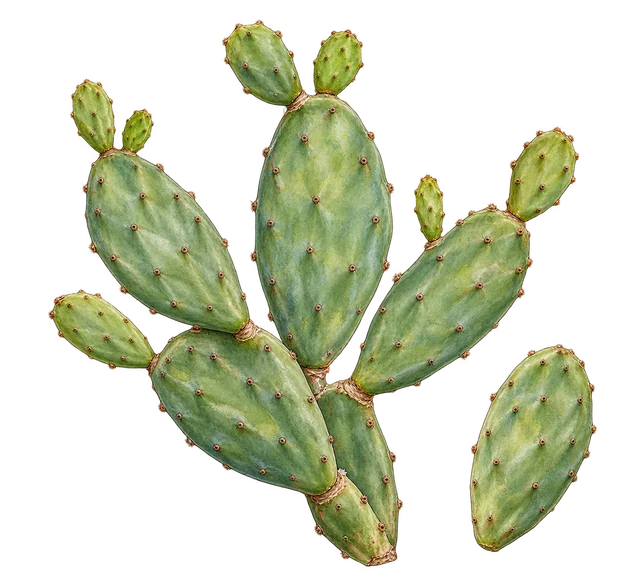
Rachette / cochineal nopal
Nopalea cochinellifera (L.) Salm-Dyck as reported; also treated as Opuntia cochenillifera
- Plant part / material
- Stem segments (cladodes; source calls them joints)
- Preparation studied or reported
- Medicinal stem-segment preparation unspecified in the Trinidad table. Food pads and industrial host plants are separate uses, not a validated menopause product.
The reproductive survey uses Nopalea cochinellifera; botanical sources use Nopalea cochenillifera and current Kew Opuntia cochenillifera. The material is a flattened stem segment, not a leaf, fruit or seed oil.
Menopause tradition
Traditional account
Reported or traditional useThe survey records stem joints for hot flashes and menopause. It gives no validated formulation or clinical result.
What the evidence supportsThe source is retained with its design and preparation limits; reported use is not upgraded to clinical effectiveness.
Medicinal pregnancy and breastfeeding safety is unestablished. Do not apply another nopal species’ health claims to this cactus or infer hormonal activity from the hot-flash tradition. Cactus surfaces can bear tiny glochids even when large spines are sparse; this reference is not a harvesting or preparation guide.
Food and fodder
Food or household practice
Reported or traditional useFlora of North America documents pads as food and fodder. That history does not identify the unknown medicinal preparation or prove a therapeutic effect.
What the evidence supportsThe source is retained with its design and preparation limits; reported use is not upgraded to clinical effectiveness.
Medicinal pregnancy and breastfeeding safety is unestablished. Do not apply another nopal species’ health claims to this cactus or infer hormonal activity from the hot-flash tradition. Cactus surfaces can bear tiny glochids even when large spines are sparse; this reference is not a harvesting or preparation guide.
Cochineal production
Food or household practice
Reported or traditional useBotanical references describe the cactus as a host for cochineal insects raised for red dye. This is a material and agricultural use, not a health claim.
What the evidence supportsThe source is retained with its design and preparation limits; reported use is not upgraded to clinical effectiveness.
Medicinal pregnancy and breastfeeding safety is unestablished. Do not apply another nopal species’ health claims to this cactus or infer hormonal activity from the hot-flash tradition. Cactus surfaces can bear tiny glochids even when large spines are sparse; this reference is not a harvesting or preparation guide.
Only the exact part and formulation described here; related existing cards do not inherit these claims.
- Medicinal pregnancy and breastfeeding safety is unestablished.
- Do not apply another nopal species’ health claims to this cactus or infer hormonal activity from the hot-flash tradition.
- Cactus surfaces can bear tiny glochids even when large spines are sparse; this reference is not a harvesting or preparation guide.
- Lans 2007: Ethnomedicines used in Trinidad and Tobago for reproductive problems
- Kew Plants of the World Online: Opuntia cochenillifera
- Flora of North America: Nopalea cochenillifera
Read the complete historical reference and its material distinctions
Identity & detailed reference
Identity
The reproductive survey uses Nopalea cochinellifera; botanical sources use Nopalea cochenillifera and current Kew Opuntia cochenillifera. The material is a flattened stem segment, not a leaf, fruit or seed oil.
Ingredient details, preparation and research
Also known as: rachette; cochineal nopal; Nopalea cochenillifera
Source plant or material
Nopalea cochinellifera (L.) Salm-Dyck as reported; also treated as Opuntia cochenillifera; Stem segments (cladodes; source calls them joints)
Plant family / material: Cactaceae
Forms and route
Medicinal stem-segment preparation unspecified in the Trinidad table. Food pads and industrial host plants are separate uses, not a validated menopause product.
Absorption and preparation
No absorption-enhancement directions are established for this material. An extract, food, infusion and isolated chemical can deliver different substances; study results do not establish a home preparation.
Traditional and reported uses
- Menopause tradition: The survey records stem joints for hot flashes and menopause. It gives no validated formulation or clinical result.
- Food and fodder: Flora of North America documents pads as food and fodder. That history does not identify the unknown medicinal preparation or prove a therapeutic effect.
- Cochineal production: Botanical references describe the cactus as a host for cochineal insects raised for red dye. This is a material and agricultural use, not a health claim.
Contraindications and cautions
- Medicinal pregnancy and breastfeeding safety is unestablished.
- Do not apply another nopal species’ health claims to this cactus or infer hormonal activity from the hot-flash tradition.
- Cactus surfaces can bear tiny glochids even when large spines are sparse; this reference is not a harvesting or preparation guide.
Identity and exact material
The reproductive survey uses Nopalea cochinellifera; botanical sources use Nopalea cochenillifera and current Kew Opuntia cochenillifera. The material is a flattened stem segment, not a leaf, fruit or seed oil. Medicinal stem-segment preparation unspecified in the Trinidad table. Food pads and industrial host plants are separate uses, not a validated menopause product.
Evidence and preparation boundaries
The botanical part called a joint is a stem segment, also called a cladode. The reproductive table does not specify processing. Food studies of another Opuntia species, fruit supplements, or cactus seed oil cannot establish this material’s menopause efficacy or reproductive safety. No exact preparation-specific medicine-interaction standard was located.
Safety and uncertainty
Medicinal pregnancy and breastfeeding safety is unestablished. Do not apply another nopal species’ health claims to this cactus or infer hormonal activity from the hot-flash tradition. Cactus surfaces can bear tiny glochids even when large spines are sparse; this reference is not a harvesting or preparation guide.
Evidence limits
- This is a focused source review, not a systematic clinical review. A traditional indication or laboratory result does not establish an effective or safe treatment.
- A lack of reported adverse effects is not proof of safety. No therapeutic dose or preparation is recommended.
Entry sources
- Lans 2007: Ethnomedicines used in Trinidad and Tobago for reproductive problems
- Kew Plants of the World Online: Opuntia cochenillifera
- Flora of North America: Nopalea cochenillifera
Reference entry 554 · Recorded content review: 2026-10-11 · Review scope and dates