


Key cautions
- For medically necessary gluten avoidance, choose a product protected from wheat, barley and rye cross-contact.
What’s inside
Starch, protein, fiber, lipids and minerals; outer layers can contain bitter saponins, with levels varying by cultivar and processing.
Uses in brief

- Cooked grain dishes
- Flour and processed grain foods
History, folklore and reported uses
History, folklore and traditional uses
FAO emphasizes the role of Indigenous Andean people in maintaining and protecting quinoa through agricultural knowledge. Peru and Bolivia are prominent regional examples; contemporary worldwide cultivation does not erase that history.
Traditional, historical and reported uses
- Cooked grain dishes
Food or household practiceWhy this label?
Source documents this specific material, culinary use or attributed practice; no clinical efficacy is inferred.
FAO documents quinoa as a food-security crop of the Andean region. Cooked grain can form the base of a meal rather than being treated as a supplement.
- Flour and processed grain foods
Food or household practiceWhy this label?
Source documents this specific material, culinary use or attributed practice; no clinical efficacy is inferred.
Research compares polished, milled and cooked quinoa, demonstrating that flour and whole grain are different processed materials. Food uses should follow instructions for the purchased form.
2 bounded uses; regional records do not establish treatment effects.
Historical-use additions reviewed 2026-10-09
Regional reading paths
These sourced notes describe cultivation, trade, food traditions or material history. A regional connection does not claim exclusive origin.
South America
native and cultivated; Peru, Bolivia
Cooked pseudocereal.
Identity & detailed reference
Identity
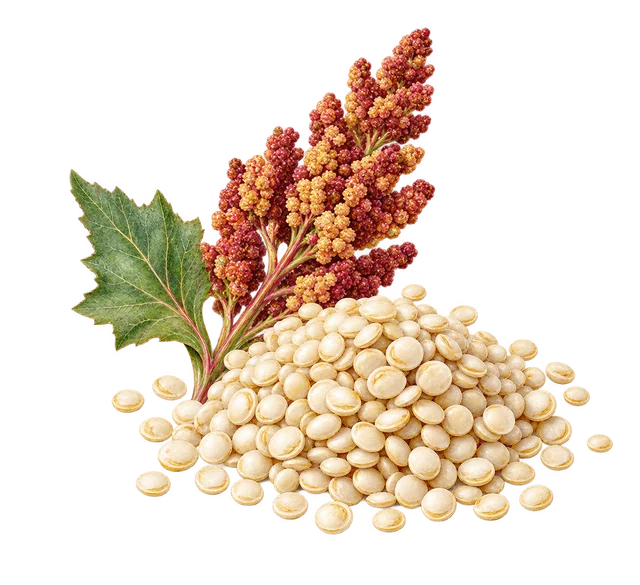
Chenopodium quinoa; the cleaned edible seeds of Chenopodium quinoa, a pseudocereal rather than wheat or rice.
Ingredient details, preparation and research
Also known as: Chenopodium quinoa
Source plant or material
Chenopodium quinoa
Plant family / material: Amaranthaceae
Forms and route
Dry cleaned grain, prewashed grain, flakes, flour and cooked dishes; leafy greens are a separate food form.
Vitamins and minerals
Dry-grain composition is not the same as cooked-grain composition because cooking adds water. No universal protein or mineral serving is supplied here.
Absorption and preparation
Processing can reduce saponins and also change mineral levels. A lower antinutrient measurement is not proof of a measured clinical absorption improvement.
Practical preparation
Use cleaned food-grade grain. Follow package rinsing and cooking directions; prewashed and unprocessed products should not be treated identically. Refrigerate cooked leftovers promptly.
Traditional and reported uses
- Cooked grain dishes
- Flour and processed grain foods
Contraindications and cautions
- Quinoa is not a treatment for nutrient deficiency or diabetes. A diverse diet and individualized medical care still matter.
- For medically necessary gluten avoidance, choose a product protected from wheat, barley and rye cross-contact.
Processing changes the ingredient
Studies measured changes in saponins, phenolics and minerals with milling and cooking. These are food-chemistry findings; antioxidant test results do not establish disease prevention from eating quinoa.
Evidence limits
This is a food-form review, not a treatment recommendation. Composition and laboratory findings apply to the material actually studied; no medicinal dose, universal nutrient ranking or preservation guarantee is inferred.
Entry sources
- FAO: Quinoa
- Processing and cooking effects on quinoa saponins and minerals
- Processing effects on quinoa phenolics and saponins
Reference entry 432 · Recorded content review: 2026-10-09 · Review scope and dates