


Key cautions
- Pregnancy and breastfeeding safety of the exact medicinal leaf preparations is not established in these trials.
- Discuss medicines and chronic conditions with a clinician; this review did not establish a complete interaction profile.
What’s inside
Quercetin was used as a standardization marker for one studied leaf product. Its amount in a home infusion is not established here, and the marker does not identify all clinically relevant constituents.
Uses in brief

- Menstrual-pain research (human research).
- Digestive-pain research (human research).
History, folklore and reported uses
History, folklore and traditional uses
Mexican researchers have studied leaf-derived medicines rather than simply testing guava as a fruit food. Their work illustrates why the identity of the manufactured preparation matters.
Traditional, historical and reported uses
- Menstrual-pain research
Human researchWhy this label?
The source is retained with its design and preparation limits; reported use is not upgraded to clinical effectiveness.
A randomized trial in 197 women found pain improvement with one standardized leaf-extract regimen; the lower-exposure regimen did not show a consistent result.
- Digestive-pain research
Human researchWhy this label?
The source is retained with its design and preparation limits; reported use is not upgraded to clinical effectiveness.
An earlier randomized study of QG-5 leaf extract reported shorter abdominal pain during acute diarrhoeal illness. It did not establish all leaf preparations as infection treatments.
- Mexican leaf-infusion traditions
Traditional accountWhy this label?
Primary trial introduction documents the tradition; the clinical intervention was a manufactured extract.
The trial authors describe guava leaf infusions in Mexican traditional medicine for menstrual cramps and digestive complaints, within a hot-and-cold explanatory framework. This is an attributed cultural account; it does not establish efficacy or equivalence to the standardized extracts tested.
Includes only uses and context documented for this material. Historical reporting is not proof of benefit; no use-count quota is applied.
Women’s Health: traditions, evidence and cautions
Historical use does not establish benefit or safety. Pregnancy, breastfeeding and fertility care require particular caution: food, tea, essential oil and concentrated extract are not interchangeable. These records are not treatment, dosing or pregnancy-management instructions. Discuss supplements with a qualified clinician or pharmacist; do not delay evaluation of persistent symptoms.
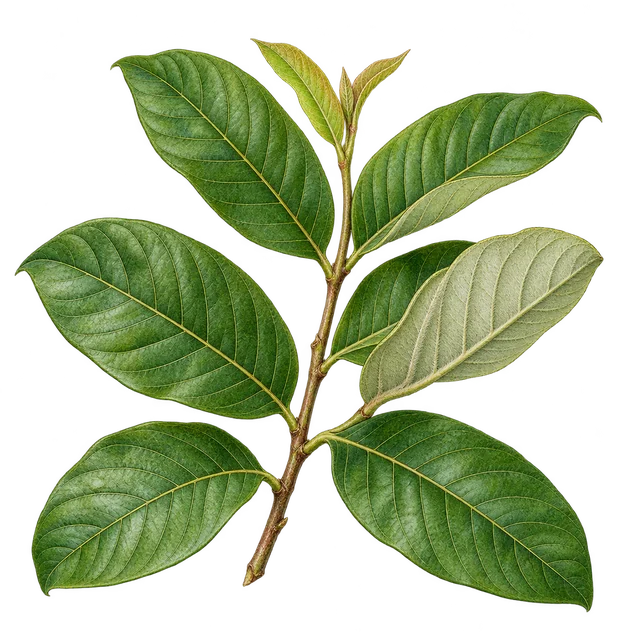
Guava leaf
Psidium guajava L.
- Plant part / material
- Leaves
- Preparation studied or reported
- Leaf medicinal materials and study-specific standardized extracts. A leaf infusion, an extract capsule and a serving of guava fruit are distinct exposures.
Only the exact part and formulation described here; related existing cards do not inherit these claims.
Mexican researchers have studied leaf-derived medicines rather than simply testing guava as a fruit food. Their work illustrates why the identity of the manufactured preparation matters.
Menstrual-pain research
Human research
Reported or traditional useA randomized trial in 197 women found pain improvement with one standardized leaf-extract regimen; the lower-exposure regimen did not show a consistent result.
What the evidence supportsThe source is retained with its design and preparation limits; reported use is not upgraded to clinical effectiveness.
Pregnancy and breastfeeding safety of the exact medicinal leaf preparations is not established in these trials. Discuss medicines and chronic conditions with a clinician; this review did not establish a complete interaction profile. Severe, new or worsening menstrual pain and persistent diarrhoea need assessment; a leaf product must not delay care.
Digestive-pain research
Human research
Reported or traditional useAn earlier randomized study of QG-5 leaf extract reported shorter abdominal pain during acute diarrhoeal illness. It did not establish all leaf preparations as infection treatments.
What the evidence supportsThe source is retained with its design and preparation limits; reported use is not upgraded to clinical effectiveness.
Pregnancy and breastfeeding safety of the exact medicinal leaf preparations is not established in these trials. Discuss medicines and chronic conditions with a clinician; this review did not establish a complete interaction profile. Severe, new or worsening menstrual pain and persistent diarrhoea need assessment; a leaf product must not delay care.
Mexican leaf-infusion traditions
Traditional account
Reported or traditional useThe trial authors describe guava leaf infusions in Mexican traditional medicine for menstrual cramps and digestive complaints, within a hot-and-cold explanatory framework. This is an attributed cultural account; it does not establish efficacy or equivalence to the standardized extracts tested.
What the evidence supportsPrimary trial introduction documents the tradition; the clinical intervention was a manufactured extract.
Pregnancy and breastfeeding safety of the exact medicinal leaf preparations is not established in these trials. Discuss medicines and chronic conditions with a clinician; this review did not establish a complete interaction profile. Severe, new or worsening menstrual pain and persistent diarrhoea need assessment; a leaf product must not delay care.
Only the exact part and formulation described here; related existing cards do not inherit these claims.
- Pregnancy and breastfeeding safety of the exact medicinal leaf preparations is not established in these trials.
- Discuss medicines and chronic conditions with a clinician; this review did not establish a complete interaction profile.
- Severe, new or worsening menstrual pain and persistent diarrhoea need assessment; a leaf product must not delay care.
- Doubova et al. 2007: Psidii guajavae folium extract in primary dysmenorrhea
- Lozoya et al. 2002: Guava leaf phytodrug in acute diarrhoeal disease
- Doubova et al. 2007: Mexican leaf-use context and dysmenorrhoea trial
Read the complete historical reference and its material distinctions
Identity & detailed reference
Identity
This is Psidium guajava leaf. It is not ripe guava fruit, fruit juice, seed material or another guava species. The clinical evidence belongs to named extracts, not every leaf product.
Ingredient details, preparation and research
Also known as: Psidii guajavae folium
Source plant or material
Psidium guajava L.; Leaves
Plant family / material: Myrtaceae
Forms and route
Leaf medicinal materials and study-specific standardized extracts. A leaf infusion, an extract capsule and a serving of guava fruit are distinct exposures.
Absorption and preparation
No absorption-enhancement directions are established for this material. An extract, food, infusion and isolated chemical can deliver different substances; study results do not establish a home preparation.
Traditional and reported uses
- Menstrual-pain research: A randomized trial in 197 women found pain improvement with one standardized leaf-extract regimen; the lower-exposure regimen did not show a consistent result.
- Digestive-pain research: An earlier randomized study of QG-5 leaf extract reported shorter abdominal pain during acute diarrhoeal illness. It did not establish all leaf preparations as infection treatments.
- The trial authors describe guava leaf infusions in Mexican traditional medicine for menstrual cramps and digestive complaints, within a hot-and-cold explanatory framework. This is an attributed cultural account; it does not establish efficacy or equivalence to the standardized extracts tested.
Contraindications and cautions
- Pregnancy and breastfeeding safety of the exact medicinal leaf preparations is not established in these trials.
- Discuss medicines and chronic conditions with a clinician; this review did not establish a complete interaction profile.
- Severe, new or worsening menstrual pain and persistent diarrhoea need assessment; a leaf product must not delay care.
Similar items and how they compare
- Guava fruit
Leaves and fruit come from the same species.
The edible fruit card does not inherit medicinal leaf-extract evidence.
Identity and exact material
This is Psidium guajava leaf. It is not ripe guava fruit, fruit juice, seed material or another guava species. The clinical evidence belongs to named extracts, not every leaf product. Leaf medicinal materials and study-specific standardized extracts. A leaf infusion, an extract capsule and a serving of guava fruit are distinct exposures.
Evidence and preparation boundaries
A positive extract trial does not establish equivalent tea strength, absorption or safety. Menstrual-pain findings do not extend to ovulation, fertility, fibroids or pregnancy. The digestive study used a product standardized to quercetin content; a chemical marker helps define a product but does not prove that the marker alone causes the result.
Safety and uncertainty
Pregnancy and breastfeeding safety of the exact medicinal leaf preparations is not established in these trials. Discuss medicines and chronic conditions with a clinician; this review did not establish a complete interaction profile. Severe, new or worsening menstrual pain and persistent diarrhoea need assessment; a leaf product must not delay care.
Evidence limits
- This is a focused source review, not a systematic clinical review. A traditional indication or laboratory result does not establish an effective or safe treatment.
- A lack of reported adverse effects is not proof of safety. No therapeutic dose or preparation is recommended.
Entry sources
- Doubova et al. 2007: Psidii guajavae folium extract in primary dysmenorrhea
- Lozoya et al. 2002: Guava leaf phytodrug in acute diarrhoeal disease
- Kew Plants of the World Online: Psidium guajava
Reference entry 547 · Recorded content review: 2026-10-11 · Review scope and dates