


Key cautions
- Do not self-prescribe in pregnancy or breastfeeding; safety is not established.
- Hormone-sensitive conditions, hormonal medicines or unexplained vaginal bleeding require clinician review.
What’s inside
The clinical sources describe phytoestrogen-rich material and estrogen-like tissue effects. Constituent presence is not a treatment recommendation; products need their own chemical characterization.
Uses in brief

- Menopause research (human research).
History, folklore and reported uses
History, folklore and traditional uses
A Thai pilot paper investigated a dried-root product in five women. Its optimistic conclusions come from an uncontrolled study, so they should not be mistaken for a guarantee of safety.
Traditional, historical and reported uses
- Menopause research
Human researchWhy this label?
The source is retained with its design and preparation limits; reported use is not upgraded to clinical effectiveness.
A small pilot examined menopausal symptoms. Later oral-capsule research examined vaginal symptoms and tissue changes; neither establishes safe long-term self-treatment.
Includes only uses and context documented for this material. Historical reporting is not proof of benefit; no use-count quota is applied.
Women’s Health: traditions, evidence and cautions
Historical use does not establish benefit or safety. Pregnancy, breastfeeding and fertility care require particular caution: food, tea, essential oil and concentrated extract are not interchangeable. These records are not treatment, dosing or pregnancy-management instructions. Discuss supplements with a qualified clinician or pharmacist; do not delay evaluation of persistent symptoms.
White kwao krua / Pueraria mirifica
Pueraria mirifica Airy Shaw & Suvat. (also Pueraria candollei var. mirifica)
- Plant part / material
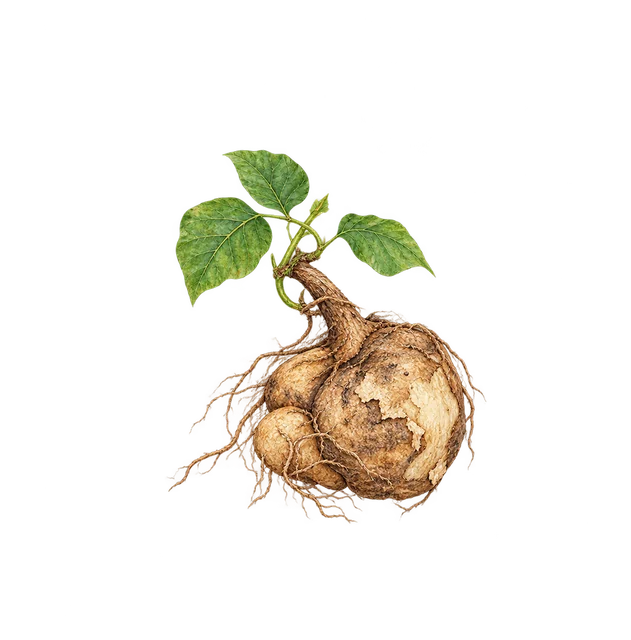
- Tuberous root
- Preparation studied or reported
- Traditional dried-root powder and specific oral manufactured products. This card does not cover kudzu starch, other Pueraria species or vaginal gels.
Only the exact part and formulation described here; related existing cards do not inherit these claims.
A Thai pilot paper investigated a dried-root product in five women. Its optimistic conclusions come from an uncontrolled study, so they should not be mistaken for a guarantee of safety.
Menopause research
Human research
Reported or traditional useA small pilot examined menopausal symptoms. Later oral-capsule research examined vaginal symptoms and tissue changes; neither establishes safe long-term self-treatment.
What the evidence supportsThe source is retained with its design and preparation limits; reported use is not upgraded to clinical effectiveness.
Do not self-prescribe in pregnancy or breastfeeding; safety is not established. Hormone-sensitive conditions, hormonal medicines or unexplained vaginal bleeding require clinician review. Manufactured products vary. Neither a food label nor a small clinical trial establishes a reliable home dose or long-term safety.
Only the exact part and formulation described here; related existing cards do not inherit these claims.
- Do not self-prescribe in pregnancy or breastfeeding; safety is not established.
- Hormone-sensitive conditions, hormonal medicines or unexplained vaginal bleeding require clinician review.
- Manufactured products vary. Neither a food label nor a small clinical trial establishes a reliable home dose or long-term safety.
- Muangman and Cherdshewasart: Pueraria mirifica crude-drug pilot study
- Manonai et al. 2007: Effect of Pueraria mirifica on vaginal health
Read the complete historical reference and its material distinctions
Identity & detailed reference
Identity
White kwao krua is Pueraria mirifica, also studied under Pueraria candollei var. mirifica. It is distinct from food kudzu and red kwao krua; shared folk names are not reliable substitutes.
Ingredient details, preparation and research
Also known as: white kwao krua; Pueraria candollei var. mirifica
Source plant or material
Pueraria mirifica Airy Shaw & Suvat. (also Pueraria candollei var. mirifica); Tuberous root
Plant family / material: Fabaceae
Forms and route
Traditional dried-root powder and specific oral manufactured products. This card does not cover kudzu starch, other Pueraria species or vaginal gels.
Absorption and preparation
No absorption-enhancement directions are established for this material. An extract, food, infusion and isolated chemical can deliver different substances; study results do not establish a home preparation.
Traditional and reported uses
- Menopause research: A small pilot examined menopausal symptoms. Later oral-capsule research examined vaginal symptoms and tissue changes; neither establishes safe long-term self-treatment.
Contraindications and cautions
- Do not self-prescribe in pregnancy or breastfeeding; safety is not established.
- Hormone-sensitive conditions, hormonal medicines or unexplained vaginal bleeding require clinician review.
- Manufactured products vary. Neither a food label nor a small clinical trial establishes a reliable home dose or long-term safety.
Identity and exact material
White kwao krua is Pueraria mirifica, also studied under Pueraria candollei var. mirifica. It is distinct from food kudzu and red kwao krua; shared folk names are not reliable substitutes. Traditional dried-root powder and specific oral manufactured products. This card does not cover kudzu starch, other Pueraria species or vaginal gels.
Evidence and preparation boundaries
The primary placebo-controlled study evaluated 71 women over 24 weeks and found vaginal effects consistent with estrogen activity. Its small size and selected population do not establish safety in hormone-sensitive illness, pregnancy or long-term use. An official Japanese notice records health-damage reports involving Pueraria products; an incident count alone does not estimate an individual’s risk.
Safety and uncertainty
Do not self-prescribe in pregnancy or breastfeeding; safety is not established. Hormone-sensitive conditions, hormonal medicines or unexplained vaginal bleeding require clinician review. Manufactured products vary. Neither a food label nor a small clinical trial establishes a reliable home dose or long-term safety.
Evidence limits
- Exact composition and source of marketed products cannot be inferred from these trials.
- No claim for breast enlargement, fertility, contraception or disease prevention is established.
Entry sources
- Muangman and Cherdshewasart: Pueraria mirifica crude-drug pilot study
- Manonai et al. 2007: Effect of Pueraria mirifica on vaginal health
- Japan Ministry of Health: health-damage reporting for special-attention food components
- Kew Plants of the World Online: Pueraria mirifica
Reference entry 546 · Recorded content review: 2026-10-11 · Review scope and dates