


Key cautions
- Pregnancy and breastfeeding safety is not established by this traditional record. Do not self-prescribe medicinal preparations when pregnant, trying to conceive, or breastfeeding; obtain clinician review.
- White peony root is not ornamental peony flower or interchangeable with every red-peony drug.
- Do not use a traditional bleeding indication to self-treat heavy or unexplained bleeding.
What’s inside
Paeoniflorin is a documented root constituent. Isolated paeoniflorin or total-glucoside products are different preparations from processed root pieces.
Uses in brief

- Traditional menstrual, abdominal/muscle discomfort and sweating-related uses.
- Formula studies do not establish single-root efficacy.
History, folklore and reported uses
History, folklore and traditional uses
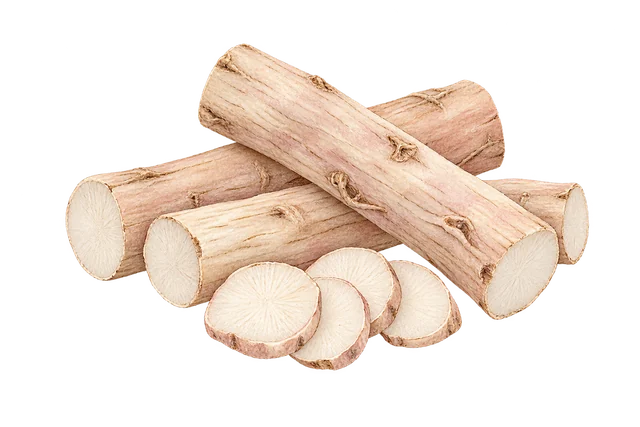
Bai shao is a Chinese materia-medica root associated with menstrual regulation and abdominal discomfort. It is one of the four botanical ingredients of Si Wu Tang.
Traditional, historical and reported uses
- menstruation
Traditional accountWhy this label?
The traditional record is not efficacy proof. A 78-person Si Wu Tang pilot trial did not show a significant pain advantage at treatment end; it cannot establish white peony alone as effective.
Recorded for irregular periods and menstrual bleeding complaints within traditional Chinese pattern-based care. The traditional record is not efficacy proof. A 78-person Si Wu Tang pilot trial did not show a significant pain advantage at treatment end; it cannot establish white peony alone as effective.
- Abdominal and muscle-pain tradition
Traditional accountWhy this label?
HKBU records traditional use for abdominal or flank discomfort and spasmodic limb pain, alongside menstrual complaints. These descriptions belong to Chinese pattern-based medicine and do not prove a general analgesic effect.
HKBU records traditional use for abdominal or flank discomfort and spasmodic limb pain, alongside menstrual complaints. These descriptions belong to Chinese pattern-based medicine and do not prove a general analgesic effect.
- Sweating-related tradition
Traditional accountWhy this label?
The same materia-medica record describes a traditional sweating-related role. Sweating can have many causes; this entry does not establish a treatment for unexplained night sweats.
The same materia-medica record describes a traditional sweating-related role. Sweating can have many causes; this entry does not establish a treatment for unexplained night sweats.
Coverage reflects verified sources, without a minimum use quota.
Women’s Health: traditions, evidence and cautions
Historical use does not establish benefit or safety. Pregnancy, breastfeeding and fertility care require particular caution: food, tea, essential oil and concentrated extract are not interchangeable. These records are not treatment, dosing or pregnancy-management instructions. Discuss supplements with a qualified clinician or pharmacist; do not delay evaluation of persistent symptoms.
White peony root / bai shao
Paeonia lactiflora Pall.
- Plant part / material
- Processed dried root (Paeoniae Radix Alba)
- Preparation studied or reported
- Medicinal root pieces and multi-herb decoctions; isolated paeoniflorin and red-peony materials are separate.
One exact-material card. Medicinal root pieces and multi-herb decoctions; isolated paeoniflorin and red-peony materials are separate.. Keep preparations distinct; do not transfer findings from a named extract to every tea or powder.
Bai shao is a Chinese materia-medica root associated with menstrual regulation and abdominal discomfort. It is one of the four botanical ingredients of Si Wu Tang.
menstruation
Traditional account
Reported or traditional useRecorded for irregular periods and menstrual bleeding complaints within traditional Chinese pattern-based care. The traditional record is not efficacy proof. A 78-person Si Wu Tang pilot trial did not show a significant pain advantage at treatment end; it cannot establish white peony alone as effective.
What the evidence supportsThe traditional record is not efficacy proof. A 78-person Si Wu Tang pilot trial did not show a significant pain advantage at treatment end; it cannot establish white peony alone as effective.
Pregnancy and breastfeeding safety is not established by this traditional record. Do not self-prescribe medicinal preparations when pregnant, trying to conceive, or breastfeeding; obtain clinician review. White peony root is not ornamental peony flower or interchangeable with every red-peony drug. Do not use a traditional bleeding indication to self-treat heavy or unexplained bleeding. Pregnancy, trying to conceive, breastfeeding and concurrent medicines need qualified review.
Abdominal and muscle-pain tradition
Traditional account
Reported or traditional useHKBU records traditional use for abdominal or flank discomfort and spasmodic limb pain, alongside menstrual complaints. These descriptions belong to Chinese pattern-based medicine and do not prove a general analgesic effect.
What the evidence supportsHKBU records traditional use for abdominal or flank discomfort and spasmodic limb pain, alongside menstrual complaints. These descriptions belong to Chinese pattern-based medicine and do not prove a general analgesic effect.
Pregnancy and breastfeeding safety is not established by this traditional record. Do not self-prescribe medicinal preparations when pregnant, trying to conceive, or breastfeeding; obtain clinician review. White peony root is not ornamental peony flower or interchangeable with every red-peony drug. Do not use a traditional bleeding indication to self-treat heavy or unexplained bleeding. Pregnancy, trying to conceive, breastfeeding and concurrent medicines need qualified review.
Sweating-related tradition
Traditional account
Reported or traditional useThe same materia-medica record describes a traditional sweating-related role. Sweating can have many causes; this entry does not establish a treatment for unexplained night sweats.
What the evidence supportsThe same materia-medica record describes a traditional sweating-related role. Sweating can have many causes; this entry does not establish a treatment for unexplained night sweats.
Pregnancy and breastfeeding safety is not established by this traditional record. Do not self-prescribe medicinal preparations when pregnant, trying to conceive, or breastfeeding; obtain clinician review. White peony root is not ornamental peony flower or interchangeable with every red-peony drug. Do not use a traditional bleeding indication to self-treat heavy or unexplained bleeding. Pregnancy, trying to conceive, breastfeeding and concurrent medicines need qualified review.
One exact-material card. Medicinal root pieces and multi-herb decoctions; isolated paeoniflorin and red-peony materials are separate.. Keep preparations distinct; do not transfer findings from a named extract to every tea or powder.
- Pregnancy and breastfeeding safety is not established by this traditional record. Do not self-prescribe medicinal preparations when pregnant, trying to conceive, or breastfeeding; obtain clinician review.
- White peony root is not ornamental peony flower or interchangeable with every red-peony drug.
- Do not use a traditional bleeding indication to self-treat heavy or unexplained bleeding.
- Pregnancy, trying to conceive, breastfeeding and concurrent medicines need qualified review.
- HKBU materia medica: White Peony Root
- Yeh et al. (2007): randomized placebo-controlled Si Wu Tang trial
- Yeh et al. 2007: Si Wu Tang placebo-controlled pilot trial
- Kew POWO: Paeonia lactiflora taxonomy
- HKBU: Paeonia lactiflora plant and processed root
Read the complete historical reference and its material distinctions
Identity & detailed reference
Identity
Paeonia lactiflora Pall.; Processed dried root (Paeoniae Radix Alba).
Ingredient details, preparation and research
Also known as: bai shao; Paeoniae Radix Alba; Paeonia lactiflora root
Source plant or material
Paeonia lactiflora Pall. — Processed dried root (Paeoniae Radix Alba)
Plant family / material: Paeoniaceae (peony family; older materia medica may say Ranunculaceae)
Forms and route
Medicinal root pieces and multi-herb decoctions; isolated paeoniflorin and red-peony materials are separate.
Vitamins and minerals
No nutrient quantities or daily-value claims are assigned to this medicinal material. Do not borrow the food nutrient profile of another plant part or use an extract as a dietary substitute.
Absorption and preparation
Preparation and route matter. A tea, whole powder, alcohol extract and isolated constituent can give different exposures. No food pairing or absorption-enhancement technique is established by the sources reviewed.
Traditional and reported uses
- Recorded for irregular periods and menstrual bleeding complaints within traditional Chinese pattern-based care. The traditional record is not efficacy proof. A 78-person Si Wu Tang pilot trial did not show a significant pain advantage at treatment end; it cannot establish white peony alone as effective.
- HKBU records traditional use for abdominal or flank discomfort and spasmodic limb pain, alongside menstrual complaints. These descriptions belong to Chinese pattern-based medicine and do not prove a general analgesic effect.
- The same materia-medica record describes a traditional sweating-related role. Sweating can have many causes; this entry does not establish a treatment for unexplained night sweats.
Contraindications and cautions
- Pregnancy and breastfeeding safety is not established by this traditional record. Do not self-prescribe medicinal preparations when pregnant, trying to conceive, or breastfeeding; obtain clinician review.
- White peony root is not ornamental peony flower or interchangeable with every red-peony drug.
- Do not use a traditional bleeding indication to self-treat heavy or unexplained bleeding.
- Pregnancy, trying to conceive, breastfeeding and concurrent medicines need qualified review.
Similar items and how they compare
- Red peony root
Related drug name
Processing and botanical source scope differ; not automatically interchangeable.
- Peony flowers
Same ornamental genus
Petals and garden cultivars are not Paeoniae Radix Alba.
Identity and composition
Paeonia lactiflora Pall.; Processed dried root (Paeoniae Radix Alba). Paeoniflorin is a documented root constituent. Isolated paeoniflorin or total-glucoside products are different preparations from processed root pieces.
menstruation: what evidence can say
The traditional record is not efficacy proof. A 78-person Si Wu Tang pilot trial did not show a significant pain advantage at treatment end; it cannot establish white peony alone as effective. Pregnancy and breastfeeding safety is not established by this traditional record. Do not self-prescribe medicinal preparations when pregnant, trying to conceive, or breastfeeding; obtain clinician review.
Exact material and preparation boundaries
One exact-material card. Medicinal root pieces and multi-herb decoctions; isolated paeoniflorin and red-peony materials are separate.. Keep preparations distinct; do not transfer findings from a named extract to every tea or powder.
Medicines, pregnancy and breastfeeding
The selected materia-medica and formula sources do not establish a reliable clinical interaction or reproductive-safety profile for white-peony root alone. This is an evidence gap, not a claim that interactions do not exist. Results for isolated constituents, other peony parts or combination medicines are not a safety guarantee for this root.
Formula evidence kept separate
The Si Wu Tang pilot trial tested four ingredients together. It did not show a statistically significant treatment-end pain advantage; an unexpected follow-up signal warranted further research, not a claim that white peony worked by itself.
Source-supported safety summary
Pregnancy and breastfeeding safety is not established by this traditional record. Do not self-prescribe medicinal preparations when pregnant, trying to conceive, or breastfeeding; obtain clinician review. White peony root is not ornamental peony flower or interchangeable with every red-peony drug. Do not use a traditional bleeding indication to self-treat heavy or unexplained bleeding. Pregnancy, trying to conceive, breastfeeding and concurrent medicines need qualified review.
Evidence limits
- This is a focused educational source review, not a systematic review or a treatment plan.
- Traditional use documents a practice; it does not establish clinical benefit. Laboratory findings and multi-ingredient trials cannot establish a single ingredient’s effects.
- HKBU plant and material text was inspected via indexed university records after direct 403 responses. Its historical Ranunculaceae placement is updated to Paeoniaceae using Kew.
Entry sources
- HKBU materia medica: White Peony Root
- Yeh et al. (2007): randomized placebo-controlled Si Wu Tang trial
- Yeh et al. 2007: Si Wu Tang placebo-controlled pilot trial
- Kew POWO: Paeonia lactiflora taxonomy
- HKBU: Paeonia lactiflora plant and processed root
Reference entry 533 · Recorded content review: 2026-10-11 · Review scope and dates