


Key cautions
- Do not douche or insert homemade bark preparations into the vagina.
- New discharge with odor, pain, fever or abnormal bleeding needs medical assessment.
What’s inside
A reliable composition profile for the exact preparation was not established in this review; chemistry from another plant part is not transferred.
Uses in brief

- Discharge and menstrual history (traditional account).
- Other astringent traditions (traditional account).
History, folklore and reported uses
History, folklore and traditional uses
WHO’s regional handbook identifies the dried bark and its place in Ayurvedic texts and pharmacopoeial practice. A record in a traditional-remedies handbook should not be read as a modern clinical proof.
Traditional, historical and reported uses
- Discharge and menstrual history
Traditional accountWhy this label?
The source is retained with its design and preparation limits; reported use is not upgraded to clinical effectiveness.
The handbook records leucorrhoea and excessive menstrual bleeding among traditional indications. These symptoms can have different causes that need diagnosis.
- Other astringent traditions
Traditional accountWhy this label?
The source is retained with its design and preparation limits; reported use is not upgraded to clinical effectiveness.
Diarrhoea and dysentery also occur in the traditional account. Laboratory antimicrobial observations do not establish treatment of an infection in people.
Includes only uses and context documented for this material. Historical reporting is not proof of benefit; no use-count quota is applied.
Women’s Health: traditions, evidence and cautions
Historical use does not establish benefit or safety. Pregnancy, breastfeeding and fertility care require particular caution: food, tea, essential oil and concentrated extract are not interchangeable. These records are not treatment, dosing or pregnancy-management instructions. Discuss supplements with a qualified clinician or pharmacist; do not delay evaluation of persistent symptoms.
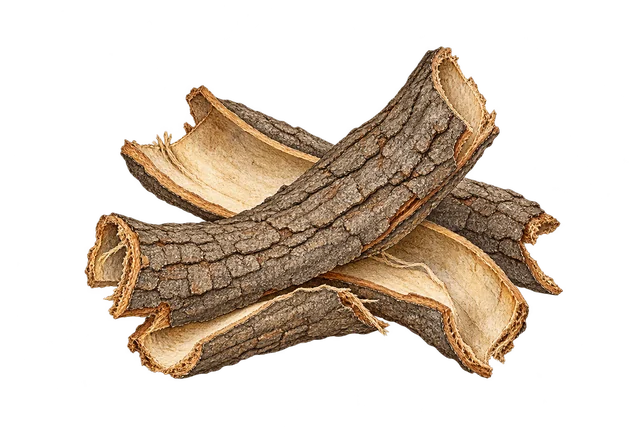
Lodhra bark
Symplocos racemosa Roxb.
- Plant part / material
- Dried stem bark
- Preparation studied or reported
- Traditional powdered stem bark and Ayurvedic mixtures. Historical vaginal preparations are documented only; this card gives no intravaginal directions.
Only the exact part and formulation described here; related existing cards do not inherit these claims.
WHO’s regional handbook identifies the dried bark and its place in Ayurvedic texts and pharmacopoeial practice. A record in a traditional-remedies handbook should not be read as a modern clinical proof.
Discharge and menstrual history
Traditional account
Reported or traditional useThe handbook records leucorrhoea and excessive menstrual bleeding among traditional indications. These symptoms can have different causes that need diagnosis.
What the evidence supportsThe source is retained with its design and preparation limits; reported use is not upgraded to clinical effectiveness.
Do not douche or insert homemade bark preparations into the vagina. New discharge with odor, pain, fever or abnormal bleeding needs medical assessment. Medicinal pregnancy and breastfeeding safety is not established by the reviewed record; avoid unsupervised use.
Other astringent traditions
Traditional account
Reported or traditional useDiarrhoea and dysentery also occur in the traditional account. Laboratory antimicrobial observations do not establish treatment of an infection in people.
What the evidence supportsThe source is retained with its design and preparation limits; reported use is not upgraded to clinical effectiveness.
Do not douche or insert homemade bark preparations into the vagina. New discharge with odor, pain, fever or abnormal bleeding needs medical assessment. Medicinal pregnancy and breastfeeding safety is not established by the reviewed record; avoid unsupervised use.
Only the exact part and formulation described here; related existing cards do not inherit these claims.
- Do not douche or insert homemade bark preparations into the vagina.
- New discharge with odor, pain, fever or abnormal bleeding needs medical assessment.
- Medicinal pregnancy and breastfeeding safety is not established by the reviewed record; avoid unsupervised use.
Read the complete historical reference and its material distinctions
Identity & detailed reference
Identity
Lodhra here means Symplocos racemosa stem bark. It is neither the tree’s other parts nor any product bearing the common name without authenticated species and part.
Ingredient details, preparation and research
Also known as: Symplocos bark
Source plant or material
Symplocos racemosa Roxb.; Dried stem bark
Plant family / material: Symplocaceae
Forms and route
Traditional powdered stem bark and Ayurvedic mixtures. Historical vaginal preparations are documented only; this card gives no intravaginal directions.
Absorption and preparation
No absorption-enhancement directions are established for this material. An extract, food, infusion and isolated chemical can deliver different substances; study results do not establish a home preparation.
Traditional and reported uses
- Discharge and menstrual history: The handbook records leucorrhoea and excessive menstrual bleeding among traditional indications. These symptoms can have different causes that need diagnosis.
- Other astringent traditions: Diarrhoea and dysentery also occur in the traditional account. Laboratory antimicrobial observations do not establish treatment of an infection in people.
Contraindications and cautions
- Do not douche or insert homemade bark preparations into the vagina.
- New discharge with odor, pain, fever or abnormal bleeding needs medical assessment.
- Medicinal pregnancy and breastfeeding safety is not established by the reviewed record; avoid unsupervised use.
Identity and exact material
Lodhra here means Symplocos racemosa stem bark. It is neither the tree’s other parts nor any product bearing the common name without authenticated species and part. Traditional powdered stem bark and Ayurvedic mixtures. Historical vaginal preparations are documented only; this card gives no intravaginal directions.
Evidence and preparation boundaries
The source documents a traditional powder and reports laboratory antimicrobial work. It is not a rigorous clinical trial of vaginal infection or menstrual bleeding, and it supplies no reliable pregnancy, infant-exposure or interaction evidence for this card. A laboratory response cannot validate a homemade vaginal product.
Safety and uncertainty
Do not douche or insert homemade bark preparations into the vagina. New discharge with odor, pain, fever or abnormal bleeding needs medical assessment. Medicinal pregnancy and breastfeeding safety is not established by the reviewed record; avoid unsupervised use.
Evidence limits
- This is a focused source review, not a systematic clinical review. A traditional indication or laboratory result does not establish an effective or safe treatment.
- A lack of reported adverse effects is not proof of safety. No therapeutic dose or preparation is recommended.
Entry sources
- WHO: Traditional Herbal Remedies for Primary Health Care, Lodhra chapter
- Indian Institute of Science, Herbarium JCB: Symplocos racemosa
- Ayurvedic Pharmacopoeia of India, Part I Volume I, reproduced government monographs
Reference entry 544 · Recorded content review: 2026-10-11 · Review scope and dates