


Key cautions
- Use cultivated food-grade produce, not an unidentified or contaminated waterway harvest.
- Vacuum packing does not necessarily mean ready to eat or shelf-stable; follow refrigeration and cooking instructions.
What’s inside
Starch and fiber with water and other vegetable constituents. Grating, cooking and added batter or sauce change texture and the final food composition.
Uses in brief

- Cooked slices in soups and stir-fries
- Grated lotus-root soup
History, folklore and reported uses
History, folklore and traditional uses
NParks records lotus rhizomes in soups and stir-fries. Japan MAFF describes regional grated-lotus-root soups, showing how one vegetable can contribute either crisp pieces or a thickened texture.
Traditional, historical and reported uses
- Cooked slices in soups and stir-fries
Food or household practiceWhy this label?
The cited source documents this material, preparation or cultural practice; it does not establish treatment efficacy.
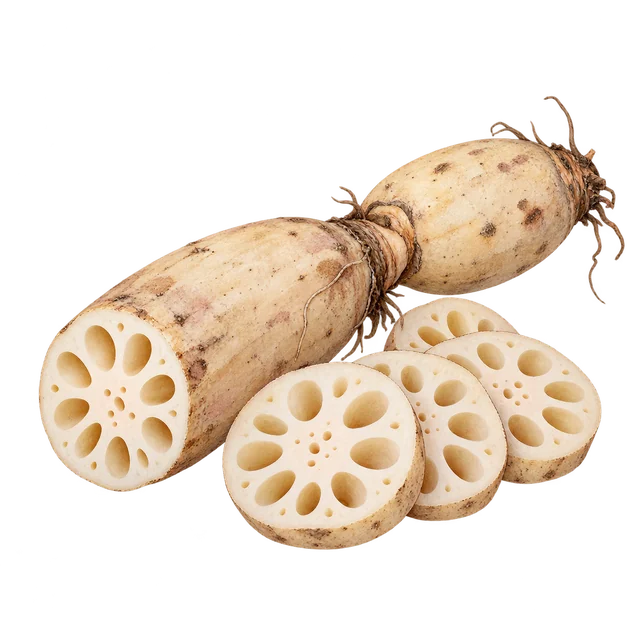
Sliced food-grade rhizome contributes texture to cooked dishes. It should be cleaned and prepared for the intended recipe rather than eaten straight from a pond or field.
- Grated lotus-root soup
Food or household practiceWhy this label?
The cited source documents this material, preparation or cultural practice; it does not establish treatment efficacy.
MAFF documents grated rhizome cooked into dashi-and-miso soup. The thicker consistency is a food property; the dish’s sodium and other ingredients come from the whole recipe.
2 supported featured food or cultural uses; no treatment claim.
Historical-use additions reviewed 2026-10-09
Regional reading paths
These sourced notes describe cultivation, trade, food traditions or material history. A regional connection does not claim exclusive origin.
Asia
Native/cultivated: Asia; established Chinese vegetable use.
Underground stem cooked in soups and stir-fries.
Identity & detailed reference
Identity
Nelumbo nucifera edible rhizome, commonly called lotus root. It is an underground stem with characteristic air spaces, not the lotus seed or an arbitrary aquatic root.
Ingredient details, preparation and research
Also known as: Renkon; Lotus root; Nelumbo nucifera rhizome
Source plant or material
Nelumbo nucifera
Plant family / material: Nelumbonaceae
Forms and route
Fresh sections, peeled chilled or vacuum-packed slices, frozen pieces and properly cooked dishes. Pickled commercial products include a separate seasoning and preservation process.
Vitamins and minerals
No single nutrient value covers raw rhizome, boiled slices and fried or miso-seasoned dishes. Added oil, salt and water can change a serving more than the vegetable’s name suggests.
Absorption and preparation
Cooking changes starch texture and digestibility; it does not demonstrate a medicinal absorption benefit. Claims about lotus-seed or leaf extracts do not apply to a vegetable serving.
Practical preparation
Wash thoroughly, trim damaged areas and peel if the recipe requires. Check the inner holes for remaining soil. Cook fresh or prepared sections according to reliable directions, and refrigerate leftovers promptly.
Combination notes
Use crisp slices or grated rhizome according to the desired texture, accounting for sauces and seasonings separately.
Traditional and reported uses
- Cooked slices in soups and stir-fries
- Grated lotus-root soup
Contraindications and cautions
- Use cultivated food-grade produce, not an unidentified or contaminated waterway harvest.
- Vacuum packing does not necessarily mean ready to eat or shelf-stable; follow refrigeration and cooking instructions.
An edible stem, not a seed preparation
Kew explains the plant’s rhizome structure and aquatic habit. Botanical identity helps distinguish this food from lotus seeds and unrelated water lilies, but is not a guide for identifying wild edible plants.
Evidence limits
Cooked food-rhizome profile; no pond-foraging instruction, medicinal decoction or unvalidated pickling recipe.
Entry sources
Reference entry 359 · Recorded content review: 2026-10-09 · Review scope and dates