


Key cautions
- Avoid during lactation; do not recommend for pregnancy, milk supply or self-directed hormonal manipulation.
- Avoid pregnancy and breastfeeding use; do not use as a fertility remedy.
- Review hormone-sensitive conditions, pituitary disorders and hormonal or dopamine-related medicines before use.
What’s inside
Fruit extracts contain several classes of compounds; dopaminergic effects are relevant to research and interaction precautions. No single-constituent hormone-balancing claim is established.
Uses in brief

- Fruit extracts studied for PMS; stronger evidence needed.
- Conflicting lactation traditions; avoid breastfeeding use.
History, folklore and reported uses
History, folklore and traditional uses
LactMed records both a galactagogue reputation and a traditional Persian oversupply-reduction use, illustrating inconsistent historical aims.
Traditional, historical and reported uses
- Conflicting lactation traditions; safety reference
Mixed/contextual sourcesWhy this label?
Valid clinical evidence does not support increasing milk. Prolactin effects can vary with exposure and may suppress lactation.
Historical milk-increase and milk-reduction uses are recorded for reference only. Valid clinical evidence does not support increasing milk. Prolactin effects can vary with exposure and may suppress lactation.
- Premenstrual symptoms
Human researchWhy this label?
NCCIH reports some low-to-moderate-quality evidence for PMS symptoms, including cyclical breast tenderness. Benefits remain preparation-specific; stronger studies are needed for firm general conclusions.
NCCIH reports some low-to-moderate-quality evidence for PMS symptoms, including cyclical breast tenderness. Benefits remain preparation-specific; stronger studies are needed for firm general conclusions.
- The chastity story
Historical recordWhy this label?
NCCIH explains that the name may reflect a historical belief about reducing sexual desire, including reported medieval monastic use. This is a cultural story, not a proven effect on sexuality or fertility.
NCCIH explains that the name may reflect a historical belief about reducing sexual desire, including reported medieval monastic use. This is a cultural story, not a proven effect on sexuality or fertility.
Coverage reflects verified sources, without a minimum use quota.
Women’s Health: traditions, evidence and cautions
Historical use does not establish benefit or safety. Pregnancy, breastfeeding and fertility care require particular caution: food, tea, essential oil and concentrated extract are not interchangeable. These records are not treatment, dosing or pregnancy-management instructions. Discuss supplements with a qualified clinician or pharmacist; do not delay evaluation of persistent symptoms.
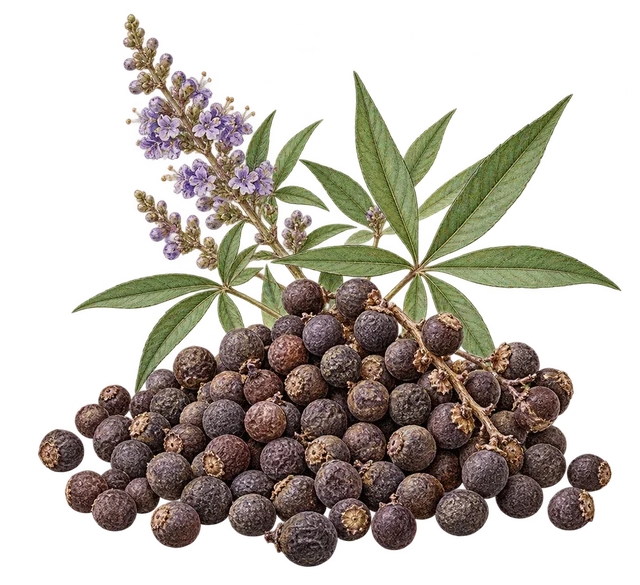
Chasteberry / chaste-tree fruit
Vitex agnus-castus L.
- Plant part / material
- Fruit/berries
- Preparation studied or reported
- Fruit extracts and tinctures; not Vitex negundo or other Vitex species.
One exact-material card. Fruit extracts and tinctures; not Vitex negundo or other Vitex species.. Keep preparations distinct; do not transfer findings from a named extract to every tea or powder.
LactMed records both a galactagogue reputation and a traditional Persian oversupply-reduction use, illustrating inconsistent historical aims.
Conflicting lactation traditions; safety reference
Mixed/contextual sources
Reported or traditional useHistorical milk-increase and milk-reduction uses are recorded for reference only. Valid clinical evidence does not support increasing milk. Prolactin effects can vary with exposure and may suppress lactation.
What the evidence supportsValid clinical evidence does not support increasing milk. Prolactin effects can vary with exposure and may suppress lactation.
Avoid during lactation; do not recommend for pregnancy, milk supply or self-directed hormonal manipulation. Avoid pregnancy and breastfeeding use; do not use as a fertility remedy. Review hormone-sensitive conditions, pituitary disorders and hormonal or dopamine-related medicines before use. Headache, digestive upset, itching and other reactions can occur.
Premenstrual symptoms
Human research
Reported or traditional useNCCIH reports some low-to-moderate-quality evidence for PMS symptoms, including cyclical breast tenderness. Benefits remain preparation-specific; stronger studies are needed for firm general conclusions.
What the evidence supportsNCCIH reports some low-to-moderate-quality evidence for PMS symptoms, including cyclical breast tenderness. Benefits remain preparation-specific; stronger studies are needed for firm general conclusions.
Avoid during lactation; do not recommend for pregnancy, milk supply or self-directed hormonal manipulation. Avoid pregnancy and breastfeeding use; do not use as a fertility remedy. Review hormone-sensitive conditions, pituitary disorders and hormonal or dopamine-related medicines before use. Headache, digestive upset, itching and other reactions can occur.
The chastity story
Historical record
Reported or traditional useNCCIH explains that the name may reflect a historical belief about reducing sexual desire, including reported medieval monastic use. This is a cultural story, not a proven effect on sexuality or fertility.
What the evidence supportsNCCIH explains that the name may reflect a historical belief about reducing sexual desire, including reported medieval monastic use. This is a cultural story, not a proven effect on sexuality or fertility.
Avoid during lactation; do not recommend for pregnancy, milk supply or self-directed hormonal manipulation. Avoid pregnancy and breastfeeding use; do not use as a fertility remedy. Review hormone-sensitive conditions, pituitary disorders and hormonal or dopamine-related medicines before use. Headache, digestive upset, itching and other reactions can occur.
One exact-material card. Fruit extracts and tinctures; not Vitex negundo or other Vitex species.. Keep preparations distinct; do not transfer findings from a named extract to every tea or powder.
- Avoid during lactation; do not recommend for pregnancy, milk supply or self-directed hormonal manipulation.
- Avoid pregnancy and breastfeeding use; do not use as a fertility remedy.
- Review hormone-sensitive conditions, pituitary disorders and hormonal or dopamine-related medicines before use.
- Headache, digestive upset, itching and other reactions can occur.
- LactMed: Chasteberry
- NCCIH: chasteberry
- NC State Extension: Vitex agnus-castus
- EMA: Vitex fruit assessment report revision1
Read the complete historical reference and its material distinctions
Identity & detailed reference
Identity
Vitex agnus-castus L.; Fruit/berries.
Ingredient details, preparation and research
Also known as: Vitex agnus-castus; monk’s pepper; agnus castus fruit
Source plant or material
Vitex agnus-castus L. — Fruit/berries
Plant family / material: Lamiaceae (mint family; formerly placed in Verbenaceae)
Forms and route
Fruit extracts and tinctures; not Vitex negundo or other Vitex species.
Vitamins and minerals
No nutrient quantities or daily-value claims are assigned to this medicinal material. Do not borrow the food nutrient profile of another plant part or use an extract as a dietary substitute.
Absorption and preparation
Preparation and route matter. A tea, whole powder, alcohol extract and isolated constituent can give different exposures. No food pairing or absorption-enhancement technique is established by the sources reviewed.
Traditional and reported uses
- Historical milk-increase and milk-reduction uses are recorded for reference only. Valid clinical evidence does not support increasing milk. Prolactin effects can vary with exposure and may suppress lactation.
- NCCIH reports some low-to-moderate-quality evidence for PMS symptoms, including cyclical breast tenderness. Benefits remain preparation-specific; stronger studies are needed for firm general conclusions.
- NCCIH explains that the name may reflect a historical belief about reducing sexual desire, including reported medieval monastic use. This is a cultural story, not a proven effect on sexuality or fertility.
Contraindications and cautions
- Avoid during lactation; do not recommend for pregnancy, milk supply or self-directed hormonal manipulation.
- Avoid pregnancy and breastfeeding use; do not use as a fertility remedy.
- Review hormone-sensitive conditions, pituitary disorders and hormonal or dopamine-related medicines before use.
- Headache, digestive upset, itching and other reactions can occur.
Similar items and how they compare
- Vitex negundo
Shared genus/common-name confusion
Not the same species or medicinal fruit.
- Blue cohosh
Both may appear in reproductive-herb discussions
Unrelated material; neither tradition is permission for pregnancy self-treatment.
Identity and composition
Vitex agnus-castus L.; Fruit/berries. Fruit extracts contain several classes of compounds; dopaminergic effects are relevant to research and interaction precautions. No single-constituent hormone-balancing claim is established.
Conflicting lactation traditions; safety reference: what evidence can say
Valid clinical evidence does not support increasing milk. Prolactin effects can vary with exposure and may suppress lactation. LactMed advises avoiding chasteberry during lactation. NCCIH warns use in pregnancy or breastfeeding may be unsafe; historical fertility use does not establish reproductive safety.
Exact material and preparation boundaries
One exact-material card. Fruit extracts and tinctures; not Vitex negundo or other Vitex species.. Keep preparations distinct; do not transfer findings from a named extract to every tea or powder.
Medicines, pregnancy and breastfeeding
EMA’s assessment warns that interactions with dopamine agonists/antagonists and estrogen/antiestrogen medicines cannot be excluded; this is a precaution, not proof every combination causes harm. LactMed advises avoiding use while breastfeeding because effects on prolactin can suppress milk production. Short trials do not establish long-term or pregnancy safety.
Source-supported safety summary
Avoid during lactation; do not recommend for pregnancy, milk supply or self-directed hormonal manipulation. Avoid pregnancy and breastfeeding use; do not use as a fertility remedy. Review hormone-sensitive conditions, pituitary disorders and hormonal or dopamine-related medicines before use. Headache, digestive upset, itching and other reactions can occur.
Evidence limits
- This is a focused educational source review, not a systematic review or a treatment plan.
- Traditional use documents a practice; it does not establish clinical benefit. Laboratory findings and multi-ingredient trials cannot establish a single ingredient’s effects.
- EMA 2018 revision-1 monograph direct retrieval returned 429. Interaction language was checked in official indexed monograph/assessment text; public NCCIH and LactMed pages read directly.
Entry sources
- LactMed: Chasteberry
- NCCIH: chasteberry
- NC State Extension: Vitex agnus-castus
- EMA: Vitex fruit assessment report revision1
Reference entry 531 · Recorded content review: 2026-10-11 · Review scope and dates