


Key cautions
- Use sound culinary fruit and clean utensils; refrigerate cut or cooked portions.
- Do not assume a raw vegetable relish is shelf-stable
- Avoid a food that has previously caused an allergic reaction.
What’s inside
Water, carbohydrate and fiber, with folate and potassium documented in food-composition guidance. Cooking method and maturity affect the finished food.
Uses in brief

- Cooked vegetable dishes
- Chayote and pear relish
History, folklore and reported uses
History, folklore and traditional uses
UF/IFAS identifies Guatemala as the plant’s native home, while Mexican crop sources place it in wider Mesoamerican food diversity. Florida horticultural guidance documents its subsequent cultivation and the names mirliton and vegetable pear.
A closer look at its history
Christophene and mirliton share a Mesoamerican crop
UF/IFAS places chayote’s origins in southern Mexico and Guatemala and notes pre-Columbian cultivation, while acknowledging gaps in its archaeological timeline. Names such as christophene and mirliton reflect its later regional lives. The fruit is the main market product, but tender shoots and leaves also have culinary uses.
Additional history reviewed 2026-10-10
Traditional, historical and reported uses
- Cooked vegetable dishes
Food or household practiceWhy this label?
Label describes the stated practice or evidence, not an efficacy grade. Exact form and cautions remain attached.
Extension records baked, boiled, roasted and mashed chayote. Its mild flavor permits savory preparations without treating it as nutritionally identical to potato.
- Chayote and pear relish
Food or household practiceWhy this label?
Label describes the stated practice or evidence, not an efficacy grade. Exact form and cautions remain attached.
The National Center for Home Food Preservation provides a specific tested relish. This is a documented preservation use, not permission to improvise a sealed-jar formula.
2 supported uses; records describe the named form and are not treatment recommendations.
Historical-use additions reviewed 2026-10-09
Growing notes
Sechium edule culinary fruit selections; regional season and day length affect cropping.
- Climate, season and support
- A vigorous frost-sensitive perennial vine. Plant in warm spring weather after frost; frost-free South Florida also permits fall planting. Provide a sturdy trellis. Shorter days can govern flowering. [1]
- Sun, soil and water
- Use sun to part shade and fertile, freely draining soil. Keep moisture dependable in dry weather without standing water. Use soil testing to decide amendments. [1] [2]
- Starting plants and pollination
- Plant a whole sprouting fruit shallowly rather than extracting its seed. Separate male and female flowers rely on visiting bees and wasps for fruit set. [2]
Growing sources and regional guidance
Growing notes reviewed 2026-10-10
Regional reading paths
These sourced notes describe cultivation, trade, food traditions or material history. A regional connection does not claim exclusive origin.
North America
Domesticated/cultivated: Mesoamerica, including Mexico.
Cooked vegetable fruit.
Identity & detailed reference
Identity
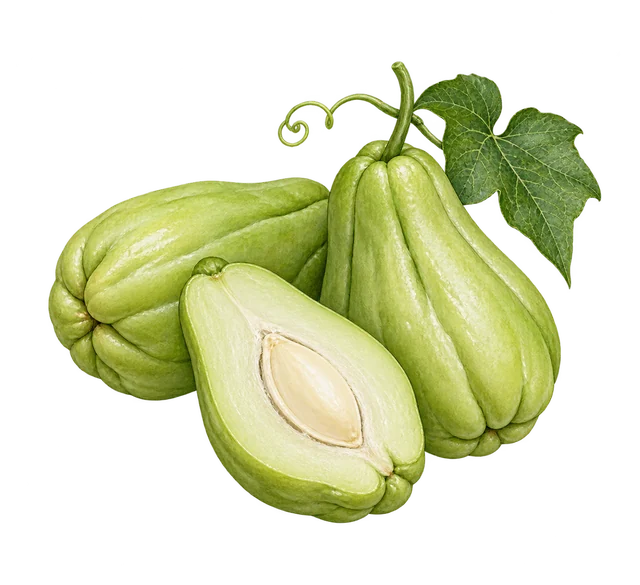
Fruit of Sechium edule, a climbing squash relative. The single soft seed is edible; this card focuses on fruit rather than separate root or shoot foods.
Ingredient details, preparation and research
Also known as: Mirliton; Vegetable pear
Source plant or material
Sechium edule
Plant family / material: Cucurbitaceae
Forms and route
Fresh young fruit, peeled mature fruit, cooked vegetable dishes and tested preserved products. Cultivars differ in surface texture and firmness.
Vitamins and minerals
A vegetable serving supplies a different balance from a fried or sweetened preparation. Cream sauces and relish ingredients determine much of the finished dish’s fat, sugar and salt.
Absorption and preparation
Cooking softens the fruit and changes its water content. There is no established therapeutic pairing or universal nutrient-absorption advantage for chayote.
Practical preparation
Wash fruit and remove tough skin or prickles as needed for the cultivar. Slice and cook in a trusted recipe. Young tender fruit and older fibrous fruit need different handling.
Traditional and reported uses
- Cooked vegetable dishes
- Chayote and pear relish
Contraindications and cautions
- Use sound culinary fruit and clean utensils; refrigerate cut or cooked portions.
- Do not assume a raw vegetable relish is shelf-stable. Use the tested acid level and processing method of an established preservation recipe.
- Avoid a food that has previously caused an allergic reaction.
Food composition and crop research
UF/IFAS discusses crop potential and distinguishes cooked food-composition values by preparation. Those data describe a vegetable; they do not establish glucose-lowering or other medicinal effects of leaf extracts.
Evidence limits
Regional history and food/material practice do not establish treatment efficacy. Composition depends on the named species, part and preparation; no medicinal dose or universal nutrient ranking is inferred.
Entry sources
- UF/IFAS: Chayote
- UF/IFAS: Chayote, a potential vegetable crop for Florida
- NCHFP: Chayote and pear relish
- CONABIO: Especies domesticadas en México
- Mexico City Congress: Alimentos mesoamericanos incluidos en la dieta de la milpa
Reference entry 415 · Recorded content review: 2026-10-09 · Review scope and dates