


Key cautions
- The cited lactation evidence does not establish medicinal-use safety during pregnancy; postpartum traditions must not be extrapolated to pregnancy.
- Health Canada says not to use during pregnancy and to seek professional advice before breastfeeding use.
- Stop for allergy; Asteraceae sensitivity, cramps, nausea and vomiting matter.
What’s inside
The bitter sesquiterpene lactone cnicin is documented; the whole herb also contains other compounds. Cnicin experiments must not be treated as trials of the herb.
Uses in brief

- Traditional digestive-bitter and expectorant uses.
- Milk-supply reputation; no valid clinical proof of benefit.
History, folklore and reported uses
History, folklore and traditional uses
LactMed documents a galactagogue reputation; Australian qualitative interviews also describe contemporary fenugreek/blessed-thistle product use, not an efficacy trial.
Traditional, historical and reported uses
- Lactation / milk-supply tradition
Traditional accountWhy this label?
No scientifically valid trials establish a milk-supply benefit for blessed thistle.
Used in milk-supply blends. No scientifically valid trials establish a milk-supply benefit for blessed thistle.
- Bitter digestive and appetite tradition
Traditional accountWhy this label?
Health Canada’s oral monograph records the dried herb tops as a traditional digestive bitter for appetite and indigestion. Its licensing framework is not proof from a modern clinical trial.
Health Canada’s oral monograph records the dried herb tops as a traditional digestive bitter for appetite and indigestion. Its licensing framework is not proof from a modern clinical trial.
- Older expectorant use
Traditional accountWhy this label?
The same monograph records traditional use for cold symptoms with excessive mucus. This does not establish treatment of pneumonia, asthma or serious breathing difficulty.
The same monograph records traditional use for cold symptoms with excessive mucus. This does not establish treatment of pneumonia, asthma or serious breathing difficulty.
- Beverage-flavouring context
Food or household practiceWhy this label?
LactMed notes use as a flavouring in alcoholic beverages. Food-flavouring status does not establish therapeutic safety or make alcohol a milk-supply aid.
LactMed notes use as a flavouring in alcoholic beverages. Food-flavouring status does not establish therapeutic safety or make alcohol a milk-supply aid.
Coverage reflects verified sources, without a minimum use quota.
Women’s Health: traditions, evidence and cautions
Historical use does not establish benefit or safety. Pregnancy, breastfeeding and fertility care require particular caution: food, tea, essential oil and concentrated extract are not interchangeable. These records are not treatment, dosing or pregnancy-management instructions. Discuss supplements with a qualified clinician or pharmacist; do not delay evaluation of persistent symptoms.
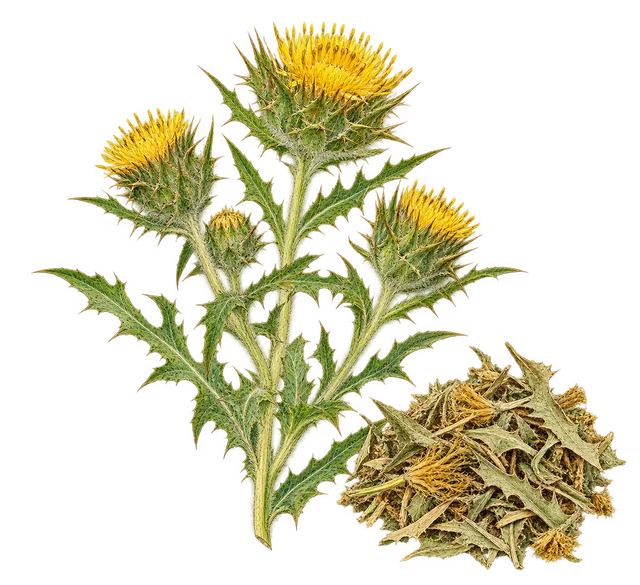
Blessed thistle herb
Centaurea benedicta (L.) L. (syn. Cnicus benedictus)
- Plant part / material
- Aerial herb
- Preparation studied or reported
- Herbal supplements and mixed lactation teas; different from milk thistle.
Centaurea benedicta (L.) L. (syn. Cnicus benedictus); Aerial herb.
Lactation / milk-supply tradition
Traditional account
Reported or traditional useUsed in milk-supply blends. No scientifically valid trials establish a milk-supply benefit for blessed thistle.
What the evidence supportsNo scientifically valid trials establish a milk-supply benefit for blessed thistle.
The cited lactation evidence does not establish medicinal-use safety during pregnancy; postpartum traditions must not be extrapolated to pregnancy. Health Canada says not to use during pregnancy and to seek professional advice before breastfeeding use. Stop for allergy; Asteraceae sensitivity, cramps, nausea and vomiting matter. A lactation supplement must not replace assessment of milk transfer, feeding frequency and infant growth.
Bitter digestive and appetite tradition
Traditional account
Reported or traditional useHealth Canada’s oral monograph records the dried herb tops as a traditional digestive bitter for appetite and indigestion. Its licensing framework is not proof from a modern clinical trial.
What the evidence supportsHealth Canada’s oral monograph records the dried herb tops as a traditional digestive bitter for appetite and indigestion. Its licensing framework is not proof from a modern clinical trial.
The cited lactation evidence does not establish medicinal-use safety during pregnancy; postpartum traditions must not be extrapolated to pregnancy. Health Canada says not to use during pregnancy and to seek professional advice before breastfeeding use. Stop for allergy; Asteraceae sensitivity, cramps, nausea and vomiting matter. A lactation supplement must not replace assessment of milk transfer, feeding frequency and infant growth.
Older expectorant use
Traditional account
Reported or traditional useThe same monograph records traditional use for cold symptoms with excessive mucus. This does not establish treatment of pneumonia, asthma or serious breathing difficulty.
What the evidence supportsThe same monograph records traditional use for cold symptoms with excessive mucus. This does not establish treatment of pneumonia, asthma or serious breathing difficulty.
The cited lactation evidence does not establish medicinal-use safety during pregnancy; postpartum traditions must not be extrapolated to pregnancy. Health Canada says not to use during pregnancy and to seek professional advice before breastfeeding use. Stop for allergy; Asteraceae sensitivity, cramps, nausea and vomiting matter. A lactation supplement must not replace assessment of milk transfer, feeding frequency and infant growth.
Beverage-flavouring context
Food or household practice
Reported or traditional useLactMed notes use as a flavouring in alcoholic beverages. Food-flavouring status does not establish therapeutic safety or make alcohol a milk-supply aid.
What the evidence supportsLactMed notes use as a flavouring in alcoholic beverages. Food-flavouring status does not establish therapeutic safety or make alcohol a milk-supply aid.
The cited lactation evidence does not establish medicinal-use safety during pregnancy; postpartum traditions must not be extrapolated to pregnancy. Health Canada says not to use during pregnancy and to seek professional advice before breastfeeding use. Stop for allergy; Asteraceae sensitivity, cramps, nausea and vomiting matter. A lactation supplement must not replace assessment of milk transfer, feeding frequency and infant growth.
One exact-material card. Herbal supplements and mixed lactation teas; different from milk thistle.. Keep preparations distinct; do not transfer findings from a named extract to every tea or powder.
- The cited lactation evidence does not establish medicinal-use safety during pregnancy; postpartum traditions must not be extrapolated to pregnancy.
- Health Canada says not to use during pregnancy and to seek professional advice before breastfeeding use.
- Stop for allergy; Asteraceae sensitivity, cramps, nausea and vomiting matter.
- A lactation supplement must not replace assessment of milk transfer, feeding frequency and infant growth.
- LactMed: Blessed Thistle
- Sim et al. (2015): Qualitative study of herbal galactagogues
- Health Canada: Blessed thistle oral monograph
- Southern Cross University medicinal plant monograph: Cnicus benedictus
- ITIS: Centaurea benedicta accepted name
- NLM MeSH: Centaurea benedicta and cnicin
Read the complete historical reference and its material distinctions
Identity & detailed reference
Identity
Centaurea benedicta (L.) L. (syn. Cnicus benedictus); Aerial herb.
Ingredient details, preparation and research
Also known as: Cnicus benedictus; holy thistle; Centaurea benedicta
Source plant or material
Centaurea benedicta (L.) L. (syn. Cnicus benedictus) — Aerial herb
Plant family / material: Asteraceae (daisy family)
Forms and route
Herbal supplements and mixed lactation teas; different from milk thistle.
Vitamins and minerals
No nutrient quantities or daily-value claims are assigned to this medicinal material. Do not borrow the food nutrient profile of another plant part or use an extract as a dietary substitute.
Absorption and preparation
Preparation and route matter. A tea, whole powder, alcohol extract and isolated constituent can give different exposures. No food pairing or absorption-enhancement technique is established by the sources reviewed.
Traditional and reported uses
- Used in milk-supply blends. No scientifically valid trials establish a milk-supply benefit for blessed thistle.
- Health Canada’s oral monograph records the dried herb tops as a traditional digestive bitter for appetite and indigestion. Its licensing framework is not proof from a modern clinical trial.
- The same monograph records traditional use for cold symptoms with excessive mucus. This does not establish treatment of pneumonia, asthma or serious breathing difficulty.
- LactMed notes use as a flavouring in alcoholic beverages. Food-flavouring status does not establish therapeutic safety or make alcohol a milk-supply aid.
Contraindications and cautions
- The cited lactation evidence does not establish medicinal-use safety during pregnancy; postpartum traditions must not be extrapolated to pregnancy.
- Health Canada says not to use during pregnancy and to seek professional advice before breastfeeding use.
- Stop for allergy; Asteraceae sensitivity, cramps, nausea and vomiting matter.
- A lactation supplement must not replace assessment of milk transfer, feeding frequency and infant growth.
Similar items and how they compare
- Milk thistle
Common-name confusion
Silybum marianum fruit products are a different species and part.
- Fenugreek
Often paired in lactation supplements
A mixture’s result cannot show which ingredient caused an effect.
Identity and composition
Centaurea benedicta (L.) L. (syn. Cnicus benedictus); Aerial herb. The bitter sesquiterpene lactone cnicin is documented; the whole herb also contains other compounds. Cnicin experiments must not be treated as trials of the herb.
Lactation / milk-supply tradition: what evidence can say
No scientifically valid trials establish a milk-supply benefit for blessed thistle. Asteraceae allergy, stomach cramps, nausea and vomiting are concerns. A liver-enzyme event involved a multi-ingredient tea, so attribution is uncertain.
Exact material and preparation boundaries
One exact-material card. Herbal supplements and mixed lactation teas; different from milk thistle.. Keep preparations distinct; do not transfer findings from a named extract to every tea or powder.
Medicines, pregnancy and breastfeeding
No dependable milk-supply benefit or infant-exposure profile is established. The reviewed sources do not establish a clinically validated interaction profile for these preparations. Have a pharmacist assess the actual product and medicines, especially if stomach symptoms are persistent.
Source-supported safety summary
The cited lactation evidence does not establish medicinal-use safety during pregnancy; postpartum traditions must not be extrapolated to pregnancy. Health Canada says not to use during pregnancy and to seek professional advice before breastfeeding use. Stop for allergy; Asteraceae sensitivity, cramps, nausea and vomiting matter.
Evidence limits
- This is a focused educational source review, not a systematic review or a treatment plan.
- Traditional use documents a practice; it does not establish clinical benefit. Laboratory findings and multi-ingredient trials cannot establish a single ingredient’s effects.
- Nomenclatural author citation in the old inventory is simplified; accepted species is Centaurea benedicta (L.) L., with Cnicus benedictus L. as a medicinal synonym.
- The Australian qualitative paper was checked through indexed publisher text; it documents reported combination-product use and perceived effects, not clinical efficacy.
Entry sources
- LactMed: Blessed Thistle
- Sim et al. (2015): Qualitative study of herbal galactagogues
- Health Canada: Blessed thistle oral monograph
- Southern Cross University medicinal plant monograph: Cnicus benedictus
- ITIS: Centaurea benedicta accepted name
- NLM MeSH: Centaurea benedicta and cnicin
Reference entry 528 · Recorded content review: 2026-10-11 · Review scope and dates