


Key cautions
- Avoid in pregnancy and breastfeeding. LactMed strongly discourages breastfeeding use because of potentially severe toxicity and missing safety data.
- Avoid pregnancy and breastfeeding use. Serious newborn cardiovascular and gastrointestinal toxicity has been reported after maternal use.
- Seek urgent medical or poison-control advice after a suspected toxic exposure; do not wait for a home remedy to work.
What’s inside
The root contains alkaloid and saponin constituents of toxicological concern. LactMed describes nicotine-like and cardiovascular effects; a chemical profile is not a safe-use guide.
Uses in brief

- Historical obstetric-use reference only; serious toxicity prevents a recommendation.
History, folklore and reported uses
History, folklore and traditional uses
LactMed documents reported obstetric use and American midwifery surveys. This record is retained for safety literacy, not as a recommended pregnancy aid. Blue cohosh is botanically distinct from black cohosh.
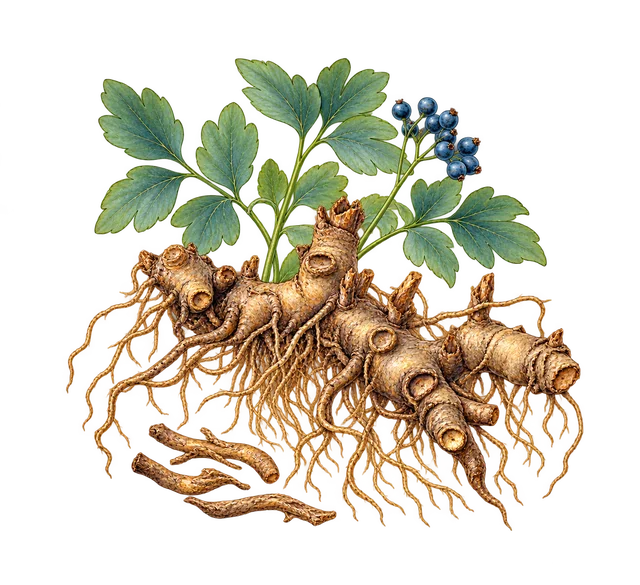
NC State documents blue cohosh as a woodland perennial with divided leaves and conspicuous blue seed structures. Its ornamental appearance does not make the root or seed safe to eat.
Traditional, historical and reported uses
- pregnancy safety
Traditional accountWhy this label?
No adequate evidence establishes safe obstetric benefit. Severe neonatal cardiovascular and gastrointestinal toxicity has been reported after maternal use.
Reported historical/midwifery obstetric use only. No adequate evidence establishes safe obstetric benefit. Severe neonatal cardiovascular and gastrointestinal toxicity has been reported after maternal use.
Coverage reflects verified sources, without a minimum use quota.
Women’s Health: traditions, evidence and cautions
Historical use does not establish benefit or safety. Pregnancy, breastfeeding and fertility care require particular caution: food, tea, essential oil and concentrated extract are not interchangeable. These records are not treatment, dosing or pregnancy-management instructions. Discuss supplements with a qualified clinician or pharmacist; do not delay evaluation of persistent symptoms.
Blue cohosh — safety reference
Caulophyllum thalictroides
- Plant part / material
- root
- Preparation studied or reported
- historical medicinal root preparations; no use instructions
Caulophyllum thalictroides; root.
pregnancy safety
Traditional account
Reported or traditional useReported historical/midwifery obstetric use only. No adequate evidence establishes safe obstetric benefit. Severe neonatal cardiovascular and gastrointestinal toxicity has been reported after maternal use.
What the evidence supportsNo adequate evidence establishes safe obstetric benefit. Severe neonatal cardiovascular and gastrointestinal toxicity has been reported after maternal use.
Avoid in pregnancy and breastfeeding. LactMed strongly discourages breastfeeding use because of potentially severe toxicity and missing safety data. Avoid pregnancy and breastfeeding use. Serious newborn cardiovascular and gastrointestinal toxicity has been reported after maternal use. Seek urgent medical or poison-control advice after a suspected toxic exposure; do not wait for a home remedy to work.
One exact-material card. historical medicinal root preparations; no use instructions. Keep preparations distinct; do not transfer findings from a named extract to every tea or powder.
- Avoid in pregnancy and breastfeeding. LactMed strongly discourages breastfeeding use because of potentially severe toxicity and missing safety data.
- Avoid pregnancy and breastfeeding use. Serious newborn cardiovascular and gastrointestinal toxicity has been reported after maternal use.
- Seek urgent medical or poison-control advice after a suspected toxic exposure; do not wait for a home remedy to work.
- LactMed: Blue Cohosh
- NCCIH: Black and blue cohosh distinction
- NC State Extension Plant Toolbox: caulophyllum thalictroides
- FDA researchers: Primary constituents of blue cohosh
Read the complete historical reference and its material distinctions
Identity & detailed reference
Identity
Caulophyllum thalictroides; root.
Ingredient details, preparation and research
Also known as: Caulophyllum thalictroides; blue cohosh root
Source plant or material
Caulophyllum thalictroides — root
Plant family / material: Berberidaceae (barberry family)
Forms and route
historical medicinal root preparations; no use instructions
Vitamins and minerals
No nutrient quantities or daily-value claims are assigned to this medicinal material. Do not borrow the food nutrient profile of another plant part or use an extract as a dietary substitute.
Absorption and preparation
Safety/history reference only. No preparation, dosing, extraction, absorption-enhancement or home detoxification instructions are provided.
Traditional and reported uses
- Reported historical/midwifery obstetric use only. No adequate evidence establishes safe obstetric benefit. Severe neonatal cardiovascular and gastrointestinal toxicity has been reported after maternal use.
Contraindications and cautions
- Avoid in pregnancy and breastfeeding. LactMed strongly discourages breastfeeding use because of potentially severe toxicity and missing safety data.
- Avoid pregnancy and breastfeeding use. Serious newborn cardiovascular and gastrointestinal toxicity has been reported after maternal use.
- Seek urgent medical or poison-control advice after a suspected toxic exposure; do not wait for a home remedy to work.
Similar items and how they compare
- Black cohosh
Similar common name
Actaea racemosa belongs to a different genus and family; neither name identifies the other material.
Identity and composition
Caulophyllum thalictroides; root. The root contains alkaloid and saponin constituents of toxicological concern. LactMed describes nicotine-like and cardiovascular effects; a chemical profile is not a safe-use guide.
pregnancy safety: what evidence can say
No adequate evidence establishes safe obstetric benefit. Severe neonatal cardiovascular and gastrointestinal toxicity has been reported after maternal use. Avoid in pregnancy and breastfeeding. LactMed strongly discourages breastfeeding use because of potentially severe toxicity and missing safety data.
Exact material and preparation boundaries
One exact-material card. historical medicinal root preparations; no use instructions. Keep preparations distinct; do not transfer findings from a named extract to every tea or powder.
Medicines, pregnancy and breastfeeding
LactMed finds no adequate maternal or infant safety/efficacy data and strongly discourages breastfeeding use because of possible severe toxicity. No reliable interaction map was found; that gap does not support experimentation with medicines or other obstetric herbs.
Product identity and toxicity research
FDA researchers examined potentially toxic constituents in blue-cohosh supplements. A labelled herbal product is not evidence of safety or of equivalence between batches.
Source-supported safety summary
Avoid in pregnancy and breastfeeding. LactMed strongly discourages breastfeeding use because of potentially severe toxicity and missing safety data. Avoid pregnancy and breastfeeding use. Serious newborn cardiovascular and gastrointestinal toxicity has been reported after maternal use. Seek urgent medical or poison-control advice after a suspected toxic exposure; do not wait for a home remedy to work.
Evidence limits
- This is a focused educational source review, not a systematic review or a treatment plan.
- Traditional use documents a practice; it does not establish clinical benefit. Laboratory findings and multi-ingredient trials cannot establish a single ingredient’s effects.
- PubMed analytical-study abstract was available by indexing; its full text was not independently reviewed.
Entry sources
- LactMed: Blue Cohosh
- NCCIH: Black and blue cohosh distinction
- NC State Extension Plant Toolbox: caulophyllum thalictroides
- FDA researchers: Primary constituents of blue cohosh
Reference entry 527 · Recorded content review: 2026-10-11 · Review scope and dates