


Key cautions
- Pregnancy and breastfeeding safety evidence is inconclusive. Do not use for self-directed labor preparation. Gastrointestinal effects and medicine interactions are possible.
- Stomach upset, nausea and diarrhoea can occur.
- Do not use orally or vaginally to start labour without obstetric care.
What’s inside
The seed oil contains omega-6 fatty acids, including gamma-linolenic acid (GLA). It is a fixed fatty oil, not a distilled essential oil.
Uses in brief

- Seed-oil supplements studied for PMS, breast pain and menopause; benefits unestablished.
- Used in some skin products; oral eczema trials do not establish benefit.
History, folklore and reported uses
History, folklore and traditional uses
NCCIH records Native American use of leaf/stem material for minor skin injuries and digestive or throat complaints. That history should not be presented as evidence that modern concentrated seed-oil capsules were a traditional reproductive remedy.
The older skin and throat traditions described by NCCIH involved leaves and stems. Those histories are context for the plant, not evidence for concentrated seed oil.
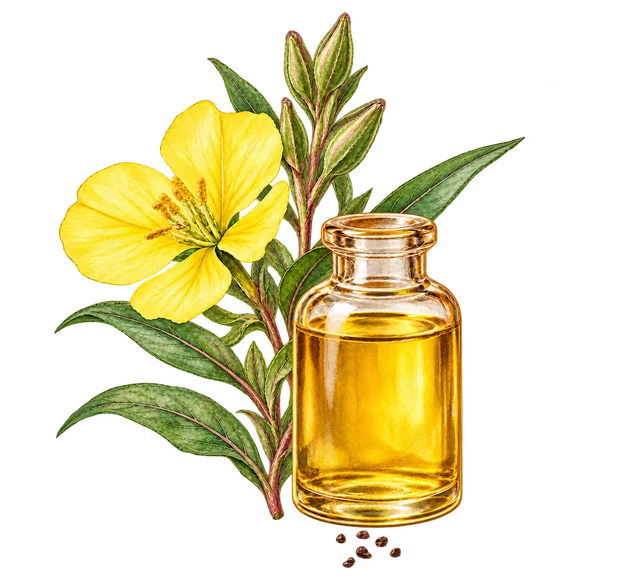
The yellow four-petalled flowers open around dusk. NC State describes garden and wildlife value, including visits by night-flying moths; this is a role of the living plant.
Traditional, historical and reported uses
- PMS; breast pain; menopause; pregnancy
Human researchWhy this label?
Evidence is insufficient for PMS or menopause and oil is probably no better than placebo for breast pain. Pregnancy-related trial findings are inconsistent.
Modern seed-oil promotion for PMS, cyclical breast pain and menopause; pregnancy use has also been reported. Evidence is insufficient for PMS or menopause and oil is probably no better than placebo for breast pain. Pregnancy-related trial findings are inconsistent.
- Skin-product use and eczema research
Human researchWhy this label?
Evening primrose oil appears in topical products. Oral trials have not shown a benefit for eczema; this negative oral finding and a cosmetic ingredient role are different questions.
Evening primrose oil appears in topical products. Oral trials have not shown a benefit for eczema; this negative oral finding and a cosmetic ingredient role are different questions.
Coverage reflects verified sources, without a minimum use quota.
Women’s Health: traditions, evidence and cautions
Historical use does not establish benefit or safety. Pregnancy, breastfeeding and fertility care require particular caution: food, tea, essential oil and concentrated extract are not interchangeable. These records are not treatment, dosing or pregnancy-management instructions. Discuss supplements with a qualified clinician or pharmacist; do not delay evaluation of persistent symptoms.
Evening primrose seed oil
Oenothera biennis
- Plant part / material
- seed oil
- Preparation studied or reported
- oral seed-oil supplements; historical leaf/stem preparations are distinct
Oenothera biennis; seed oil.
PMS; breast pain; menopause; pregnancy
Human research
Reported or traditional useModern seed-oil promotion for PMS, cyclical breast pain and menopause; pregnancy use has also been reported. Evidence is insufficient for PMS or menopause and oil is probably no better than placebo for breast pain. Pregnancy-related trial findings are inconsistent.
What the evidence supportsEvidence is insufficient for PMS or menopause and oil is probably no better than placebo for breast pain. Pregnancy-related trial findings are inconsistent.
Pregnancy and breastfeeding safety evidence is inconclusive. Do not use for self-directed labor preparation. Gastrointestinal effects and medicine interactions are possible. Stomach upset, nausea and diarrhoea can occur. Do not use orally or vaginally to start labour without obstetric care.
Skin-product use and eczema research
Human research
Reported or traditional useEvening primrose oil appears in topical products. Oral trials have not shown a benefit for eczema; this negative oral finding and a cosmetic ingredient role are different questions.
What the evidence supportsEvening primrose oil appears in topical products. Oral trials have not shown a benefit for eczema; this negative oral finding and a cosmetic ingredient role are different questions.
Pregnancy and breastfeeding safety evidence is inconclusive. Do not use for self-directed labor preparation. Gastrointestinal effects and medicine interactions are possible. Stomach upset, nausea and diarrhoea can occur. Do not use orally or vaginally to start labour without obstetric care.
One exact-material card. oral seed-oil supplements; historical leaf/stem preparations are distinct. Keep preparations distinct; do not transfer findings from a named extract to every tea or powder.
- Pregnancy and breastfeeding safety evidence is inconclusive. Do not use for self-directed labor preparation. Gastrointestinal effects and medicine interactions are possible.
- Stomach upset, nausea and diarrhoea can occur.
- Do not use orally or vaginally to start labour without obstetric care.
Read the complete historical reference and its material distinctions
Identity & detailed reference
Identity
Oenothera biennis; seed oil.
Ingredient details, preparation and research
Also known as: EPO; Oenothera biennis seed oil
Source plant or material
Oenothera biennis — seed oil
Plant family / material: Onagraceae (evening-primrose family)
Forms and route
oral seed-oil supplements; historical leaf/stem preparations are distinct
Vitamins and minerals
No nutrient quantities or daily-value claims are assigned to this medicinal material. Do not borrow the food nutrient profile of another plant part or use an extract as a dietary substitute.
Absorption and preparation
Preparation and route matter. A tea, whole powder, alcohol extract and isolated constituent can give different exposures. No food pairing or absorption-enhancement technique is established by the sources reviewed.
Traditional and reported uses
- Modern seed-oil promotion for PMS, cyclical breast pain and menopause; pregnancy use has also been reported. Evidence is insufficient for PMS or menopause and oil is probably no better than placebo for breast pain. Pregnancy-related trial findings are inconsistent.
- Evening primrose oil appears in topical products. Oral trials have not shown a benefit for eczema; this negative oral finding and a cosmetic ingredient role are different questions.
Contraindications and cautions
- Pregnancy and breastfeeding safety evidence is inconclusive. Do not use for self-directed labor preparation. Gastrointestinal effects and medicine interactions are possible.
- Stomach upset, nausea and diarrhoea can occur.
- Do not use orally or vaginally to start labour without obstetric care.
Similar items and how they compare
- Borage seed oil
Another GLA-containing fixed oil
Different species and safety profile; do not transfer results.
- Evening primrose leaf
Same plant
Leaf/stem history is not seed-oil evidence.
Identity and composition
Oenothera biennis; seed oil. The seed oil contains omega-6 fatty acids, including gamma-linolenic acid (GLA). It is a fixed fatty oil, not a distilled essential oil.
PMS; breast pain; menopause; pregnancy: what evidence can say
Evidence is insufficient for PMS or menopause and oil is probably no better than placebo for breast pain. Pregnancy-related trial findings are inconsistent. Pregnancy and breastfeeding safety evidence is inconclusive. Do not use for self-directed labor preparation. Gastrointestinal effects and medicine interactions are possible.
Exact material and preparation boundaries
One exact-material card. oral seed-oil supplements; historical leaf/stem preparations are distinct. Keep preparations distinct; do not transfer findings from a named extract to every tea or powder.
Medicines, pregnancy and breastfeeding
NCCIH recommends medicine review but does not identify a proven universal interaction in its public summary. Pregnancy and breastfeeding evidence is inconclusive, rather than established harm in every exposure. Limited observations of breastfed infants do not establish long-term safety.
Source-supported safety summary
Pregnancy and breastfeeding safety evidence is inconclusive. Do not use for self-directed labor preparation. Gastrointestinal effects and medicine interactions are possible. Stomach upset, nausea and diarrhoea can occur. Do not use orally or vaginally to start labour without obstetric care.
Evidence limits
- This is a focused educational source review, not a systematic review or a treatment plan.
- Traditional use documents a practice; it does not establish clinical benefit. Laboratory findings and multi-ingredient trials cannot establish a single ingredient’s effects.
Entry sources
Reference entry 525 · Recorded content review: 2026-10-11 · Review scope and dates