


Key cautions
- Do not improvise a fermentation or use historical soaking descriptions as food-safety guidance.
- Do not use strong smell or sourness alone to distinguish safe fermented food from spoilage.
What’s inside
Maize starch and fermentation products contribute to texture and strong aroma. Microbial identities, acidity and residual nutrients are preparation-specific.
Uses in brief

- Fermented maize food
- Porridge and baked preparations
History, folklore and reported uses
History, folklore and traditional uses
Te Ara documents Māori adaptation of introduced maize through established food-preservation knowledge. Its video features Tini Molyneux, Elle Hughes and Greg Mayor tasting foods, preserving a specific public record rather than a universal community preference.
Traditional, historical and reported uses
- Fermented maize food
Traditional accountWhy this label?
Sources document this named food or material use; no therapeutic outcome is claimed.
Te Ara records kānga pirau as a distinctive Māori fermented food. Cultural significance does not make pungency an objective safety test.
- Porridge and baked preparations
Food or household practiceWhy this label?
Sources document this named food or material use; no therapeutic outcome is claimed.
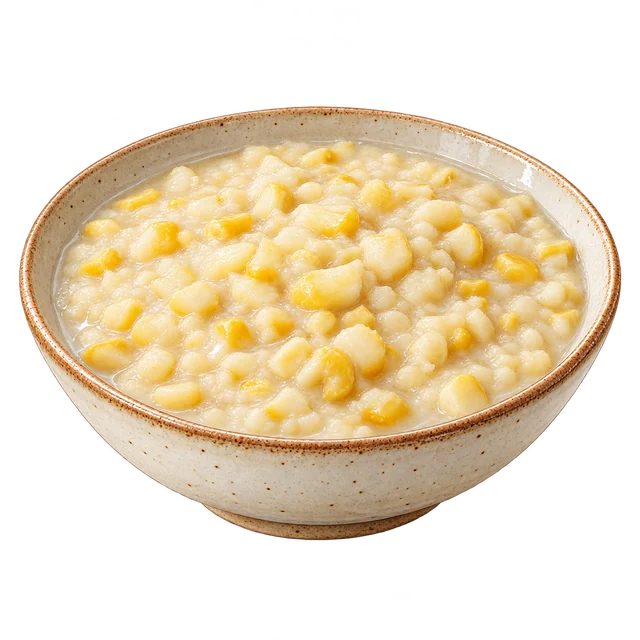
The documented presentation includes porridge and muffins made with the fermented ingredient. Baking creates a further processed food, so live-culture claims cannot simply carry over.
2 narrowly supported uses; no clinical efficacy or universal preparation is inferred.
Historical-use additions reviewed 2026-10-09
Regional reading paths
These sourced notes describe cultivation, trade, food traditions or material history. A regional connection does not claim exclusive origin.
Australia & Oceania
traditional processing; Māori communities, New Zealand
Fermented maize food.
Identity & detailed reference
Identity
Kānga pirau/kānga kōpiro: fermented Zea mays food in Māori traditions, distinct from fresh maize, cornflour and ordinary unfermented porridge.
Ingredient details, preparation and research
Source plant or material
Kānga pirau/kānga kōpiro: fermented Zea mays food in Māori traditions, distinct from fresh maize, cornflour and ordinary unfermented porridge.
Plant family / material: Poaceae; fermented food
Forms and route
Safely prepared fermented maize and dishes made from it; no home-process recipe is supplied.
Vitamins and minerals
No universal increase in vitamins, digestibility or live probiotic organisms is assumed. Muffins, porridge and other finished dishes have their own added ingredients and heat treatment.
Absorption and preparation
A fermented origin does not prove a clinical absorption advantage. Cooking a contaminated or poorly controlled fermentation cannot be presumed to correct every hazard.
Practical preparation
Seek a trusted prepared food and follow its handling instructions. Do not reproduce historical river-soaking or use smell to decide safety; no time, temperature or detoxification instructions are given.
Traditional and reported uses
- Te Ara records kānga pirau as a distinctive Māori fermented food. Cultural significance does not make pungency an objective safety test.
- The documented presentation includes porridge and muffins made with the fermented ingredient. Baking creates a further processed food, so live-culture claims cannot simply carry over.
Contraindications and cautions
- Do not improvise a fermentation or use historical soaking descriptions as food-safety guidance.
- Do not use strong smell or sourness alone to distinguish safe fermented food from spoilage.
Knowledge and benefit sharing
Research on Indigenous microorganisms discusses fermented foods and the need to respect knowledge holders in commercial and scientific use. Public description does not authorize appropriation of restricted practices or cultures.
A bounded evidence base
The supplied food-history sources establish name, context and dishes, not a validated household fermentation protocol. This card intentionally excludes medicinal and probiotic promises rather than filling the gap with analogy to other fermented maize foods.
Evidence limits
This is a food/material reference, not evidence of disease treatment. Geographic and customary-use records do not establish a medicinal dose. Nutrient quantities are omitted unless a matching food form and serving have been verified.
Entry sources
- Te Ara: Kānga pirau, stinking corn
- Charles Royal and Jenny Kaka-Scott, Te Ara: Māori foods, kai Māori
- Indigenous microorganisms and benefit sharing
Reference entry 515 · Recorded content review: 2026-10-09 · Review scope and dates