


Key cautions
- Follow the product label for refrigeration, opening and shelf life.
- Home fermentation requires a tested recipe; do not improvise critical salt, water or temperature conditions.
What’s inside
Water-rich cucumber tissue, salt and fermentation-derived organic acids. Dill, garlic and horseradish may supply aroma; amounts and live microbial populations vary.
Uses in brief

- Polish fermented cucumber condiment
- Dill and horseradish flavouring tradition
History, folklore and reported uses
History, folklore and traditional uses
Traditional processing: Rogowo and other Polish regions.
Traditional, historical and reported uses
- Polish fermented cucumber condiment
Food or household practiceWhy this label?
The linked sources document this material-specific use; no treatment outcome or universal safety is inferred.
The Polish Agriculture Ministry’s Rogowo account records cucumbers fermented with seasonings. This identifies a regional plant-food preparation rather than any sour cucumber sold under the broad word pickle.
- Dill and horseradish flavouring tradition
Food or household practiceWhy this label?
The linked sources document this material-specific use; no treatment outcome or universal safety is inferred.
Rogowo’s recorded ingredients include dill heads and horseradish. Their role here is culinary seasoning, without transferring medicinal claims from either herb to the finished pickle.
2 supported material-specific uses; practices are not proof of treatment efficacy.
Historical-use additions reviewed 2026-10-09
Regional reading paths
These sourced notes describe cultivation, trade, food traditions or material history. A regional connection does not claim exclusive origin.
Europe
Traditional processing: Rogowo and other Polish regions.
Brined fermented cucumber condiment; distinct from vinegar-only pickles.
Identity & detailed reference
Identity
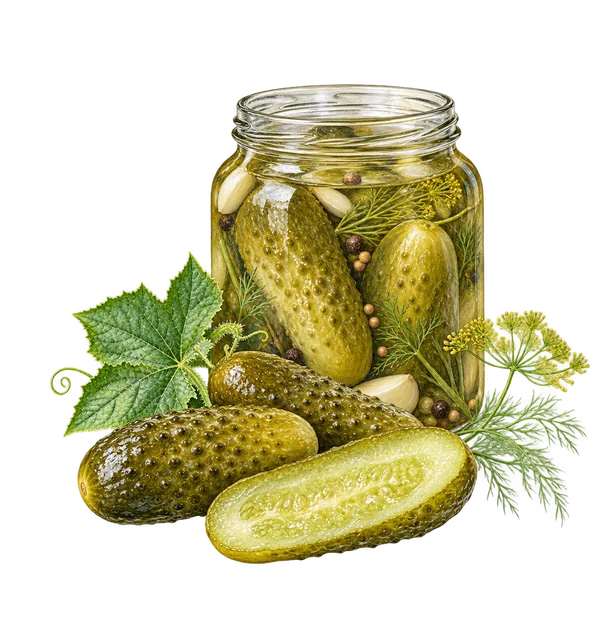
Fermented cucumbers are Cucumis sativus fruits preserved through controlled lactic-acid fermentation, often with dill and other seasonings. They differ from cucumbers acidified only with vinegar.
Ingredient details, preparation and research
Also known as: Ogórki kiszone; Lacto-fermented cucumber pickles
Source plant or material
Cucumis sativus L. + lactic-acid fermentation
Plant family / material: Cucurbitaceae; fermentation involves microbial communities
Forms and route
Refrigerated fermented pickles or properly processed shelf-stable products. Short-fermented, vinegar-pickled and heat-treated products may have different taste, storage needs and microbial viability.
Vitamins and minerals
The finished food’s salt content depends on recipe and draining. Do not assign fresh-cucumber nutrition unchanged to salted fermented pickles or assume the brine is a beneficial supplement.
Absorption and preparation
No required absorption-enhancing pairing is established. Fermentation changes composition, but the presence of acid or live microbes alone does not establish a clinical effect.
Practical preparation
Buy a clearly labelled fermented product if that is the intended food. For home preservation, follow the complete USDA/NCHFP tested process; this overview is not a recipe.
Combination notes
Use as a condiment or vegetable component; account for salt and the full recipe rather than focusing only on fermentation.
Traditional and reported uses
- Polish fermented cucumber condiment
- Dill and horseradish flavouring tradition
Contraindications and cautions
- Follow the product label for refrigeration, opening and shelf life.
- Home fermentation requires a tested recipe; do not improvise critical salt, water or temperature conditions.
- Discard spoiled or suspect products rather than tasting to determine safety. Compare sodium labels if limiting salt.
Similar items and how they compare
- Vinegar pickles
Both can be sour cucumber products.
Vinegar acidification and lactic fermentation are different processes.
Vinegar pickles and ferments differ
USDA distinguishes fermented pickles from fresh-pack vinegar processes. Both can be legitimate foods, but their production controls and microbial histories are not interchangeable.
No automatic probiotic label
NIH guidance requires a more specific evidence basis for probiotic claims. A commercial pickle may also be heat-treated, and the jar’s sour taste cannot establish living beneficial strains.
Evidence limits
No gastrointestinal treatment or claim that brine is an electrolyte remedy is made. No abbreviated salt ratio or fermentation schedule is provided.
Entry sources
- Polish Agriculture Ministry: Ogórki kiszone z Rogowa
- National Center for Home Food Preservation: General information on fermenting
- USDA: Preparing and canning fermented foods and pickled vegetables
- NIH ODS: Probiotics, food and supplement distinctions
Reference entry 386 · Recorded content review: 2026-10-09 · Review scope and dates