


Key cautions
- Avoid unidentified wild pepper plants; related species have different identities.
- Strong seasonings can be irritating; reduce or stop use if a food causes symptoms.
What’s inside
Pungent aromatic constituents differ between leaf and fruit; a single standardized chemical profile is not assigned.
Uses in brief

- Peppery berries
- Aromatic leaf
History, folklore and reported uses
History, folklore and traditional uses
This southeastern Australian rainforest ingredient is associated with Tasmania and Victoria. The AgriFutures account describes both managed wild supply and plantations; responsible sourcing matters because regional association alone does not grant harvest permission.
Traditional, historical and reported uses
- Peppery berries
Food or household practiceWhy this label?
Sources document this named food or material use; no therapeutic outcome is claimed.
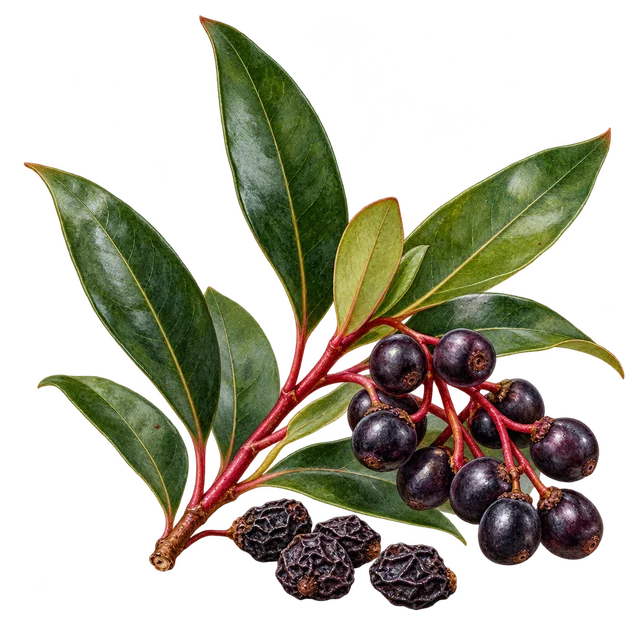
Berries are used for hot, aromatic food seasoning. They are a native-pepper ingredient rather than ordinary black pepper under a new name.
- Aromatic leaf
Food or household practiceWhy this label?
Sources document this named food or material use; no therapeutic outcome is claimed.
Leaf is a separate culinary seasoning with its own texture and intensity. A recipe specifying leaf should not automatically receive an equal amount of berries.
2 narrowly supported uses; no clinical efficacy or universal preparation is inferred.
Historical-use additions reviewed 2026-10-09
Regional reading paths
These sourced notes describe cultivation, trade, food traditions or material history. A regional connection does not claim exclusive origin.
Australia & Oceania
native; Australia, Tasmania and Victoria
Peppery culinary seasoning.
Identity & detailed reference
Identity
Tasmannia lanceolata; mountain-pepper leaf and berries, not Piper nigrum peppercorns or all Tasmannia species.
Ingredient details, preparation and research
Source plant or material
Tasmannia lanceolata; mountain-pepper leaf and berries, not Piper nigrum peppercorns or all Tasmannia species.
Plant family / material: Winteraceae
Forms and route
Fresh or dried culinary leaf; dried berries and ground seasoning products.
Vitamins and minerals
Small seasoning quantities do not justify borrowing nutrient values from a fruit or leafy-vegetable serving.
Absorption and preparation
Pungency is a sensory property, not a measurement of absorption or proof that more is better.
Practical preparation
Use authenticated food-grade leaf or berries and follow a culinary recipe. Check which part a seasoning contains; do not substitute an unknown native-pepper species.
Traditional and reported uses
- Berries are used for hot, aromatic food seasoning. They are a native-pepper ingredient rather than ordinary black pepper under a new name.
- Leaf is a separate culinary seasoning with its own texture and intensity. A recipe specifying leaf should not automatically receive an equal amount of berries.
Contraindications and cautions
- Avoid unidentified wild pepper plants; related species have different identities.
- Strong seasonings can be irritating; reduce or stop use if a food causes symptoms.
Parts must remain distinct
The industry fact sheet explicitly covers both pepperberry and pepperleaf. That supports two culinary forms within one species card, rather than duplicate entries or treating the leaf as nutritionally identical to the berry.
Composition and commercial identity
The food-composition project sampled native pepper leaf and berry separately. Its methodological distinction is more useful than a generic antioxidant ranking, which would not describe a normal seasoning serving or a clinical outcome.
Evidence limits
This is a food/material reference, not evidence of disease treatment. Geographic and customary-use records do not establish a medicinal dose. Nutrient quantities are omitted unless a matching food form and serving have been verified.
Entry sources
- AgriFutures: Focus on Mountain Pepper
- DAFF: Australian native foods
- AgriFutures: Native Foods Compositional Data for FSANZ Nutritional Panel Calculator
Reference entry 475 · Recorded content review: 2026-10-09 · Review scope and dates