


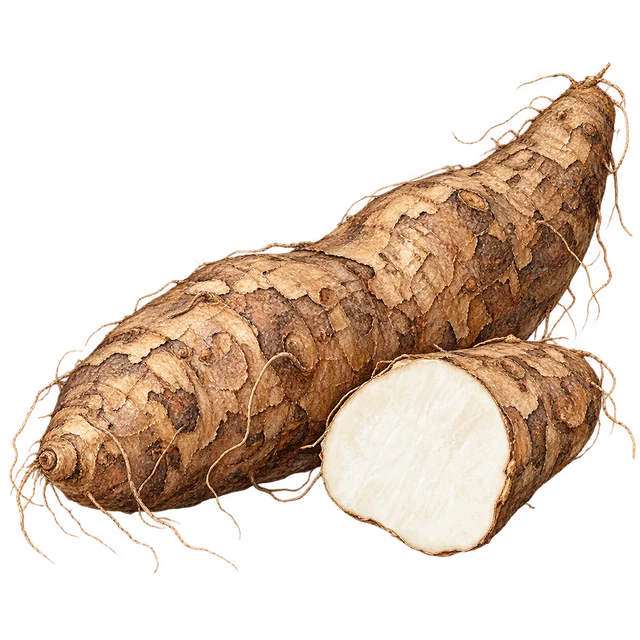
Key cautions
- Do not collect or detoxify wild Dioscorea using this card.
- Sweet potato, cultivated food yam and medicinal wild-yam products are distinct.
What’s inside
Tubers contain starch and fibre, with cultivar-dependent pigments and other constituents. The group has no single chemical or nutrient profile.
Uses in brief

- Cooked tuber staple
- Locally named crop foods
History, folklore and reported uses
History, folklore and traditional uses
Yams have different cultural and dietary roles across Pacific societies. Pohnpei’s preference for yams, for example, is documented in the food guide and should not be treated as a ranking for every island.
Traditional, historical and reported uses
- Cooked tuber staple
Food or household practiceWhy this label?
Sources document this named food or material use; no therapeutic outcome is claimed.
Cultivated yams supply starchy food in Pacific meals. Their botanical family distinguishes them from sweet potatoes despite overlapping market terminology.
- Locally named crop foods
Food or household practiceWhy this label?
Sources document this named food or material use; no therapeutic outcome is claimed.
The Pacific Food Guide connects D. alata with local names including uhi and ufi. Those names help locate regional food traditions but should be paired with an actual species when sourcing.
2 narrowly supported uses; no clinical efficacy or universal preparation is inferred.
Historical-use additions reviewed 2026-10-09
Regional reading paths
These sourced notes describe cultivation, trade, food traditions or material history. A regional connection does not claim exclusive origin.
Australia & Oceania
cultivated; Pohnpei, Samoa and Guam
Cooked tuber staple.
Identity & detailed reference
Identity
Pacific culinary yams, anchored to cultivated Dioscorea alata with other edible species identified separately; not sweet potato or medicinal wild yam.
Ingredient details, preparation and research
Source plant or material
Pacific culinary yams, anchored to cultivated Dioscorea alata with other edible species identified separately; not sweet potato or medicinal wild yam.
Plant family / material: Dioscoreaceae
Forms and route
Properly prepared cultivated tubers and established yam foods.
Vitamins and minerals
A generic yam table may not identify the same species or cooked form. No nutrient quantities are transferred to wild-yam extracts or purple cultivars by name alone.
Absorption and preparation
Cooking changes starch structure. This general food effect does not establish a special medical benefit or turn all wild Dioscorea into edible food.
Practical preparation
Buy a recognized cultivated food yam and follow preparation guidance for that species. Do not use broad internet statements about raw roots, leaves or shoots as permission to eat an unknown yam plant.
Traditional and reported uses
- Cultivated yams supply starchy food in Pacific meals. Their botanical family distinguishes them from sweet potatoes despite overlapping market terminology.
- The Pacific Food Guide connects D. alata with local names including uhi and ufi. Those names help locate regional food traditions but should be paired with an actual species when sourcing.
Contraindications and cautions
- Do not collect or detoxify wild Dioscorea using this card.
- Sweet potato, cultivated food yam and medicinal wild-yam products are distinct.
Beware inconsistent preparation text
The food-guide page combines a species heading with broad plant-part instructions. This card does not adopt its raw-root or leaf statements as universal guidance; only authenticated cultivated tubers in safe cooked food are within scope.
Avoid medicinal-wild-yam conflation
A starch food and a concentrated product marketed as wild yam are not equivalent materials. Food composition and customary meal use do not validate endocrine or hormone-related treatment claims.
Evidence limits
This is a food/material reference, not evidence of disease treatment. Geographic and customary-use records do not establish a medicinal dose. Nutrient quantities are omitted unless a matching food form and serving have been verified.
Entry sources
- University of Hawaiʻi: Pacific Food Guide, Dioscorea alata
- University of Hawaiʻi Nutrition Center: Yam
- University of Hawaiʻi CTAHR: Pacific Crops
Reference entry 505 · Recorded content review: 2026-10-09 · Review scope and dates