


Key cautions
- Do not eat raw or inadequately prepared aroid material.
- Plant identity and qualified preparation are essential; this card is not a detoxification guide.
What’s inside
The storage organ is a starchy food; cultivar, soil and preparation influence mineral and other composition. No universal antinutrient or nutrient value is assigned.
Uses in brief

- Prepared starchy staple
- Managed atoll food crop
History, folklore and reported uses
History, folklore and traditional uses
Giant swamp taro has particular importance in Micronesian and atoll food systems. SPC describes adaptation of traditional babai pits for resilient food gardens; climate, groundwater and customary land management are part of the crop’s context.
Traditional, historical and reported uses
- Prepared starchy staple
Food or household practiceWhy this label?
Sources document this named food or material use; no therapeutic outcome is claimed.
The Pacific Food Guide identifies Cyrtosperma among preferred starch crops in places such as Yap and Palau. Those regional roles do not make every aroid edible.
- Managed atoll food crop
Food or household practiceWhy this label?
Sources document this named food or material use; no therapeutic outcome is claimed.
SPC documents cultivation in atoll gardens derived from traditional pit systems, supporting food security through managed production rather than casual marsh harvesting.
2 narrowly supported uses; no clinical efficacy or universal preparation is inferred.
Historical-use additions reviewed 2026-10-09
Regional reading paths
These sourced notes describe cultivation, trade, food traditions or material history. A regional connection does not claim exclusive origin.
Australia & Oceania
cultivated; Kiribati, Marshall Islands, Yap and Palau
Prepared corm staple.
Identity & detailed reference
Identity
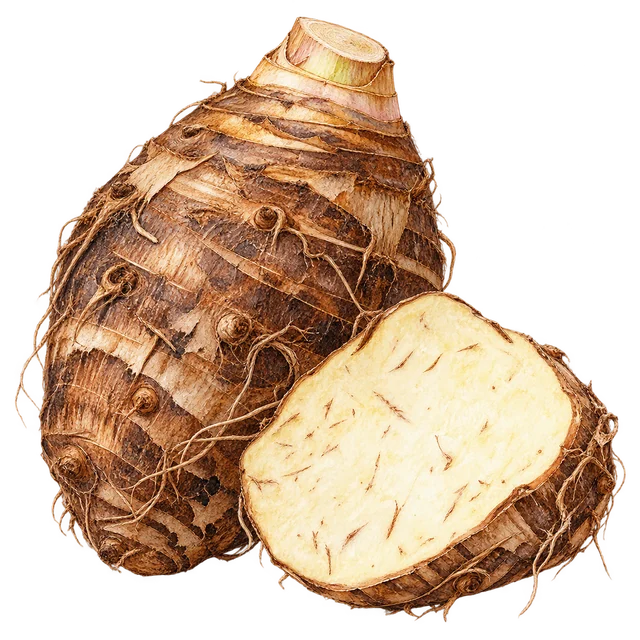
Cyrtosperma merkusii; giant swamp taro, including locally named babai/pulaka food cultivars. It is not Colocasia taro, Alocasia giant taro or Xanthosoma tannia.
Ingredient details, preparation and research
Source plant or material
Cyrtosperma merkusii; giant swamp taro, including locally named babai/pulaka food cultivars. It is not Colocasia taro, Alocasia giant taro or Xanthosoma tannia.
Plant family / material: Araceae
Forms and route
Authenticated cultivated storage stems/corms in correctly prepared food dishes.
Vitamins and minerals
Do not borrow ordinary taro nutrition numbers. A cooked cultivar-specific serving is needed, particularly before making iron, calcium or carotenoid claims.
Absorption and preparation
Processing changes texture and composition, but no generic cooking step is presented as a detoxification guarantee.
Practical preparation
Obtain properly prepared food or follow qualified local food-safety guidance for the exact cultivated material. No raw tasting, household detoxification timetable or ornamental-aroid substitution is supplied.
Traditional and reported uses
- The Pacific Food Guide identifies Cyrtosperma among preferred starch crops in places such as Yap and Palau. Those regional roles do not make every aroid edible.
- SPC documents cultivation in atoll gardens derived from traditional pit systems, supporting food security through managed production rather than casual marsh harvesting.
Contraindications and cautions
- Do not eat raw or inadequately prepared aroid material.
- Plant identity and qualified preparation are essential; this card is not a detoxification guide.
Cultivar and environment matter
A primary productivity study examines environmental and farming effects on C. merkusii. Its nutrient observations belong to the measured material; they cannot supply a universal serving or a claim that the crop treats deficiency.
Preserve distinctions among taros
The four principal aroid genera in Pacific food accounts differ botanically and in use. Keeping separate cards prevents a preparation for Colocasia from becoming unsafe instructions for an unidentified giant aroid.
Evidence limits
This is a food/material reference, not evidence of disease treatment. Geographic and customary-use records do not establish a medicinal dose. Nutrient quantities are omitted unless a matching food form and serving have been verified.
Entry sources
- University of Hawaiʻi: Pacific Food Guide, Food Preferences
- SPC: Results Report 2017, atoll food gardens
- Mendiondo et al.: Environmental and farming controls of Cyrtosperma merkusii productivity
Reference entry 504 · Recorded content review: 2026-10-09 · Review scope and dates