


Key cautions
- Concentrated extracts are different from leaf tea and need a separate safety assessment.
- For pregnancy, ongoing medicines or regular concentrated use, seek product-specific professional advice.
What’s inside
Aromatic leaf chemistry depends on material and extraction. Sensory research examines the infusion rather than assigning one standardized medicinal constituent dose.
Uses in brief

- Leaf infusion
- Contemporary culinary ingredient
History, folklore and reported uses
History, folklore and traditional uses
Te Ara documents kawakawa tea and its place in Māori food contexts. Contemporary chefs also incorporate native plants into cuisine; the cultural connection should retain the people and preparation rather than become a generic medicinal promise.
Traditional, historical and reported uses
- Leaf infusion
Traditional accountWhy this label?
Sources document this named food or material use; no therapeutic outcome is claimed.
The Te Ara food account specifically presents kawakawa tea. This records a beverage tradition, without prescribing a frequency, dose or disease indication.
- Contemporary culinary ingredient
Food or household practiceWhy this label?
Sources document this named food or material use; no therapeutic outcome is claimed.
Modern Māori cuisine includes kawakawa among native flavour ingredients. A food-seasoning application differs from an extract or topical balm.
2 narrowly supported uses; no clinical efficacy or universal preparation is inferred.
Historical-use additions reviewed 2026-10-09
Regional reading paths
These sourced notes describe cultivation, trade, food traditions or material history. A regional connection does not claim exclusive origin.
Australia & Oceania
native; New Zealand
Leaf infusion in Māori food contexts.
Identity & detailed reference
Identity
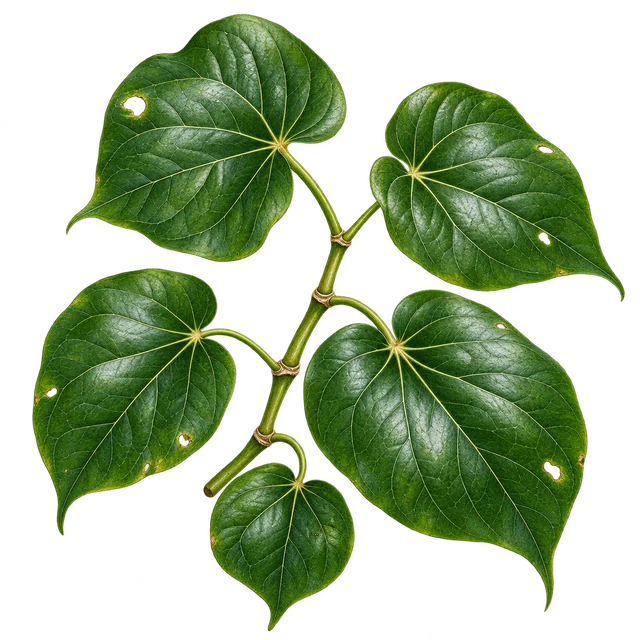
Piper excelsum, formerly Macropiper excelsum; kawakawa culinary leaf, distinct from Piper methysticum kava.
Ingredient details, preparation and research
Source plant or material
Piper excelsum, formerly Macropiper excelsum; kawakawa culinary leaf, distinct from Piper methysticum kava.
Plant family / material: Piperaceae
Forms and route
Food-grade leaf infusions and specifically formulated culinary leaf ingredients.
Vitamins and minerals
A strained leaf drink is not a full serving of leafy vegetables. No vitamin or mineral contribution is claimed without a matching beverage analysis.
Absorption and preparation
What enters an infusion differs from the complete fresh or dried leaf. Stronger flavour does not establish more useful absorption or a safe therapeutic dose.
Practical preparation
Choose an identified food product and follow its label. Do not replace a leaf infusion with concentrated extract or interpret leaf damage as a reliable potency measure.
Traditional and reported uses
- The Te Ara food account specifically presents kawakawa tea. This records a beverage tradition, without prescribing a frequency, dose or disease indication.
- Modern Māori cuisine includes kawakawa among native flavour ingredients. A food-seasoning application differs from an extract or topical balm.
Contraindications and cautions
- Concentrated extracts are different from leaf tea and need a separate safety assessment.
- For pregnancy, ongoing medicines or regular concentrated use, seek product-specific professional advice.
Human sensory research is not treatment evidence
A primary flavour study used standardized preparations and consumer-derived descriptors for several New Zealand plants. It helps describe flavour, not whether drinking kawakawa prevents diabetes, inflammation or another disease.
Distinguish two pepper-family plants
Kawakawa and Pacific kava are related but different species. Similar names and family membership do not authorize transferring psychoactive-beverage preparation or safety information from kava to kawakawa.
Evidence limits
This is a food/material reference, not evidence of disease treatment. Geographic and customary-use records do not establish a medicinal dose. Nutrient quantities are omitted unless a matching food form and serving have been verified.
Entry sources
- Te Ara: Kawakawa tea
- Charles Royal and Jenny Kaka-Scott, Te Ara: Modern Māori cuisine
- Primary sensory study: Characterizing the Flavor of New Zealand Native Plants
- Te Ara: Pepper trees, horopito and kawakawa
Reference entry 500 · Recorded content review: 2026-10-09 · Review scope and dates