


Key cautions
- Lime juice on skin followed by sunlight can cause blistering and dark marks; wash spills promptly with soap and water.
- Repeated acidic-drink exposure can damage tooth enamel; avoid prolonged sipping or holding juice in the mouth.
What’s inside
Acidic juice, vitamin C and aromatic peel constituents. Fruit size, maturity and processing affect the finished ingredient; no essential-oil concentration is implied.
Uses in brief

- Use the juice in limeade, sauces or marinades.
- Use as the citrus ingredient in a properly prepared Key lime pie.
History, folklore and reported uses
History, folklore and traditional uses
The Florida name is only one chapter of Key lime’s history. UF/IFAS traces its movement through North Africa and Iberia and its arrival in the Americas with Spanish and Portuguese voyagers. The fruit later became naturalized around the Caribbean and Florida Keys.
Its familiar pie connection sits alongside a broader everyday kitchen role. The same tart juice seasons sauces and marinades and makes limeade; its aroma also suits mixed drinks. These are documented culinary applications, not a claim that every use originated in the Keys.
Traditional, historical and reported uses
- Limeade
Food or household practiceWhy this label?
The claim documents limeade as a culinary, craft, gardening, or practical material use; it reports neither a treatment outcome nor measured nutrient content.
The juice forms the tart base of a diluted, often sweetened drink.
- Pie filling
Food or household practiceWhy this label?
The claim documents pie filling as a culinary, craft, gardening, or practical material use; it reports neither a treatment outcome nor measured nutrient content.
Key lime juice gives a characteristic citrus flavor to pies.
- Sauces
Food or household practiceWhy this label?
The claim documents sauces as a culinary, craft, gardening, or practical material use; it reports neither a treatment outcome nor measured nutrient content.
The juice seasons sauces served with food.
- Marinades
Food or household practiceWhy this label?
The claim documents marinades as a culinary, craft, gardening, or practical material use; it reports neither a treatment outcome nor measured nutrient content.
Key lime juice is used in marinades before cooking. This is not a substitute for cooking safely.
- Mixed beverages
Food or household practiceWhy this label?
The claim documents mixed beverages as a culinary, craft, gardening, or practical material use; it reports neither a treatment outcome nor measured nutrient content.
Florida’s agriculture department also lists mixed drinks; this records a culinary use without recommending alcohol.
Five named culinary applications are directly documented. Beverage, sauce and marinade roles are separated by preparation and purpose; no five-part medicinal tradition is claimed.
Identity & detailed reference
Identity
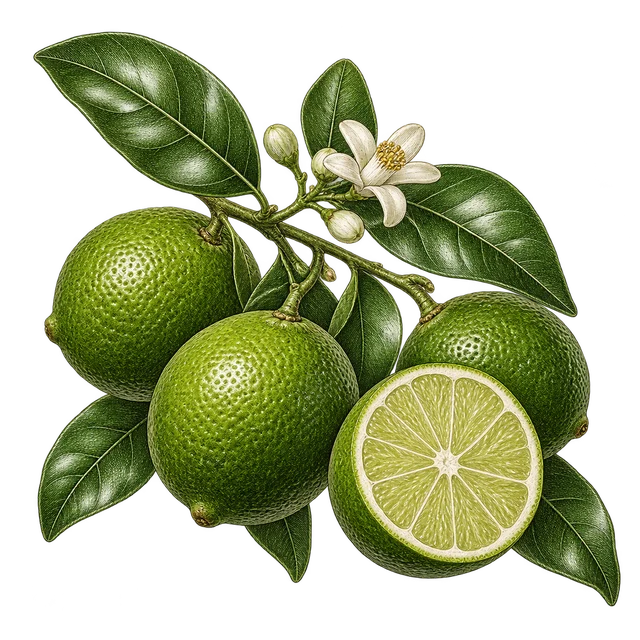
The small, aromatic Key or Mexican lime. It is a distinct citrus hybrid, not a generic name for every supermarket lime or for makrut lime leaves.
Ingredient details, preparation and research
Also known as: Mexican lime; West Indian lime
Source plant or material
Citrus × aurantiifolia, a small citrus tree.
Plant family / material: Rutaceae (citrus family)
Forms and route
Fresh fruit, expressed juice and culinary zest; limeade, sauces, marinades and pie fillings. Bottled products may be blends, so check the ingredient list.
Vitamins and minerals
Key lime contributes vitamin C, with the actual contribution depending on the small quantity of juice or fruit used. A pie or sweetened drink has a different nutritional profile from its lime ingredient.
Absorption and preparation
Citrus vitamin C can assist plant-food iron absorption at a meal. This does not establish a therapeutic dose of Key lime or a special benefit from concentrated peel oil.
Practical preparation
Wash before cutting or zesting, then strain seeds as needed. Take the colored outer peel rather than the bitter white pith for zest. Refrigerate prepared perishable foods.
Food notes
Juice and pulp of the fruit; washed food-grade peel for culinary zest. Seeds are usually removed from prepared juice.
Combination context
Use the juice for tartness and the zest for aroma. Small culinary portions are seasonings; they should not be treated as a substitute for a varied fruit intake.
Traditional and reported uses
- Use the juice in limeade, sauces or marinades.
- Use as the citrus ingredient in a properly prepared Key lime pie.
- Washed outer peel can provide culinary zest.
Contraindications and cautions
- Lime juice on skin followed by sunlight can cause blistering and dark marks; wash spills promptly with soap and water.
- Repeated acidic-drink exposure can damage tooth enamel; avoid prolonged sipping or holding juice in the mouth.
- A fresh Key-lime mixture is not shelf-stable merely because it tastes sour; use tested preserving instructions.
Similar items and how they compare
- Persian lime
Commonly used for similar tart culinary jobs.
A different citrus hybrid; the Key-lime identity is small-fruited and often seedy.
- Makrut lime leaf
Another ingredient sold with the word lime.
A leaf seasoning from a different citrus, not Key-lime fruit.
- Lemon fruit
Another acid citrus.
Flavor and recipe behavior differ; canning substitutions must be explicitly tested.
A named hybrid
Kew accepts Citrus × aurantiifolia in Rutaceae. UF/IFAS describes thin-skinned fruit with acid, aromatic pulp and seeds; ripe skin can turn yellow rather than remaining green.
Food uses are not a medicinal dose
Florida’s agriculture department documents limeade, sauces, marinades, mixed drinks and pies. These applications explain the ingredient’s value without demonstrating disease treatment.
A handling risk rather than an eating prohibition
Poison Control describes phytophotodermatitis after lime juice contacts skin and the area is exposed to ultraviolet light. Promptly washing off a spill is a practical prevention step.
Evidence limits
- Nutrition is qualitative; no USDA serving calculation or quantitative nutrient profile is asserted.
Entry sources
- Kew Plants of the World Online: Citrus × aurantiifolia
- UF/IFAS Extension: Key Lime Growing in the Florida Home Landscape
- Florida Department of Agriculture and Consumer Services: Florida Key Lime
- Illinois Extension: Citrus zest packs a bright, powerful punch
- NIH Office of Dietary Supplements: Vitamin C, consumer fact sheet
- American Dental Association: Dietary Acids and Your Teeth
- National Capital Poison Center: Lime juice and sun can cause skin rashes
- National Center for Home Food Preservation: Lemon Curd, Canned
- FDA: Selecting and Serving Produce Safely
Reference entry 166 · Recorded content review: 2026-10-07 · Review scope and dates