


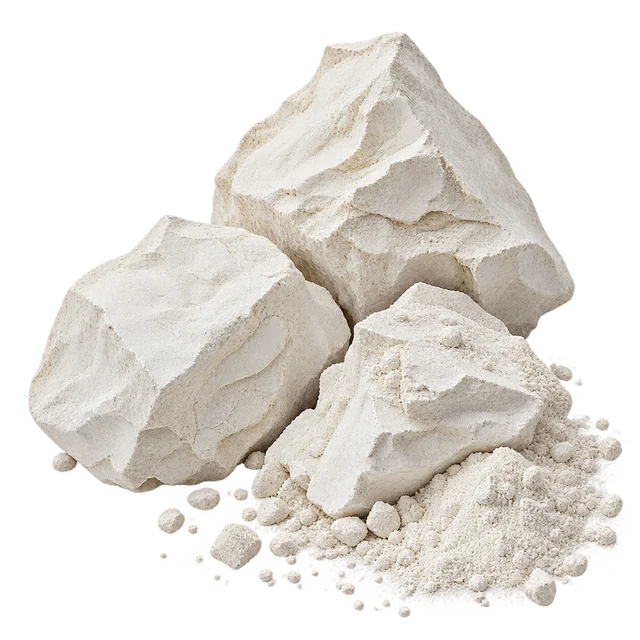
Key cautions
- Do not ingest or use raw clay as a detox or skin treatment.
- Avoid inhaling clay dust; follow supplier and workplace controls.
What’s inside
Halloysite is an aluminosilicate with structural water. Natural clay deposits can contain other minerals and trace elements; whiteness does not prove purity or suitability for body use.
Uses in brief

- Ceramic manufacturing
- Technical ceramic material
History, folklore and reported uses
History, folklore and traditional uses
Te Ara describes halloysite production at Matauri Bay in Northland, New Zealand. The geological story concerns weathered volcanic material and ceramic manufacturing, not an inherent health benefit of a regional clay.
Traditional, historical and reported uses
- Ceramic manufacturing
Food or household practiceWhy this label?
Sources document this named food or material use; no therapeutic outcome is claimed.
Te Ara records use in high-quality ceramic production, including porcelain and bone china. Processing and final product design determine material performance.
- Technical ceramic material
Food or household practiceWhy this label?
Sources document this named food or material use; no therapeutic outcome is claimed.
The same account identifies technical ceramics as another destination for the processed clay. An industrial application does not make raw powder suitable for cosmetic or oral use.
2 narrowly supported uses; no clinical efficacy or universal preparation is inferred.
Historical-use additions reviewed 2026-10-09
Regional reading paths
These sourced notes describe cultivation, trade, food traditions or material history. A regional connection does not claim exclusive origin.
Australia & Oceania
geological; New Zealand, Matauri Bay
Ceramic raw material.
Identity & detailed reference
Identity
Halloysite-rich clay from named geological deposits; a hydrated aluminosilicate mineral material, not a plant or dietary mineral supplement.
Ingredient details, preparation and research
Source plant or material
Halloysite-rich clay from named geological deposits; a hydrated aluminosilicate mineral material, not a plant or dietary mineral supplement.
Plant family / material: Not applicable: clay mineral
Forms and route
Processed ceramic clay and industrial mineral products; raw geological specimens are separate materials.
Vitamins and minerals
No dietary use, mineral supplementation or detoxification claim applies. A geological name is not food-grade certification.
Absorption and preparation
Adsorption in mineral experiments is not evidence that swallowing clay removes toxins safely. No human absorption benefit is asserted.
Practical preparation
For craft or industrial work, follow the specific supplier’s safety data sheet and dust-control requirements. Do not ingest clay, apply raw quarry material to skin or turn it into a home medicinal suspension.
Traditional and reported uses
- Te Ara records use in high-quality ceramic production, including porcelain and bone china. Processing and final product design determine material performance.
- The same account identifies technical ceramics as another destination for the processed clay. An industrial application does not make raw powder suitable for cosmetic or oral use.
Contraindications and cautions
- Do not ingest or use raw clay as a detox or skin treatment.
- Avoid inhaling clay dust; follow supplier and workplace controls.
Geological composition is variable
GNS describes trace-element enrichment in some Northland halloysite-bearing deposits. Such geological measurements are not exposure assessments for a consumer product, but they reinforce why raw earth cannot be presumed pure from colour.
Regional extraction context
The Geoscience Society’s account documents the Matauri Bay clay workings. Source locality can help trace an industrial material; it cannot replace product testing, a safety data sheet or a use-specific grade.
Evidence limits
This is a food/material reference, not evidence of disease treatment. Geographic and customary-use records do not establish a medicinal dose. Nutrient quantities are omitted unless a matching food form and serving have been verified.
Entry sources
- Te Ara: Types of clay
- GNS Science: Rare earth elements in New Zealand geological deposits
- Geoscience Society of New Zealand: Out of the Ocean, Into the Fire
Reference entry 498 · Recorded content review: 2026-10-09 · Review scope and dates